
Italy is one of the world’s most layered and surprising countries. It gave us the Roman Empire, the Renaissance, pizza and the espresso. But scratch beneath the surface and there is far more to discover. Here are 18 in-depth facts about Italy that go beyond the postcards.
1. Italy benefits from land and sea borders
Italy occupies a long, boot-shaped peninsula that juts dramatically into the heart of the Mediterranean. It shares land borders with France to the northwest, Switzerland and Austria to the north, and Slovenia to the northeast.
What makes Italy’s geography especially striking is the sheer variety of coastline it commands. The Adriatic Sea lies to the east, the Tyrrhenian Sea to the west, the Ionian Sea at the toe of the boot, and the Ligurian Sea in the northwest. That gives Italy approximately 7,600 kilometres of coastline – one of the longest in Europe.
Conditions range from the dramatic limestone cliffs of the Amalfi Coast to the broad, shallow lagoons of the Veneto and the sandy beaches of Puglia. The country also entirely surrounds two independent sovereign states: Vatican City within Rome, and the Republic of San Marino – a landlocked microstate perched high in the Apennine mountains near Rimini.
To visit Italy, head to coordinates 41.9000° N, 12.4833° E.
2. Italy is large and rugged
Italy covers a total land area of approximately 116,345 square miles (301,333 square kilometres), making it fractionally larger than the UK. But the raw figure understates how physically demanding the terrain is.
Around 35% of the country is mountainous. The Alps dominate the north, including some of Western Europe’s highest peaks such as Mont Blanc on the French border. The Apennine mountain range runs the full length of the peninsula like a spine, from Liguria all the way down to Calabria.
Only about 23% of Italy is genuinely flat, concentrated in the Po Valley in the north. This is also the country’s most agriculturally productive region and home to cities such as Milan, Turin and Bologna. The remaining terrain consists of rolling hills, volcanic highlands and coastal lowlands.
This rugged topography has historically shaped everything from Italy’s regional divisions and dialects to its cuisine, which varies dramatically from valley to valley.
3. Italy is sparser than Britain
Italy’s population stood at around 58.94 million in 2026, roughly 10% less than the United Kingdom, despite being slightly larger in area. This gives Italy a population density of around 196 people per square kilometre, compared to approximately 281 in England alone.
The distribution is highly uneven. The Po Valley and major cities in the north are densely populated. Meanwhile, large parts of the south – particularly inland areas of Calabria, Basilicata and Molise – have been steadily depopulating for decades as younger generations move north or emigrate abroad.
Italy also has one of the oldest populations in the world, with a median age of around 48, and one of the lowest birth rates in Europe. In recent years, the government has offered cash payments to remote workers and families willing to relocate to depopulating southern villages in an attempt to reverse the decline.
4. There is a collective name for Italy’s citizens
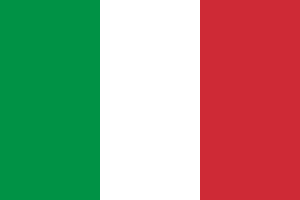
Residents of Italy are known as Italians – though the concept of a unified Italian identity is, historically speaking, a relatively recent one.
Prior to the Risorgimento – the 19th-century political and cultural movement that led to Italian unification in 1861 – the peninsula was divided into dozens of separate kingdoms, duchies and city-states. Each had its own laws, currency, culture and language. The dialects spoken across these regions were so different that, after unification, only around 2.5% of the population could speak what we now think of as standard Italian.
Even today, strong regional identities persist. A person from Venice may identify as Venetian first and Italian second. Many Italians speak regional languages – Neapolitan, Sicilian, Sardinian, Friulian – that UNESCO classifies as endangered or distinct languages in their own right, not merely dialects.
5. Italy has a world-famous capital
Rome, or Roma in Italian, is one of the most historically significant cities on earth. It served as the capital of the Roman Republic, the Roman Empire and later the Papal States, before becoming the capital of unified Italy in 1871.
The city covers approximately 496 square miles (1,285 square kilometres), making it the largest municipality in Italy by area. Its metropolitan population stood at around 4.3 million as of 2023.
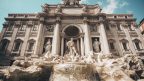
Rome is often called the “Eternal City” – a nickname that dates back to the 1st century BC. Walk its streets and it is easy to see why. Ancient, medieval, Renaissance and baroque architecture exist in close proximity, including the Colosseum, the Pantheon, the Roman Forum, the Trevi Fountain and St. Peter’s Basilica.
Rome is also unique in containing a fully sovereign state – Vatican City – entirely within its boundaries, making it the only city in the world that encircles a foreign country.
6. Italy is remarkably balmy
Italy’s climate is shaped by its length and varied topography. The majority of the peninsula, along with Sicily and Sardinia, enjoys a classic Mediterranean climate: hot, dry summers often exceeding 35°C in the south, and mild, wetter winters.
That picture changes considerably as you move north. The Po Valley experiences cold, foggy winters – Milan regularly records temperatures well below freezing. The Italian Alps have a true alpine climate, with heavy snowfall and skiing conditions that rival Switzerland and Austria.
The Adriatic coast is generally drier and sunnier than the Tyrrhenian coast. In the far south, particularly Sicily, the scirocco can strike – a hot, dust-laden wind that blows north from the Sahara and raises temperatures dramatically.
This climatic diversity is one reason Italian agriculture produces such a broad range of produce, from winter wheat and rice in the north to lemons, almonds and capers in the south.
7. Italy is volcano country
Italy sits on one of Europe’s most seismically and volcanically active zones. This is a consequence of the African tectonic plate pushing northward beneath the Eurasian plate. The country is home to three active volcanoes.
Mount Etna, in eastern Sicily, is the most active stratovolcano in Europe and also the tallest, rising to around 3,350 metres – though its height changes with each significant eruption. Etna erupts frequently, sometimes several times per year, and has been doing so for at least 500,000 years.
Mount Vesuvius, overlooking the Bay of Naples, is arguably the most famous volcano in the world. Its catastrophic eruption in AD 79 buried the cities of Pompeii and Herculaneum under metres of ash and pyroclastic material, preserving them in extraordinary detail. Vesuvius last erupted in 1944.
The third active volcano, Stromboli, is a small island in the Aeolian archipelago that has been erupting almost continuously for at least 2,000 years. It earned the nickname “Lighthouse of the Mediterranean” because its regular eruptions were historically used as a navigation aid by sailors.
8. Italy boasts a country within a country
Vatican City is the world’s smallest sovereign state, covering just 0.44 square kilometres – roughly the size of a large city park. It is home to approximately 800 residents, making it also the least populous country on earth.
It is an absolute monarchy governed by the Pope, and has been an independent state since the Lateran Treaty of 1929, which resolved a long-running dispute between the Holy See and the Italian state.
Despite its tiny size, Vatican City wields extraordinary cultural and religious influence as the headquarters of the Roman Catholic Church, which has over 1.3 billion members worldwide. Within its walls are some of the most significant artistic works ever created, including Michelangelo’s Sistine Chapel ceiling, Raphael’s Stanze and St. Peter’s Basilica – which took over 120 years to build.
Vatican City also has its own postal service, radio station, newspaper and euro coins, which are highly sought after by collectors. Its Swiss Guard force has protected the Pope since 1506.
9. Italy is immensely historically important
Italy leads the world with 58 UNESCO World Heritage Sites as of 2024 – more than any other country. This reflects an unmatched density of cultural and historical significance.
The list spans the full breadth of human history. It includes prehistoric cave paintings in Valcamonica, Bronze Age pile-dwellings around the Alps, Roman engineering marvels like the Via Appia Antica, and the ruins of Pompeii.
Renaissance masterpieces feature heavily too: the historic centres of Florence, Siena and Urbino, the villas and gardens of the Medici, and the trulli of Alberobello in Puglia – distinctive dry-stone dwellings with conical roofs found nowhere else on earth.
Natural sites are well represented as well, including the Dolomites, the Aeolian Islands and the ancient beech forests straddling the Apennines. Italy’s cultural heritage is so abundant that funding its maintenance has long been a challenge, leading to internationally collaborative restoration projects at many major sites.
10. Italy’s education system dates back centuries
The University of Bologna, founded in 1088, is not just the oldest university in Europe. It is widely regarded as the world’s first university in the modern sense: an institution that awarded degrees and operated on the basis of organised study, rather than simply a school attached to a cathedral or monastery.
It was founded initially as a place to study Roman law – a discipline of enormous practical importance in medieval Europe. At its peak in the 13th century it attracted students from across the continent, including, legend has it, Thomas Becket. It continues to operate today, with around 85,000 enrolled students and campuses in five cities.
Italy’s contribution to higher education more broadly is immense. The country was home to dozens of the earliest universities in Europe, including those at Padua, Modena, Reggio Emilia and Naples, all founded before 1250. The tradition of independent scholarly inquiry these institutions nurtured played a direct role in creating the intellectual conditions that made the Renaissance possible.
11. Italy has an interesting “lake building” worth looking out for
Rising eerily from the surface of Lake Resia (Lago di Resia) in South Tyrol, near the Austrian border, is the Gothic bell tower of a 14th-century church. It is all that remains visible of the village of Curon Venosta.
The village was submerged when the Italian government artificially raised the water level of the lake in 1950 as part of a hydroelectric project. Despite protests from local residents, the valley was flooded and around 150 houses, farmland and the entire historic village centre disappeared beneath the water. Approximately 160 families were displaced.
The church tower was left standing, either by oversight or as a concession to those who had lived there. In winter, when the lake partially freezes over, visitors can walk across the ice to reach its base.
The site has become one of the most photographed and haunting landmarks in northern Italy and inspired the imagery for a popular Italian television drama series. The story of Curon reflects a broader pattern of mid-20th-century Italian infrastructure projects that dramatically reshaped – and in some cases erased – centuries-old communities.
12. Italians have an incredibly long lifespan
Italy consistently ranks among the top countries in the world for life expectancy, with an average of around 83 to 85 years. This is several years above the European average. The reasons are both dietary and cultural.
The traditional Mediterranean diet – rich in olive oil, vegetables, legumes, fish, whole grains and moderate amounts of wine – has been extensively studied. It is associated with significantly lower rates of cardiovascular disease, type 2 diabetes and certain cancers.
Researchers also point to social factors. The Italian emphasis on family structure, communal eating and a relatively unhurried pace of life in many regions all contribute to healthy ageing, as does the cultural norm of walking rather than driving for short distances.
The town of Acciaroli in Campania has attracted particular scientific interest due to its disproportionately high number of centenarians. Researchers have studied its residents to understand what combination of genetics, diet and lifestyle explains their longevity. Italy’s longest-ever verified resident, Emma Morano, died in 2017 at the age of 117.

13. Heat measurement was made easier in Italy
The development of the thermometer was a distinctly Italian achievement, unfolding over several decades of scientific innovation in the late 16th and early 17th centuries.
Galileo Galilei is credited with inventing the thermoscope around 1593 to 1597. It was a rudimentary device that used the expansion and contraction of air to indicate temperature changes, but without a calibrated scale. The physician Santorio Santorio, a contemporary and collaborator of Galileo, adapted it for medical purposes and added a numerical scale around 1612, creating what is arguably the first clinical thermometer.
The critical next step came in 1654, when Ferdinand II, Grand Duke of Tuscany, created the first sealed liquid-in-glass thermometer. Using alcohol rather than air and enclosing it entirely, his design eliminated the influence of atmospheric pressure. It was far more accurate and portable than anything that had come before.
Daniel Gabriel Fahrenheit and Anders Celsius later added the standardised scales we use today – but the fundamental instrument they worked with was Italian in origin, a product of the same culture of empirical inquiry that drove so much of the Scientific Revolution.
14. Italy has an immense tourism scene
Italy is consistently one of the five most visited countries in the world, receiving well over 60 million international tourists per year. The appeal is extraordinarily broad.
The country offers world-class art and archaeology, fashion and design, beaches and sailing, skiing in the Alps and Dolomites, and wine tourism across Tuscany, Piedmont and Sicily. Culinary travel ranges from Michelin-starred restaurants to centuries-old trattorias serving regional dishes that vary dramatically from one province to the next. Milan is recognised as one of the four global fashion capitals.
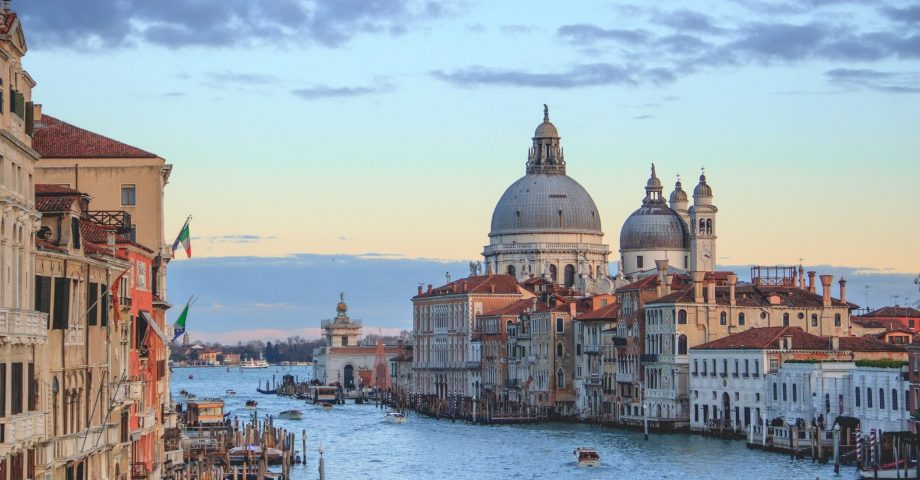
Venice, Florence and Rome form one of the world’s most visited tourist circuits, sometimes called the “Golden Triangle”. However, overtourism has become a significant policy concern, particularly in Venice. Day-trippers vastly outnumber residents there, and the city has introduced entry fees and visitor management systems in response.
Tourism contributes around 13% of Italy’s GDP and employs millions of people. The geographical and seasonal concentration of visitors creates both economic and conservation pressures that the country continues to grapple with.
15. Italians love a cup of coffee
Italy’s relationship with coffee is not merely cultural – it is almost philosophical. Italians collectively consume around 14 billion espressos per year. The rituals surrounding coffee are remarkably consistent across the country: a single espresso, drunk standing at the bar, typically in under two minutes, often first thing in the morning and again after lunch.
The price of a coffee at the bar is a matter of some national pride – often under a euro in most cities, kept low by convention and, in some regions, by price controls. Quality is taken extremely seriously.
Italy also gave the world cappuccino, macchiato, Americano and affogato. Italians themselves observe strict rules about when each drink is appropriate. Cappuccino, for instance, is considered a morning drink only. Ordering one after a meal would immediately mark you out as a tourist.
The espresso machine was invented in Italy in the late 19th century, with Luigi Bezzera and Desiderio Pavoni developing early commercial versions in Milan around 1901 to 1905. Coffee culture is so embedded in Italian life that the traditional Italian café bar, and the craft of the barista, have been inscribed on UNESCO’s Intangible Cultural Heritage list.

16. Italian gondolas only come in one colour
Since a law enacted in Venice in 1562, all gondolas must be painted black. This regulation remains in force today and applies to all approximately 400 gondolas still operating on the city’s canals.
The original purpose of the law was to curb ostentatious displays of wealth. Gondola owners had been competing with ever more elaborate and expensive colours, carvings and ornaments. Black was chosen as a unifying, status-neutral colour. Before this law, gondolas were extravagantly decorated in bright colours and gilded trim.
The gondola itself is an extraordinary feat of asymmetric design. It has no keel, is built with a slight curve and uneven width to compensate for the weight and stroke of a single standing oarsman, and is constructed from eight different types of wood. Each gondola has around 280 individual components and takes roughly two months to build by hand.
At its peak in the 17th century, Venice had around 10,000 gondolas. Today they function almost exclusively as tourist vessels, though the gondolier’s profession – which requires years of training and a rigorous qualification exam – is jealously maintained.
17. Italy’s food production is well-loved
Italy is one of the world’s most influential food-producing nations – not simply in terms of volume, but in terms of quality, diversity and the global spread of Italian culinary culture.
The country is the world’s largest producer of wine, olive oil and pasta, and leads Europe in the production of tomatoes, artichokes and hazelnuts. Italy’s system of protected designations of origin (PDO and PGI) is among the most extensive in the world, covering hundreds of products. These range from Parmigiano Reggiano cheese – which must be produced in a specific area of Emilia-Romagna and aged for a minimum period – to San Marzano tomatoes, Modena balsamic vinegar and Culatello di Zibello ham.
The country’s 20 regions each have deeply distinct food traditions. Northern Italian cooking tends to use butter, cream and polenta. Central Italy is defined by pork, truffles, lentils and hand-rolled pasta. The south favours olive oil, aubergines, chilli and dried pasta.
This regional diversity is fiercely protected. Italians are famously possessive about authentic preparation methods, and Italian culinary culture has influenced cuisines on every continent through the Italian diaspora.
18. Italy has a diverse industry model, too
Italy is the third-largest economy in the eurozone and the eighth-largest in the world. But its industrial character is unlike that of most comparable economies.
Rather than being dominated by a small number of large multinationals, Italy’s economy is built around a vast ecosystem of small and medium-sized family businesses, particularly in the north. Many are global leaders in highly specialised niches. The so-called “Third Italy” – centred on Emilia-Romagna, Tuscany and the Veneto – is home to clusters of precision manufacturers producing ceramics, shoes, textiles, packaging machinery, agricultural equipment and high-end motorcycles.
Italy is also home to the global luxury and fashion industries to a degree that few countries can match. Brands including Ferrari, Lamborghini, Maserati, Fiat, Gucci, Prada, Versace, Armani, Ferragamo and Bulgari all originated here.
The country is also Europe’s largest producer of steel by output, a major manufacturer of industrial machinery, and a global centre for the chemical and pharmaceutical industries. Tourism contributes significantly to GDP and represents one of Italy’s most important “exports” – making the economy unusually dependent on the appeal of its own history and culture.

FAQs about Italy
Is it safe for me to visit Italy?
On the whole, Italy is a safe destination for tourists. Violent crime is relatively rare, and it compares favourably to the United States in most safety indices. Petty theft and pickpocketing are the most common concerns, particularly in crowded tourist areas in Rome, Naples and Florence. Sensible precautions - keeping valuables secure and being alert in busy markets and on public transport - are sufficient for most visitors.
Do people speak English in Italy?
Italian is the official and near-universal first language. English proficiency varies considerably: it is widely spoken in tourist areas, by younger generations and in the north of the country, but significantly less common in rural areas and parts of the south. Learning a few phrases of Italian is genuinely appreciated and will improve your experience considerably.
Is Italian a difficult language to learn?
Italian is consistently rated as one of the more accessible languages for native English speakers. Its pronunciation is highly consistent - words are almost always spelled as they sound - its grammar, while requiring effort, is more regular than many European languages, and a large number of words share Latin roots with English. The Foreign Service Institute classifies Italian as a Category I language, estimating around 600 to 750 hours of study to reach professional working proficiency.
Do you know any fun facts about Italy? Share them in the comments below!
Are you fascinated with all things Italian? Check out these vibrant facts about Venice or these facts about the Amalfi Coast.