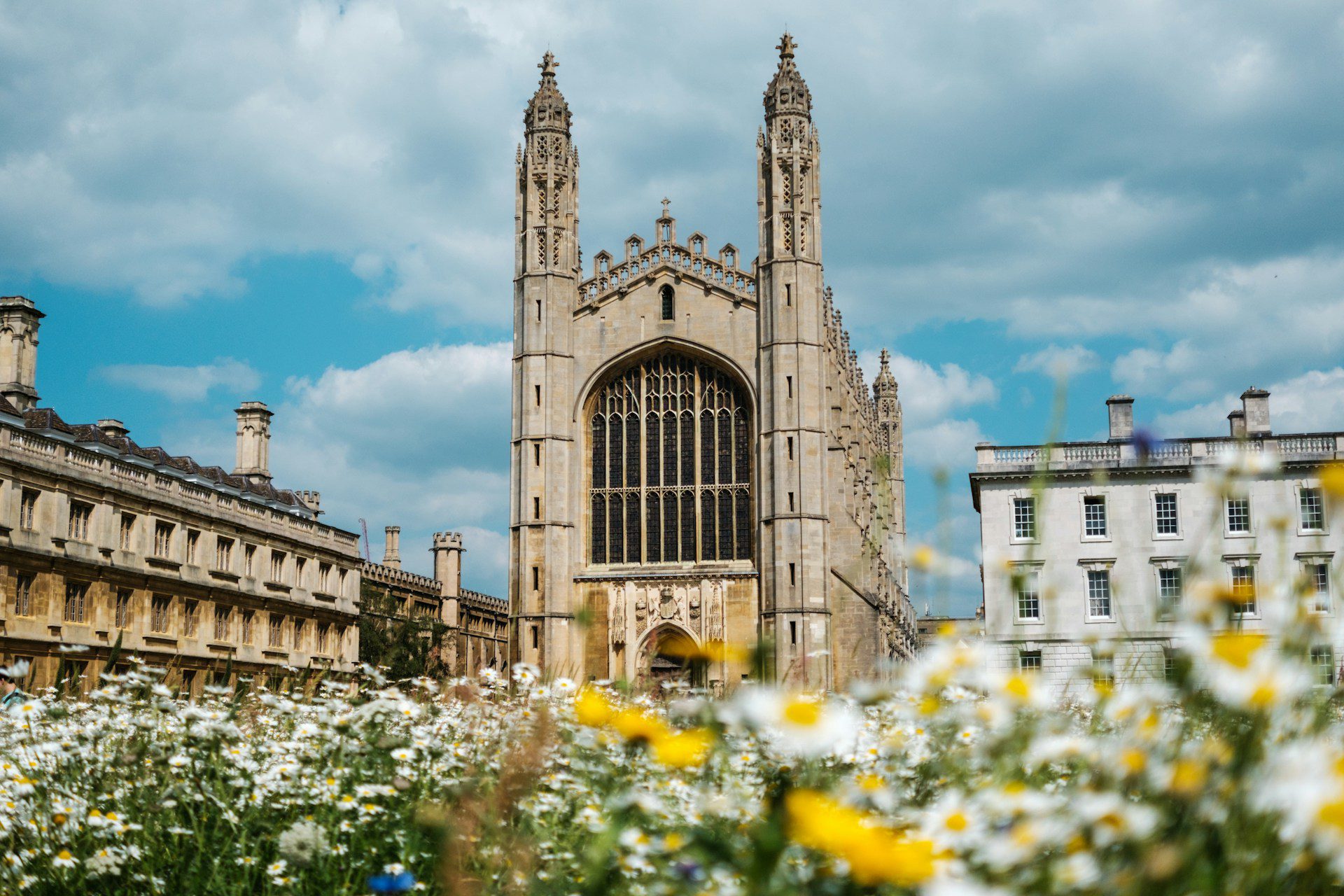
Walk through any British city with a university, and you’ll feel it — something in the air that’s equal parts pressure and possibility. It’s one of the most respected higher education systems in the world, attracting students from every continent and producing some of history’s most influential thinkers. Beyond the lecture halls and graduation gowns, there’s a lot about how the system actually works that catches people off guard. Here are some of the most fascinating and genuinely useful facts about how British universities operate that most students never hear until it’s almost too late.
The Grading System Confuses Almost Everyone at First
If you’re used to a GPA or letter-grade system, the UK’s degree classification structure looks like it was designed to be as counterintuitive as possible. There are no A’s or B’s for your final result. Instead, you graduate with a classification: a First (the highest), a 2:1, a 2:2, or a Third. A First requires hitting 70% or above, which sounds deceptively modest until you realize that in most other countries, 70 out of 100 lands you somewhere around a C. In the UK, consistently scoring in that range is genuinely impressive, and academics treat it as such. Drop a band lower, and you’re in 2:1 territory, roughly 60–69%, which is the grade most employers have in mind when they say they want a ‘good degree.
The final year usually carries the most weight
Many UK universities weigh your final year marks more heavily than earlier years (often 60% or more of your overall degree classification). This means a student who struggled in first or second year still has a real shot at a First if they perform strongly in year three. Final-year work often includes a dissertation or major project, and knowing basics like the length of a research paper can make a real difference when you’re starting from scratch. It also means that coasting into the final year with a comfortable average is one of the riskier strategies a student can adopt.
The Student Loan Isn’t Really a Loan in the Traditional Sense
Most people hear the words ‘student loan’ and picture the kind of debt that follows you around, with interest stacking up, minimum payments due whether you like it or not, and your credit score taking a hit if you fall behind. The English system doesn’t work that way at all. Nothing comes out of your pay packet until you’re earning above £25,000 a year (for those who started university from August 2023). Earn less than that, and the loan sits completely dormant — no penalty, no chasing letters, no impact on your credit file whatsoever.
Even more striking: the loan is written off entirely after a set period, regardless of how much remains. For those on the current Plan 5, that write-off happens 40 years after repayment first becomes due. In practice, government forecasts suggest that around 44% of graduates under the newer system will never fully repay what they borrowed, because the debt simply expires. It functions less like personal debt and more like a time-limited income-based tax.
The UK Has Four Completely Different University Systems
Scottish students studying at Scottish universities pay no tuition fees at all. Welsh students, meanwhile, have seen fees creep up over the past two years. Northern Irish students pay significantly less than their English counterparts, with fees running at less than half the English maximum until recently. Then there’s England, which has the highest tuition fees in the UK of £9,535 per year for the 2025/26 academic year, following a 2024 BBC-reported decision to raise the cap for the first time in nearly a decade.
Moving between countries can completely change what you pay
An English student choosing to study in Scotland still pays the full English rate. A Scottish student going to an English university pays English fees. Someone from Wales studying in England falls under English fee rules too. The geographic quirks of this system regularly catch prospective students off guard, especially international students who assume a unified “UK price.”
Most Degrees Take Three Years, But That’s Not Universal
The standard undergraduate degree in England, Wales, and Northern Ireland runs for three years. Scotland is the exception — Scottish undergraduate degrees are typically four years, with a broader curriculum in the first two years before students specialise. This four-year model actually makes Scottish degrees more comparable to those in many European and North American systems, where a bachelor’s degree involves a wider base of study before narrowing.
Some English universities also offer integrated master’s degrees, usually labelled as MEng, MChem, or MPhys, which run for four or five years and include a master’s-level qualification as part of the undergraduate programme. Students who start one of these courses and leave after three years typically graduate with a bachelor’s degree instead. The option to exit early is there, but not always well-publicised at the point of application.
The Application Process Has Some Unusual Rules
In most countries, you apply to universities directly. In the UK, undergraduate applications go through a centralised service called UCAS. You submit one application with up to five choices, and universities make offers, usually based on predicted A-level (or equivalent) grades before you’ve actually sat your exams. This means an 18-year-old is accepting or rejecting conditional offers on courses and institutions they’ll attend based on what their teachers think they might achieve, months before results day.
The clearing process that follows results day is one of the more chaotic annual events in British education — thousands of students on the phone or online in a scramble to secure places, with universities adjusting their offers in real time. It’s stressful, but it also means that students who outperform their predictions occasionally end up at universities they didn’t originally apply to through a system called Adjustment.
Oxford and Cambridge Have Ancient Privileges That Still Apply Today
The Universities of Oxford and Cambridge have structures that continue to define how students learn. Both universities use a collegiate system, where students belong to individual colleges that handle accommodation, pastoral care, and much of the teaching through small-group tutorials (called supervisions at Cambridge, tutorials at Oxford). These sessions (often just one or two students with a leading academic) are considered among the most intensive forms of undergraduate teaching in the world, and are a large part of what gives Oxbridge its academic reputation.
At some Oxbridge colleges, traditions that have existed for centuries coexist with cutting-edge research labs. The University of Cambridge alone has produced more Nobel Prize winners than most countries. And yet the day-to-day reality for students (cycling between lectures, eating in grand dining halls, navigating an ancient library system) can feel genuinely like inhabiting a different century entirely.
Knowing the University System Is the Best Way to Get in Fast
The British university system has layers that take time to understand. Some of those layers are genuinely student-friendly, like the income-based loan repayment model that makes debt far less frightening than it appears. Others are the kind of institutional quirks that have accumulated over eight centuries of higher education history. Either way, knowing how the system works before you’re inside it puts you considerably ahead.
Spotted something wrong? Suggest a correction
We check every suggestion and update articles when facts change. Thank you for helping keep facts.uk accurate.