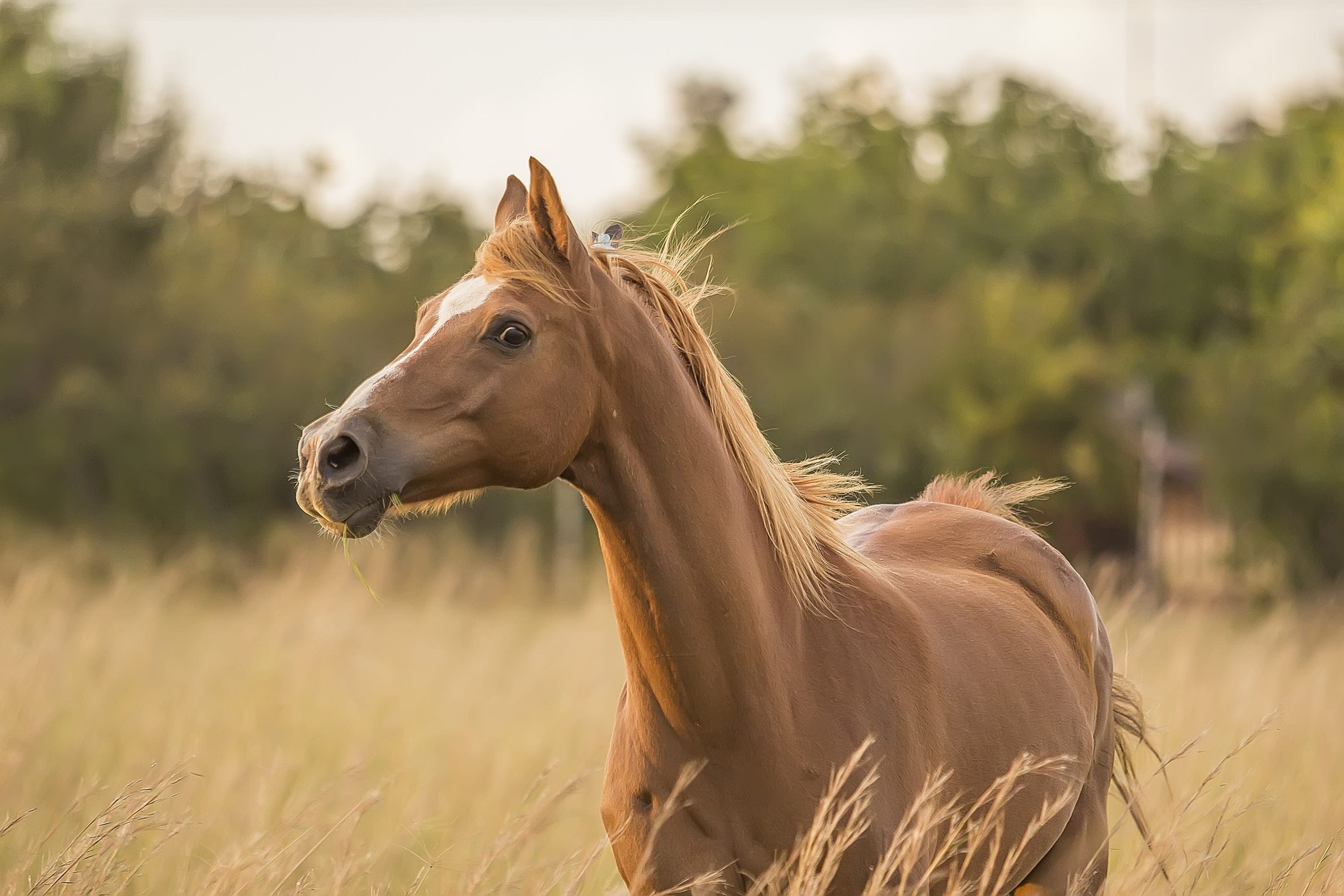
People have ridden, raced and worked with horses for thousands of years, and they helped to shape history. But they are still full of surprises, from the way they sleep to why they cannot be sick. Here are 15 facts about horses.
1Modern horses were domesticated about 4,200 years ago.
A large DNA study published in 2021 found that today’s domestic horses descend from horses first tamed on the steppes of what is now south-western Russia, around 2200 BC. They then spread across Asia and Europe within a few centuries.
2They can sleep standing up.
A system of tendons and ligaments called the stay apparatus lets horses lock their legs and doze on their feet. They still need to lie down for short periods to get deep, dreaming sleep.

3Foals can run within hours of being born.
Most foals stand within an hour of birth and can run soon after, so that they could escape predators in the wild.
4Horses have the biggest eyes of any land mammal.
Their eyes are on the sides of the head, giving them almost all-round vision. They have blind spots directly in front of their nose and directly behind them, which is why you should never approach a horse from behind.
5They cannot be sick.
A strong band of muscle at the entrance to the stomach means horses almost never vomit. It is one reason why colic, a painful stomach problem, can be so serious for them.
6Horses can only breathe through their nose.
Unlike us, horses cannot breathe through their mouths, which is why their nostrils flare so wide when they are working hard.

7That “laughing” face is about smell.
When a horse curls back its top lip and raises its head, it is not laughing. Called the flehmen response, it helps the horse draw scents towards a special smell organ in the roof of its mouth.
8You can tell a horse’s age from its teeth.
A horse’s teeth keep growing and wear down in a predictable way, so vets can estimate its age by looking at them. It is where the phrase “long in the tooth” comes from.
9Male horses usually have more teeth.
An adult male horse usually has 40 to 44 teeth, while a mare has 36 to 40, because males tend to grow extra canine teeth.
10Horses are measured in hands.
A horse’s height is measured from the ground to the top of the shoulders, called the withers, in hands. One hand is 4 inches (about 10 centimetres). A pony is usually under 14.2 hands.

11The oldest recorded horse lived to 62.
Old Billy, a barge horse from Lancashire, is said to have been born in 1760 and died in 1822 at the age of 62. Most horses live for 25 to 30 years.
12James Watt invented “horsepower”.
In the 1780s, the Scottish engineer James Watt worked out how much work a horse could do in order to sell his steam engines. One horsepower is about the power needed to lift 33,000 pounds by one foot in one minute.
13The first horsebox carried a racehorse to Doncaster.
In 1836, a horse-drawn van was used to take the racehorse Elis to Doncaster for the St Leger, so he arrived fresh instead of walking for days. He won.
14Horses can read our faces.
Studies at the University of Sussex found that horses react differently to photos of happy and angry human faces, and can remember a person’s expression hours later.
15Horses see mainly in blue and yellow.
Horses have two types of colour-sensing cells, like people with red-green colour blindness, so they see blues and yellows well but struggle to tell red from green.

FAQs about horses
How long do horses live?
Usually 25 to 30 years, and some live into their 30s or beyond.
What is a baby horse called?
A foal. A young male is a colt and a young female is a filly.
How many bones does a horse have?
Usually 205, compared with 206 in an adult human.
Sources and further reading
Explore more: facts about zebras and facts about dogs.
Do you know any fun facts about horses? Share them in the comments below!
Spotted something wrong? Suggest a correction
We check every suggestion and update articles when facts change. Thank you for helping keep facts.uk accurate.



Leave a Reply