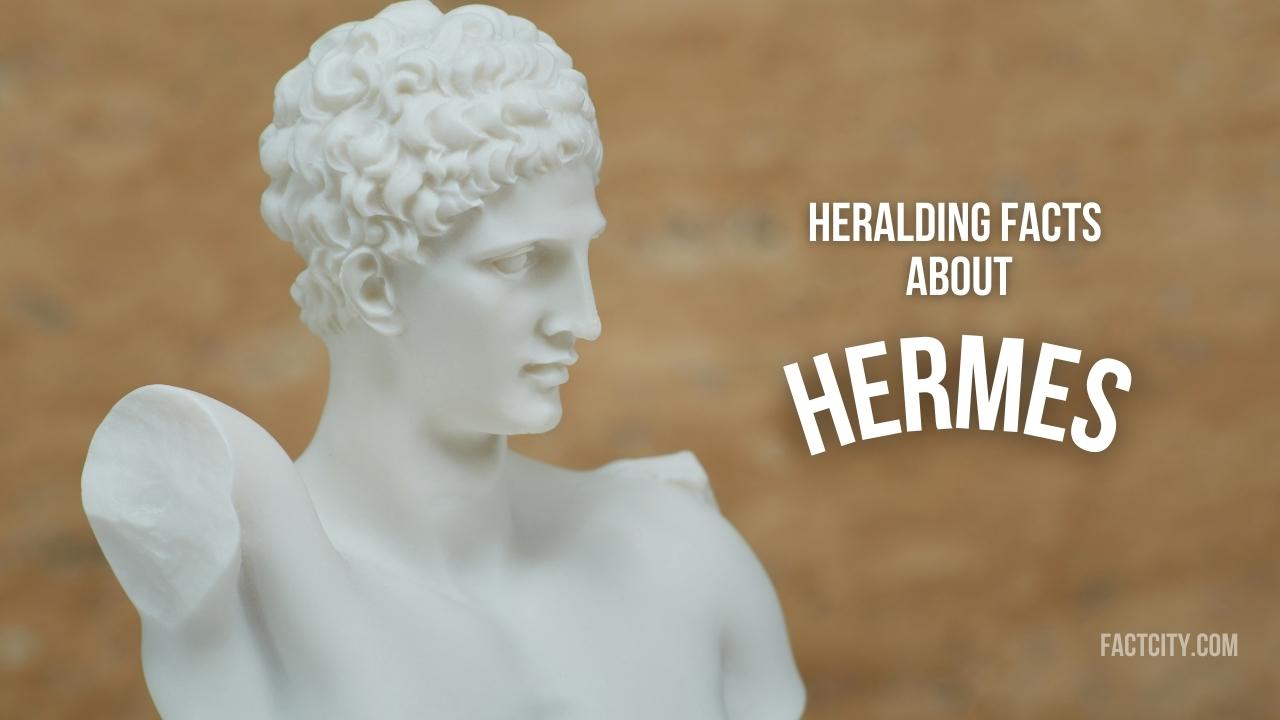
Hermes was the fastest of the Greek gods, the messenger of Zeus, a guide for the dead and the patron of travellers, merchants and thieves. He stole his brother’s cattle on the day he was born, invented the lyre before he was a day old, and talked his way out of trouble with Zeus himself. Here are 15 facts about Hermes, the cleverest trickster on Mount Olympus.
Hermes at a glance
God of: messengers, travellers, trade, thieves, shepherds, luck and boundaries
Parents: Zeus and Maia, one of the Pleiades
Symbols: winged sandals, winged hat, the caduceus (a staff with two snakes)
Roman name: Mercury
Sacred animals: the tortoise and the ram
1He was the messenger of the gods.
Hermes carried messages for Zeus and the other Olympians, and he was the only god who could move freely between Olympus, the world of mortals and the underworld. In art he is easy to spot: a young, athletic man with winged sandals, a winged hat called a petasos and a herald’s staff.
2He was one of the twelve Olympians.
Hermes was a son of Zeus and the nymph Maia, the eldest of the seven Pleiades. He was born in a cave on Mount Cyllene in Arcadia, in southern Greece, and was counted among the twelve great gods of Olympus.
3He was a thief on his first day.
According to the Homeric Hymn to Hermes, he climbed out of his cradle on the day he was born, crept off and stole fifty cattle from his half-brother Apollo. To hide his tracks he drove them backwards and wore sandals made of twigs, then slipped back into his cradle as if nothing had happened.
4He invented the lyre on the same day.
On the way, baby Hermes found a tortoise, scooped out its shell and strung it with sheep gut to make the first lyre. When a furious Apollo tracked him down, Hermes played him a song. Apollo was so charmed that he let Hermes keep the cattle in exchange for the lyre, which became Apollo’s own instrument.
5He was the god of thieves and merchants.
The same cunning made Hermes the patron of trade, markets and good bargains, and also of liars and thieves. The Greeks saw no contradiction: both took a quick tongue and quick wits.
6He guided the dead to the underworld.
As a psychopomp, or “guide of souls”, Hermes led the spirits of the dead down to the River Styx, where Charon the ferryman took them across into Hades. He was one of the few gods who could also lead souls back out, as he did when he brought Persephone back to her mother each spring.
7His staff is often mistaken for a medical symbol.
Hermes’ caduceus, a winged staff wrapped by two snakes, appears on the badges of many American medical organisations. Strictly, the symbol of medicine is the Rod of Asclepius, which has a single snake and no wings. The mix-up became widespread after the US Army Medical Department adopted the caduceus in 1902, and it is still common today.

8He killed a giant with 100 eyes.
When Zeus fell in love with Io and turned her into a cow to hide her from Hera, Hera set the giant Argus, who had a hundred eyes, to guard her. Zeus sent Hermes, who played music and told stories until every one of Argus’s eyes closed, then killed him. Hera placed the eyes in the tail of her sacred bird, the peacock.
9He helped many heroes.
In some versions of the myth, Hermes lent Perseus his winged sandals and a sword to defeat Medusa. He gave Odysseus a magic herb called moly to protect him from the witch Circe, and he guided the old King Priam safely through the Greek camp to ask Achilles for the body of his son Hector.
10He was the father of Pan.
Hermes had many children. The best known is Pan, the goat-legged god of the wild and of shepherds, whose sudden shouts gave us the word “panic”. He was also said to be the father of Hermaphroditus, his son with Aphrodite.
11His statues stood at every crossroads.
Stone pillars topped with a carved head of Hermes, called herms, stood at crossroads, doorways and boundaries all over Greece to protect travellers. In 415 BC, the night before an Athenian fleet sailed for Sicily, almost all the herms in Athens were vandalised, causing a scandal that helped turn Athens against the general Alcibiades.
12The planet Mercury is named after his Roman version.
The Romans identified Hermes with their god Mercury, and the fastest-moving planet, which races around the Sun in just 88 days, carries his name. The liquid metal mercury, or quicksilver, is named after him too.
13Hermes the fashion brand isn’t named after him.
The French luxury house Hermès, famous for its Birkin bags and silk scarves, takes its name from its founder, the harness maker Thierry Hermès, who opened his workshop in Paris in 1837.
14Interflora’s logo is Hermes.
The winged messenger has long been a symbol of speedy delivery. The flower delivery network Interflora uses a running figure of Mercury as its logo, and Goodyear’s winged foot comes from the same god.
15Athens held athletic games in his honour.
Hermes was the patron of athletes and gymnasiums, and festivals called the Hermaea were held for him in Athens and elsewhere, with sports contests for boys and young men.
FAQs about Hermes
Was Hermes a good or bad god?
Neither, really. He was helpful and kind to travellers and heroes, but he was also a liar and a thief, and he killed Argus on Zeus’s orders. The Greeks loved him as a clever, charming rogue.
What is Hermes the god of?
Messengers, travel, roads, trade, thieves, shepherds, sport, luck and guiding the dead.
Who were Hermes’ parents?
Zeus, king of the gods, and Maia, the eldest of the Pleiades.
What is Hermes’ Roman name?
Mercury.
Is Hermes the fastest god?
Yes. Hermes was the swiftest of the Olympians, which is why Zeus used him as his messenger.
What was Hermes passionate about?
Travel, trade, music, sport and, above all, clever tricks. He loved outwitting others, starting with Apollo on the day he was born.
Who did Hermes love?
Hermes never married. Myths give him many partners, including Aphrodite, with whom he had Hermaphroditus, and several nymphs, one of whom was the mother of Pan. A few lesser-known stories also link him to young men, such as Crocus, who was turned into the crocus flower.
Was Hermes the most powerful god?
No. Zeus was the most powerful, but Hermes was one of the most trusted, because Zeus relied on him for difficult missions.
Sources and further reading
Explore more: facts about Apollo and more Greek gods.
Do you know any fun facts about Hermes? Share them in the comments below!
Spotted something wrong? Suggest a correction
We check every suggestion and update articles when facts change. Thank you for helping keep facts.uk accurate.
Leave a Reply