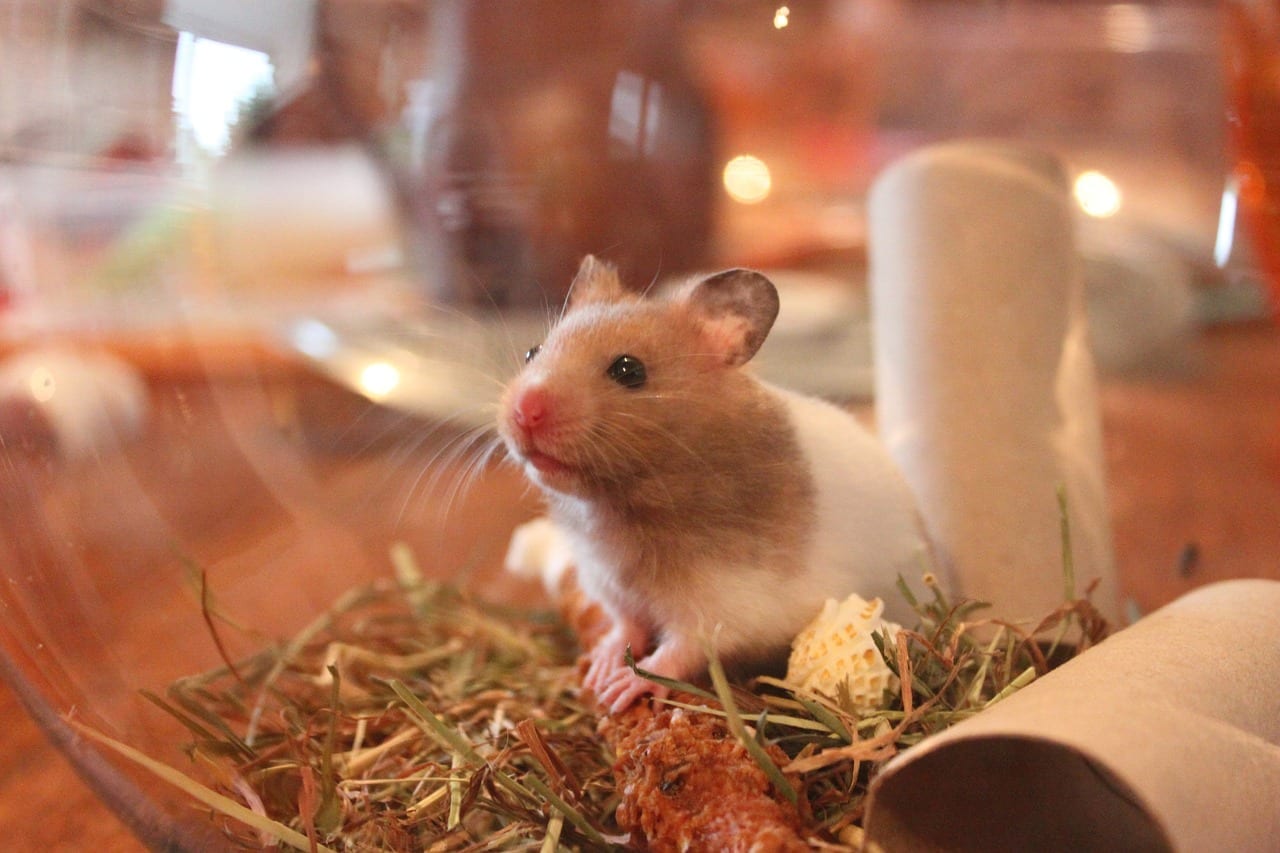
Hamsters are small rodents from Europe and Asia, famous for stuffing their cheeks with food. Millions live as pets, yet the wild golden hamster that most pets descend from is now endangered. Here are 18 facts about hamsters.
1There are between 18 and 24 hamster species.
Experts group species in slightly different ways, so counts vary. Animal Diversity Web lists 18 species in 7 genera, while the RSPCA gives a figure of 24.
2Wild hamsters live only in Europe and Asia.
Their natural range runs from central and eastern Europe through Turkey, Syria and Iran to Mongolia, Siberia, northern China and Korea. There are no wild hamsters in the UK.

3A Syrian hamster can carry half its body weight in its cheeks.
Hamsters have large pouches inside their cheeks. The RSPCA says a Syrian hamster can hoard up to half its own body weight in food in them before carrying it back to its store.
4Some hamsters fill their cheek pouches with air to swim.
The pouches are not just for food. Some species puff them up with air to help them float, and mothers may carry their young in them when danger threatens.

5One wild hamster burrow held 90 kg of stored food.
Wild hamsters stockpile seeds and grain underground to see them through winter. Burrows have been found holding as much as 90 kg (about 200 lb) of food.
6The German word for “to hoard” comes from the hamster.
The English word hamster comes from German. In German the animal’s name was turned into a verb, hamstern, which means to hoard, because hamsters are so good at it.
7In Arabic the golden hamster is called “Mister Saddlebags”.
The Syrian, or golden, hamster’s Arabic name roughly translates as “mister saddlebags”, a nod to the bulging cheek pouches it fills with food.
8Most pet hamsters come from one family caught in Syria in 1930.
In 1930 the zoologist Israel Aharoni captured a mother hamster and her pups near Aleppo. DNA studies show that all domestic golden hamsters descend from a single female, probably that one.
9Golden hamsters arrived in Britain in 1931.
Descendants of the 1930 family were sent to the Wellcome Bureau of Scientific Research in Britain in 1931 for medical research. From laboratories they later spread into homes as pets.

10Golden hamsters have the shortest known pregnancy of any placental mammal.
A golden hamster is pregnant for only about 16 days. A typical litter has 8 to 12 pups.
11Baby hamsters are born with their eyes closed.
Newborn golden hamsters are helpless. Their eyes open at about 12 to 14 days old, and they are weaned at around three weeks.
12A hamster’s teeth never stop growing.
Like other rodents, hamsters have front teeth that keep growing all their lives. Gnawing on hard food and objects wears them down.
13Hamsters are most active at dusk and during the night.
Wild golden hamsters spend the day in their burrows and wake at dusk. Pet hamsters keep the same habits, which is why their wheels often spin after dark.

14Wild hamsters can run up to 8 km in a day.
According to the RSPCA, wild hamsters can cover up to five miles (about 8 km) a day while searching for food.
15Hamsters rely more on smell and hearing than on sight.
Their large eyes have retinas packed with rods, which work in dim light, and they can see ultraviolet light. Even so, they depend mainly on their keen senses of smell and hearing to find food and spot danger.
16Syrian hamsters prefer to live alone.
Most hamsters are solitary and can fight if kept together. Syrian and Chinese hamsters should live alone, although some dwarf species, such as the Roborovski hamster, can share a home.
17Wild hamsters do not truly hibernate.
In winter they sink into long spells of torpor, a deep, energy-saving sleep that can last for weeks. They wake every so often to eat from their food stores.
18The European hamster is critically endangered.
In 2020 the IUCN listed the European hamster as Critically Endangered. Females once had more than 20 young a year, but now have only 5 or 6, and the species could die out within 30 years if nothing changes.
FAQs about hamsters
How long do hamsters live?
Pet hamsters usually live for up to about two years, although some live a little longer.
Are hamsters nocturnal?
Yes, mostly. They sleep through much of the day and are most active at dusk and during the night.
Can two hamsters live together?
Syrian hamsters must live alone because they fight. Some dwarf species, such as Roborovski hamsters, can live together with the right space and care.
Sources and further reading
- RSPCA: Keeping hamsters as pets
- Animal Diversity Web (University of Michigan): Cricetinae (hamsters)
- Animal Diversity Web (University of Michigan): Golden hamster
- IUCN: Almost a third of lemurs and North Atlantic right whale now Critically Endangered
Explore more: facts about mice, facts about rats and facts about rabbits.
Do you know any fun facts about hamsters? Share them in the comments below!
Spotted something wrong? Suggest a correction
We check every suggestion and update articles when facts change. Thank you for helping keep facts.uk accurate.


Leave a Reply