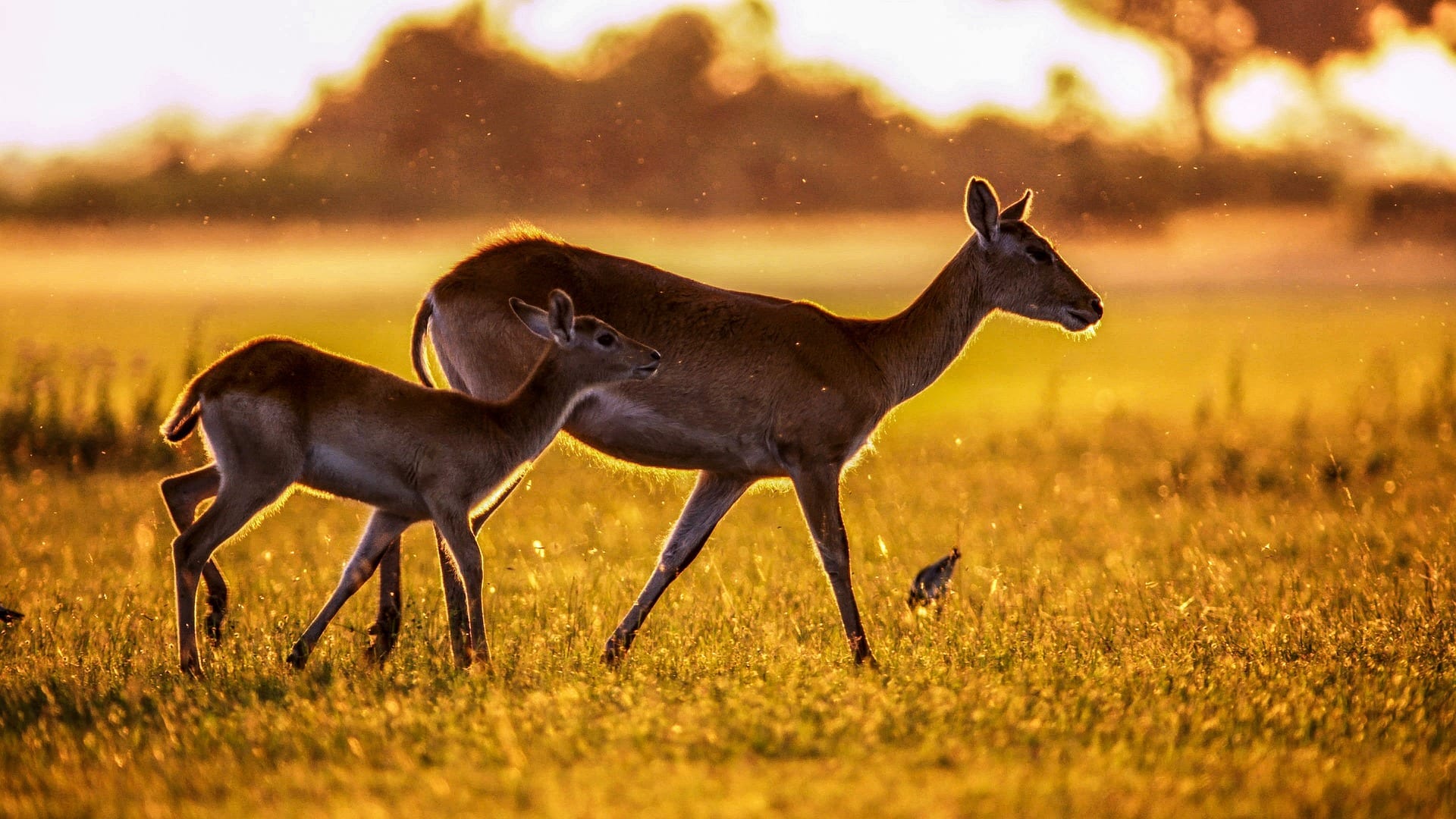
Gazelles are small, fast antelopes that live on the grasslands, savannas and deserts of Africa and Asia. They are famous for their speed and their springy leaps, but some of their most surprising tricks are hidden inside their bodies. Here are 16 facts about gazelles.
1Gazelles are a group of antelopes, not a single species.
The word “gazelle” covers somewhere between 15 and 20 species, depending on how scientists group them. Most belong to the genus Gazella, with others in the related groups Eudorcas and Nanger.
2They live in Africa and Asia.
Most gazelles live in the deserts, grasslands and savannas of Africa. Others are found across south-west and central Asia and as far east as the Indian subcontinent and China.
3Gazelles belong to the same family as cows.
Gazelles are bovids, members of the family Bovidae. That family also includes cattle, sheep, goats, buffalo and the other antelopes, so a gazelle is a distant cousin of a farm cow.
4They do not have two stomachs.
A popular claim says gazelles have two stomachs. In fact, like cows, they are ruminants with one stomach split into four chambers. This lets them bring food back up and chew it again (chewing the cud) to get more goodness from tough plants.
5The name probably comes from Arabic.
“Gazelle” reached English around 1600 through French and Spanish. It probably comes from the Arabic word ghazāl, which is linked to the word ghazal, a type of love poem.
6Most gazelles are about the height of a large dog.
Most gazelles stand about 60 to 110 cm (2 to 3.5 feet) at the shoulder. A Thomson’s gazelle stands 55 to 82 cm and weighs 15 to 35 kg, while a dorcas gazelle, the second smallest species, weighs only about 12 to 18 kg.
7The dama gazelle is the largest, and one of the rarest.
The dama gazelle stands about 99 cm (39 inches) at the shoulder and weighs 40 to 86 kg. It is critically endangered, with fewer than 400 thought to survive in the wild, mainly in Chad and Sudan.
8The Thomson’s gazelle is Africa’s most common gazelle.
Thomson’s gazelles are the most numerous gazelles in Africa, yet they have one of the smallest ranges, living only in southern Kenya and northern Tanzania. Many of them are found on the Serengeti plains.
9They can reach 70 to 80 km/h.
A Thomson’s gazelle can run at around 70 to 80 km/h (about 45 to 50 mph). A cheetah is faster over a short sprint, but a gazelle that dodges and twists for long enough can outlast it.

10Gazelles bounce high into the air when they spot danger.
When a gazelle sees a predator it may “stot” or “pronk”: it leaps with stiff legs and its head held high, with all four hooves off the ground at once. This warns the rest of the herd and may show the predator that this gazelle is fit and not worth chasing.
11Newborn calves hide alone in the grass.
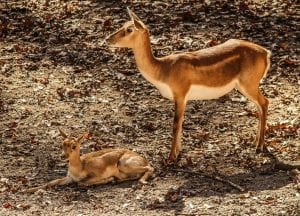
A gazelle calf can stand and walk soon after birth, but for its first few weeks it lies still and hidden in tall grass. Its mother grazes nearby and comes back a few times a day to feed it.
12Life is risky for young gazelles.
Thomson’s gazelles are hunted by lions, cheetahs, leopards, hyenas, African wild dogs, jackals, baboons and even pythons. Around half of all Thomson’s gazelle calves die in their first year.
13Females usually have horns too.
In most gazelle species both sexes have horns, but the female’s horns are shorter and thinner. A male dorcas gazelle’s horns are 25 to 28 cm long, while a female’s are 17 to 19 cm. Some female Thomson’s gazelles have no horns at all.
14Sand gazelles shrink their hearts to save water.
A 2006 study of sand gazelles in the deserts of Saudi Arabia found that their hearts and livers got noticeably smaller during four months with little food and water. Smaller organs need less oxygen, so the gazelles breathe less and lose less water in their breath.
15A dorcas gazelle may never need to drink.
Dorcas gazelles live in the Sahara and other dry parts of northern Africa and the Middle East. They can get almost all the water they need from the plants they eat, although they will drink when water is available.
16One gazelle species has already been lost.
The Queen of Sheba’s gazelle lived in the mountains of Yemen and is known only from a few museum specimens. It has not been recorded since 1951 and is now listed as extinct, probably because of hunting and habitat loss.
FAQs about gazelles
Is a gazelle a deer or an antelope?
A gazelle is an antelope. Antelopes belong to the same family as cattle and goats, while deer belong to a separate family. One clear difference is that antelope horns are permanent, but deer grow and shed antlers every year.
How fast can a gazelle run?
A Thomson’s gazelle can reach about 70 to 80 km/h (45 to 50 mph) and is good at sudden turns, which helps it escape predators.
What eats gazelles?
Lions, cheetahs, leopards, hyenas and African wild dogs all hunt gazelles. Jackals, baboons and pythons often take the young calves.
Sources and further reading
- Animal Diversity Web (University of Michigan): Eudorcas thomsonii, Thomson’s gazelle
- Animal Diversity Web (University of Michigan): Gazella dorcas, dorcas gazelle
- Smithsonian’s National Zoo: Dama gazelle
- ScienceDaily: Gazelles shrink liver and heart to reduce oxygen consumption during drought
Explore more: facts about antelopes, facts about cheetahs and facts about the Serengeti.
Do you know any fun facts about gazelles? Share them in the comments below!
Spotted something wrong? Suggest a correction
We check every suggestion and update articles when facts change. Thank you for helping keep facts.uk accurate.
Leave a Reply