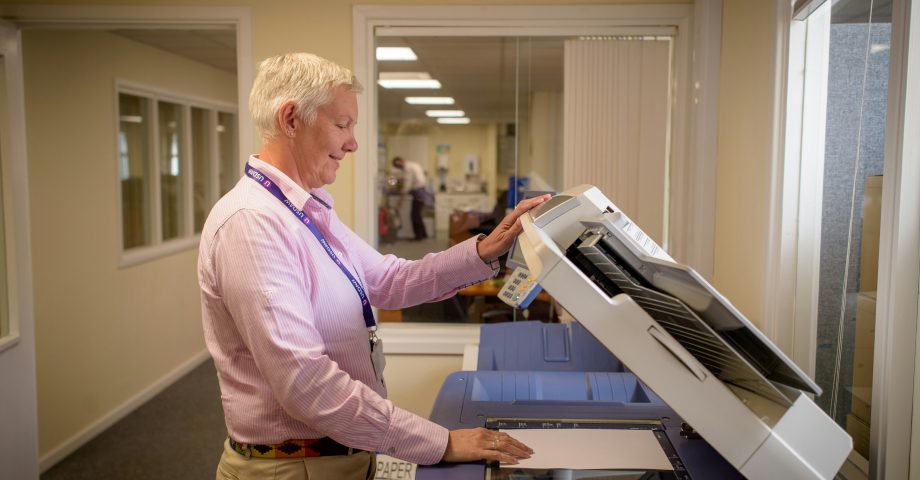

In an era where so much of our work is handled digitally, it might surprise some people that office printing remains a cornerstone of everyday business operations. Far from being a relic of the past, printing serves functional, legal, and even psychological needs that digital-only solutions can’t always satisfy. From contracts and reports to signage and quick in‑house memos, the presence of printers and toner in offices around the world remains strong. Let’s explore how office printing became so essential and why it still matters.
The Early Days of Office Printing
The history of office printing traces back to the introduction of the typewriter and the first impact printers in the early 20th century. Before computers became ubiquitous, offices relied on mechanical typewriters and bulky printers to produce paper documents. These early machines made information reproducible in a way that handwriting never could, boosting productivity and record‑keeping.
As technology evolved, so did the machines. Dot‑matrix printers gave way to inkjet and laser printers, which offered cleaner, faster, and more reliable output. Office workflows shifted, and printing became a natural extension of administrative and managerial tasks. The fundamental role of outputting tangible, reliable documents was established, and it has endured.
Why Printing Still Matters in a Digital World
Even with the rise of email, cloud storage, and collaboration platforms, there are compelling reasons why office printing remains indispensable.
Legal and Compliance Needs: Many industries require physical copies of documents for legal compliance, audits, and official records. Contracts, financial statements, and regulatory paperwork often need signatures or physical storage. A printed document can serve as an official, unalterable record in a way that a digital file sometimes cannot.
The Tangibility Factor: Humans interact with physical objects differently than digital ones. Many workers absorb information better when they can hold, underline, annotate, or flip through a printed page. Designers, editors, lawyers, and many other professionals find that the tangible quality of paper enhances focus and comprehension.
Presentations and Client Meetings: A printed packet of materials looks professional and can make an excellent first impression in client meetings or presentations. While tablets and laptops are useful, having a stack of crisply printed reports communicates preparedness and attention to detail.
The Role of Toner in Office Efficiency
One of the unsung heroes of office printing is toner, the fine powder used in laser printers to produce crisp, durable text and images. Unlike inkjet printers, which use liquid ink that can smudge or run, laser printers use toner that fuses to the paper through heat, resulting in sharp, long‑lasting prints.
Because toner cartridges tend to last longer and are more cost‑effective over time, many offices have standardized on laser printers. This makes sourcing reliable toner supplies critical to keeping operations running smoothly. Businesses depend on high‑quality toner to avoid print errors, faded text, and machine jams.
For offices looking to manage both quality and cost, suppliers like Tonergiant.co.uk offer a wide range of toner options that fit many printer models. Choosing the right toner ensures that printed materials consistently meet professional standards without unnecessary expense.
Printing and Team Collaboration
Even with sophisticated digital tools, printing plays a supportive role in team collaboration. For instance, project teams might print drafts of proposals for group review, allowing each member to mark up the document with feedback. Departments sometimes post printed dashboards or updates on internal boards where everyone can see progress at a glance without logging into a system.
In spaces like manufacturing or retail, printed work orders, checklists, and labels are often more practical than relying entirely on mobile devices or terminals. These printed assets make work more transparent and accessible at the point of need.
Environmental Considerations
As environmental awareness grows, so does the focus on responsible printing. Offices today are more conscientious about how much they print, investing in energy‑efficient printers and duplex (double‑sided) printing to reduce paper usage. Recycled paper and toner recycling programs also help minimize the environmental footprint of office printing.
By balancing necessity with sustainability efforts, companies can maintain the benefits of printing while honoring their environmental commitments.
The Future of Office Printing
Looking ahead, office printing is unlikely to disappear. Instead, it will continue to evolve alongside digital tools. Hybrid workflows that blend digital and physical documents will remain common, especially where legal requirements, human preferences, and practical needs intersect.
Printers will become smarter, more efficient, and more integrated with cloud and mobile ecosystems. At the same time, dependable toner and consumables will remain a key part of the ecosystem, ensuring that when a physical document is needed, it’s ready and of high quality.
In the end, office printing persists not because it’s outdated, but because it fulfills essential needs that digital solutions alone cannot replace. From compliance to collaboration, the printed page keeps work flowing every day.