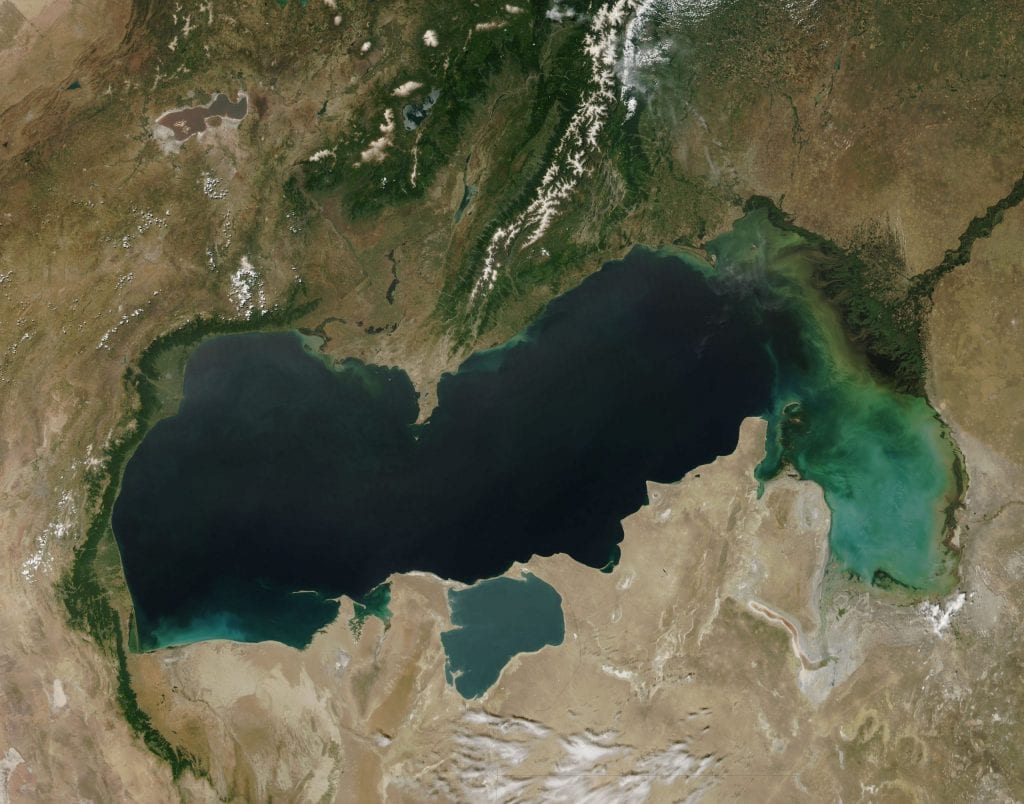
The Caspian Sea is the largest enclosed body of water on Earth, lying between Europe and Asia and surrounded by five countries. It is salty, but only about a third as salty as the ocean, so you cannot drink it, though you can swim in it. It has no outlet to any ocean, which is why scientists argue about whether it is really a sea or the world’s biggest lake.
It is also shrinking. Here are the facts about this strange, salty, landlocked sea.
Quick answers
Is it salt water or fresh water? Slightly salty: about 1.2% salt, roughly a third of normal seawater.
Can you drink it? No. It is too salty to drink safely.
Can you swim in it? Yes. There are popular beaches in Azerbaijan, Kazakhstan, Russia, Turkmenistan and Iran.
Is it landlocked? Yes. No river flows out of it, and it has no link to any ocean.
Size: about 371,000 km², a little bigger than Germany
Deepest point: about 1,025 metres
Surface level: about 29 metres below the level of the oceans
1It is the largest inland body of water in the world
At around 371,000 square kilometres, the Caspian Sea is bigger than Germany and bigger than the next several largest lakes in the world put together. Its exact size changes over time because its water level rises and falls.
2Five countries share its shores
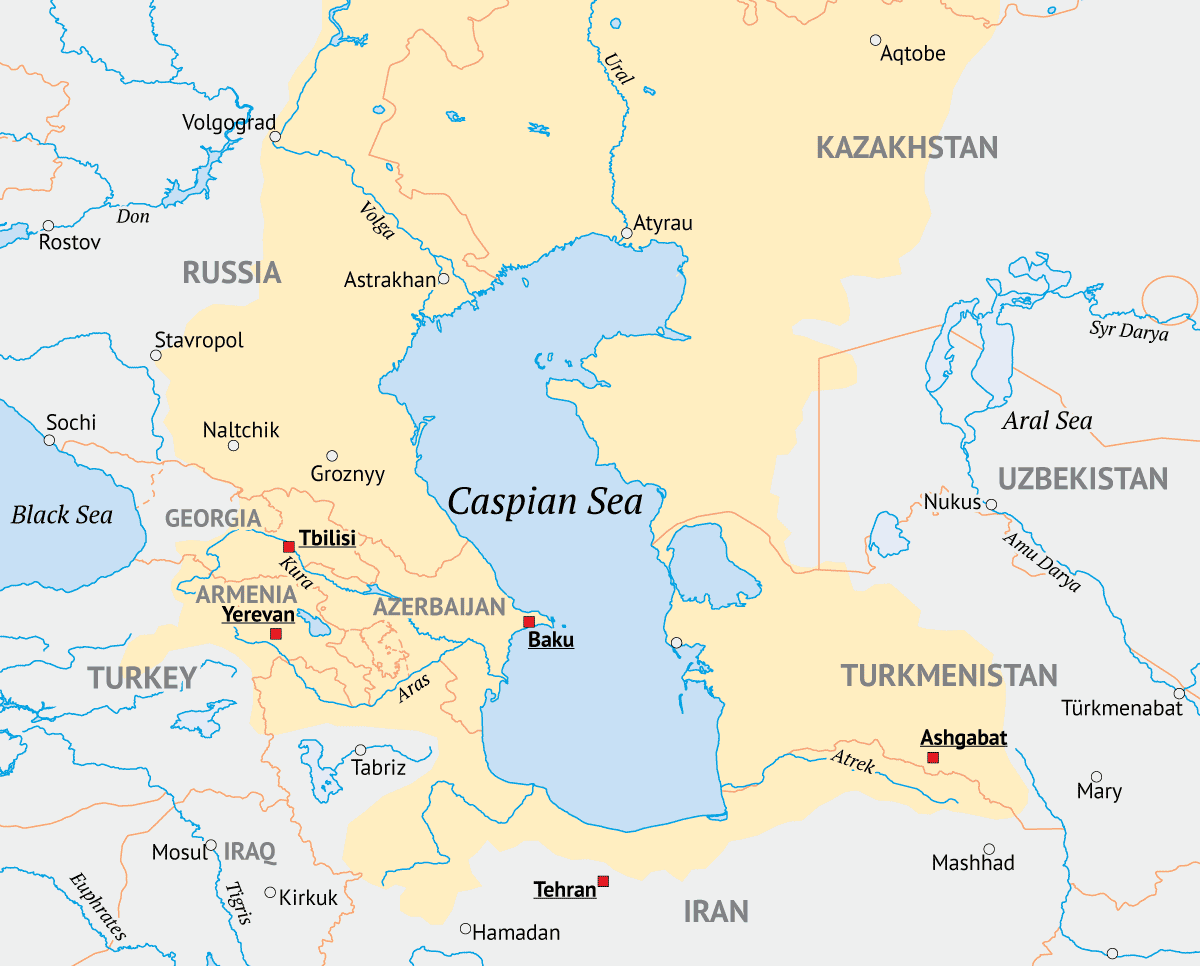
The Caspian is bordered by Russia, Kazakhstan, Turkmenistan, Iran and Azerbaijan. Baku, the capital of Azerbaijan, is the largest city on its coast.
3Is it a sea or a lake? Officially, neither
Because it is surrounded by land, many geographers call it a lake. Because it is huge and salty, it has always been called a sea. The question matters, because sea and lake rules divide up fishing, oil and gas rights differently. In 2018 the five countries signed a treaty that gave the Caspian a “special legal status”: it is treated as neither a sea nor a lake.
4It is salty, but much less salty than the ocean
The Caspian’s water is about 1.2% salt, roughly a third of the saltiness of the oceans. The north, where the Volga River pours in, is almost fresh, while the south is saltier. It is still far too salty to drink.
5Its surface is below sea level
The Caspian sits in a deep basin, and its surface lies about 29 metres below the level of the world’s oceans. If it were connected to the ocean, the sea would pour in.
6One river supplies most of its water
Around 130 rivers flow into the Caspian, but the Volga, Europe’s longest river, provides about 80% of the river water. That means the Caspian’s health depends heavily on how much rain and snow falls across Russia, far to the north.
7Water only leaves by evaporating
No river flows out of the Caspian, so the only way water leaves is by evaporation in the hot, dry climate. On its eastern side, a shallow lagoon called Kara-Bogaz-Gol evaporates so much water that it is one of the saltiest places on Earth. In 1980 the Soviet Union dammed it to save water, but the lagoon dried up into a salt flat, and the dam was removed in 1992.
8It is shrinking fast
In 2025 the Caspian’s water level fell below minus 29 metres, the lowest ever recorded, after dropping nearly 80 cm since 2020. Warmer weather means more evaporation and less water coming down the Volga. Because the northern part is so shallow, even a small drop exposes huge areas of seabed, leaving ports and fishing harbours stranded.
9The north is shallow, the south is deep
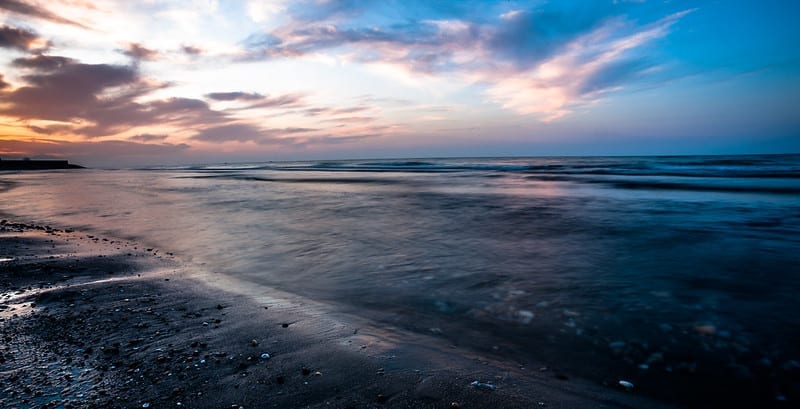
The Caspian has three parts. The northern part is very shallow, only about 5 metres deep on average, and freezes over in winter. The middle and southern parts are much deeper, and the south reaches about 1,025 metres at its deepest point.
10It is a leftover piece of an ancient ocean
Millions of years ago, the Caspian was part of the Paratethys, a sea that stretched across much of Europe and Asia. As mountains rose and the land shifted, the Caspian was cut off. It became completely landlocked around 5.5 million years ago.
11It has its own seal, found nowhere else
The Caspian seal is one of the world’s smallest seals and the only marine mammal that lives in the Caspian. It is found nowhere else on Earth. Hunting, pollution and the loss of the winter ice where it breeds have caused its numbers to fall dramatically over the last century, and it is listed as Endangered.
12It was once the home of the world’s caviar
The Caspian’s sturgeon, including the giant beluga sturgeon, once produced most of the world’s wild caviar. Overfishing and poaching have pushed several species close to extinction, and international trade in wild Caspian caviar is now tightly controlled. Most caviar sold today comes from farmed fish.
13It started one of the world’s first oil booms
Oil has been collected around Baku for centuries, and in the late 1800s it became one of the first great oil industries in the world. By around 1900, the Baku oil fields produced about half of the world’s oil. Oil and gas are still pumped from beneath the Caspian today.
14Most of its islands are empty, but not all
The Caspian has around 50 islands, most of them small and uninhabited. Some are home to people, though, such as Pirallahı Island off Azerbaijan, which has its own town and is linked to the mainland by a causeway.
15It gave its name to a flying “monster”
In the 1960s, Western spy planes photographed a strange, enormous aircraft skimming the Caspian. Nicknamed the “Caspian Sea Monster”, it was a Soviet ekranoplan, a cross between a plane and a ship that flew just a few metres above the water. It was over 90 metres long, one of the largest aircraft of its time, and it crashed in 1980.
FAQs about the Caspian Sea
Is the Caspian Sea fresh water or salt water?
Salt water, but only mildly salty: about 1.2% salt, around a third of normal seawater. The northern end near the Volga is almost fresh.
Can you drink water from the Caspian Sea?
No. It is too salty to drink safely without being desalinated.
Can you swim in the Caspian Sea?
Yes. Its beaches are popular in summer, especially around Baku in Azerbaijan, Aktau in Kazakhstan and along Iran’s northern coast.
Is the Caspian Sea landlocked?
Yes. It is completely surrounded by land and has no natural connection to any ocean.
Why is the Caspian Sea shrinking?
Mainly because warmer weather increases evaporation and less water flows in from the Volga River. Its level hit a record low in 2025.
Which countries border the Caspian Sea?
Russia, Kazakhstan, Turkmenistan, Iran and Azerbaijan.
Sources and further reading
Explore more: facts about the Ural Mountains, facts about the Mariana Trench and more facts about seas and oceans.
Do you know any more fun facts about the Caspian Sea? Share them in the comments below!
Spotted something wrong? Suggest a correction
We check every suggestion and update articles when facts change. Thank you for helping keep facts.uk accurate.
Leave a Reply