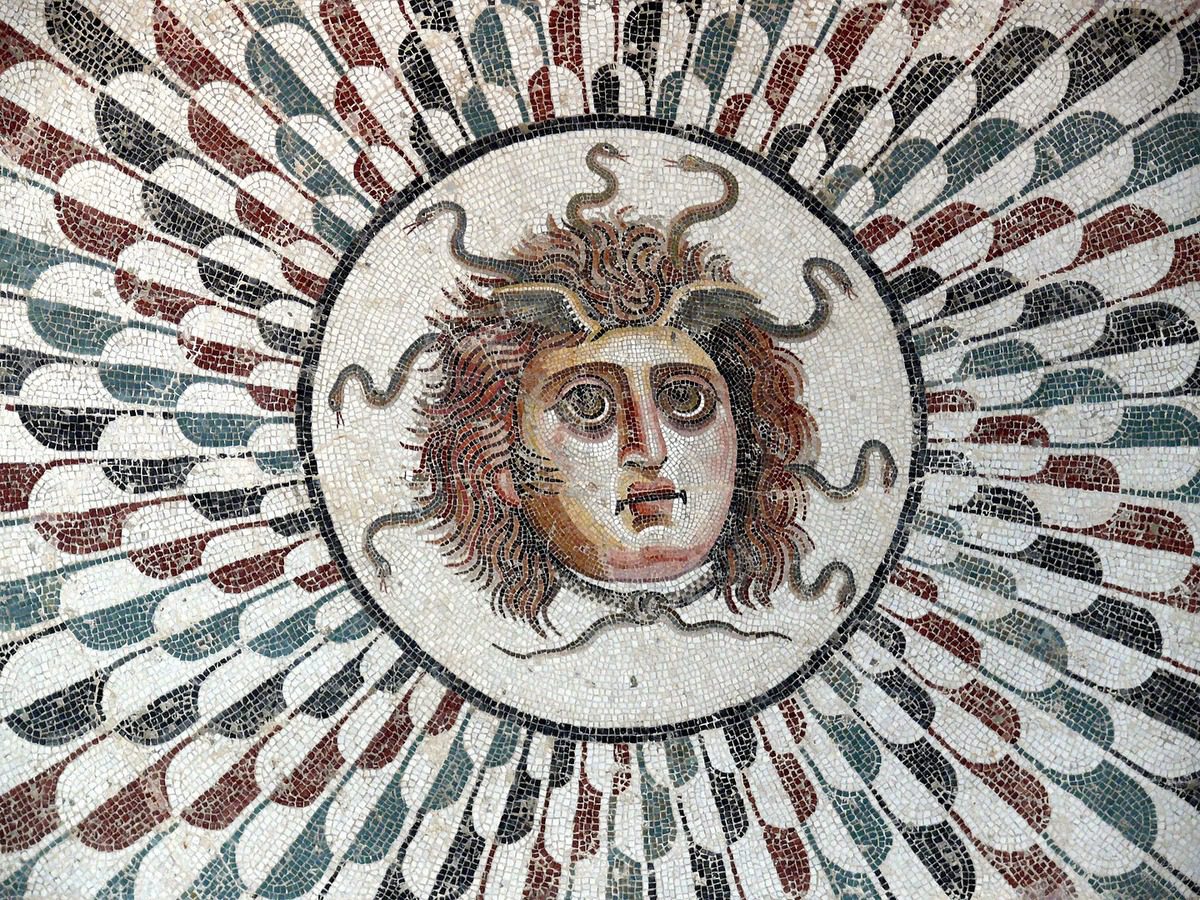
Medusa is the snake-haired Gorgon of Greek mythology whose stare could turn people to stone. Her story has been told in very different ways over almost 3,000 years, from a winged monster with tusks to a young woman punished for something that was not her fault. Here are 19 facts about Medusa.
1Medusa was one of three Gorgon sisters.
Her sisters were called Stheno and Euryale. The Greek poet Hesiod and later writers say all three were daughters of the ancient sea gods Phorcys and Ceto.
2She was the only one of the three who could die.
Stheno and Euryale were immortal, but Medusa was mortal. That is why the hero Perseus was sent to bring back her head and not one of her sisters’.
3The Gorgons lived at the edge of the known world.
Hesiod’s poem the Theogony places them beyond the great river Oceanus, which the Greeks believed circled the earth, close to the Hesperides, the nymphs of the evening.
4In older stories she was a monster from the start.
Early Greek writers and artists show the Gorgons as frightening creatures from birth. One ancient handbook of myths, the Bibliotheca, describes them with snakes for hair, big tusks like a pig’s, bronze hands and golden wings.
5The tale of a beautiful woman cursed by Athena comes mainly from the Roman poet Ovid.
In his Metamorphoses, written about 2,000 years ago, Medusa was a beauty with many suitors who was famous for her hair. The sea god (Neptune to the Romans, Poseidon to the Greeks) attacked her in the temple of Minerva (Athena). The goddess punished Medusa, not the god, by turning her hair into snakes.
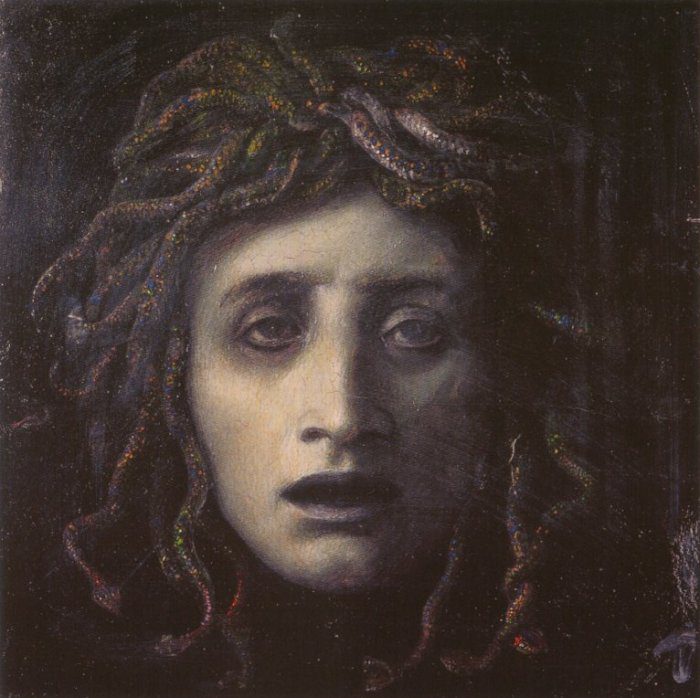
6Anyone who looked at her face was turned to stone.
This deadly gaze is Medusa’s best-known power. In the myths it worked even after her death, which is why her severed head became such a feared weapon.
7Perseus, the hero who killed her, was a son of Zeus.
Perseus is sometimes wrongly called a son of Poseidon. In the myths his parents were Zeus and Danaë, a princess of Argos. King Polydectes of Seriphos wanted Perseus out of the way and ordered him to fetch Medusa’s head.
8Perseus had a whole kit of magical gifts.
Nymphs gave him winged sandals, a special bag for the head and the helmet of Hades, which made the wearer invisible. Hermes gave him a sickle. To find the nymphs, Perseus first tricked the Graeae, three old sisters who shared one eye and one tooth.
9He never looked straight at her.
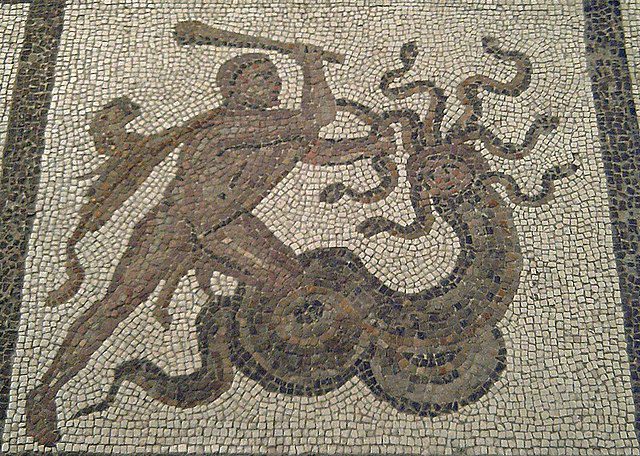
With Athena guiding his hand, Perseus watched Medusa’s reflection in a polished bronze shield and cut off her head. In Ovid’s version, Medusa and her snakes were asleep when he struck.
10The winged horse Pegasus was her son.
When Medusa was beheaded, Pegasus and his brother Chrysaor, a warrior with a golden sword, sprang from her neck. Ancient writers say their father was Poseidon.
11Her blood was said to have filled Libya with snakes.
As Perseus flew over the North African desert with the head, drops of blood fell to the sand and turned into snakes. Both the Greek poet Apollonius of Rhodes and Ovid tell this story to explain the region’s many serpents.
12One myth says she made coral hard.
Ovid wrote that Perseus laid the head on a bed of sea plants, which turned to stone at its touch. He said this is why coral is soft under water but hardens in the air.
13Perseus used the head as a weapon.
On his way home he rescued the Ethiopian princess Andromeda, who had been chained to a rock for a sea monster. Back on Seriphos, he held up the head and turned King Polydectes to stone.
14Athena ended up wearing Medusa’s face.
Perseus gave the head to Athena, who placed it on her shield or breastplate, known as the aegis. A Gorgon face on its own is called a gorgoneion, and the Greeks put it on shields, buildings and objects to scare away evil.
15A famous bronze statue of Perseus holding her head stands in Florence.
Benvenuto Cellini’s Perseus with the Head of Medusa was ordered by Duke Cosimo I de’ Medici in 1545 and unveiled in 1554. It still stands in the Loggia dei Lanzi, an open-air gallery on the Piazza della Signoria.
16Two Medusa heads hold up columns under Istanbul.
In the Basilica Cistern, a huge Byzantine water store, two carved Medusa heads were reused as column bases. One lies on its side and the other is upside down. Nobody knows for certain why, and the idea that it was done to block her gaze is a legend.
17Her head is on the flag of Sicily.
Sicily’s regional flag, made official by a law of 4 January 2000, shows the Trinacria: a Gorgon head in the centre with three bent legs and ears of wheat.
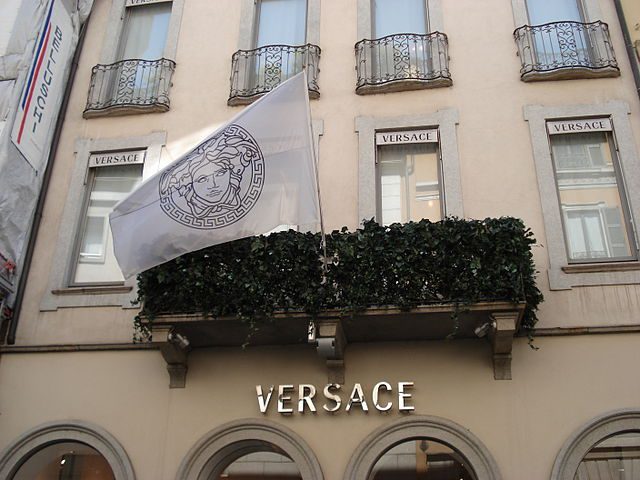
18The fashion house Versace uses Medusa as its logo.
Its gold Medusa head is one of the best-known fashion logos in the world, and it is based on the classical gorgoneion.
19Jellyfish are named after her.
Scientists call the free-swimming, bell-shaped stage of a jellyfish a “medusa”. The name was chosen by the Swedish naturalist Carl Linnaeus in the 18th century, because the long, trailing tentacles reminded people of Medusa’s snaky hair.
FAQs about Medusa
Why did Athena turn Medusa into a Gorgon?
In Ovid’s version, Medusa was attacked by Poseidon inside Athena’s temple, and Athena punished Medusa by changing her hair into snakes. Older Greek myths do not have this story: there, Medusa was simply born a Gorgon.
Was Medusa a goddess?
No. Medusa was a Gorgon, the daughter of the sea gods Phorcys and Ceto, but unlike her two sisters she was mortal.
Who killed Medusa?
The Greek hero Perseus, a son of Zeus, cut off her head while looking at her reflection in a bronze shield. He was helped by Athena and Hermes.
Sources and further reading
- Theoi Greek Mythology: Medusa and the Gorgons
- Theoi Greek Mythology: Perseus
- Ovid, Metamorphoses Book IV (translated by A. S. Kline)
Explore more: facts about Olympus, facts about Greece and facts about snakes.
Do you know any fun facts about Medusa? Share them in the comments below!
Spotted something wrong? Suggest a correction
We check every suggestion and update articles when facts change. Thank you for helping keep facts.uk accurate.

Leave a Reply