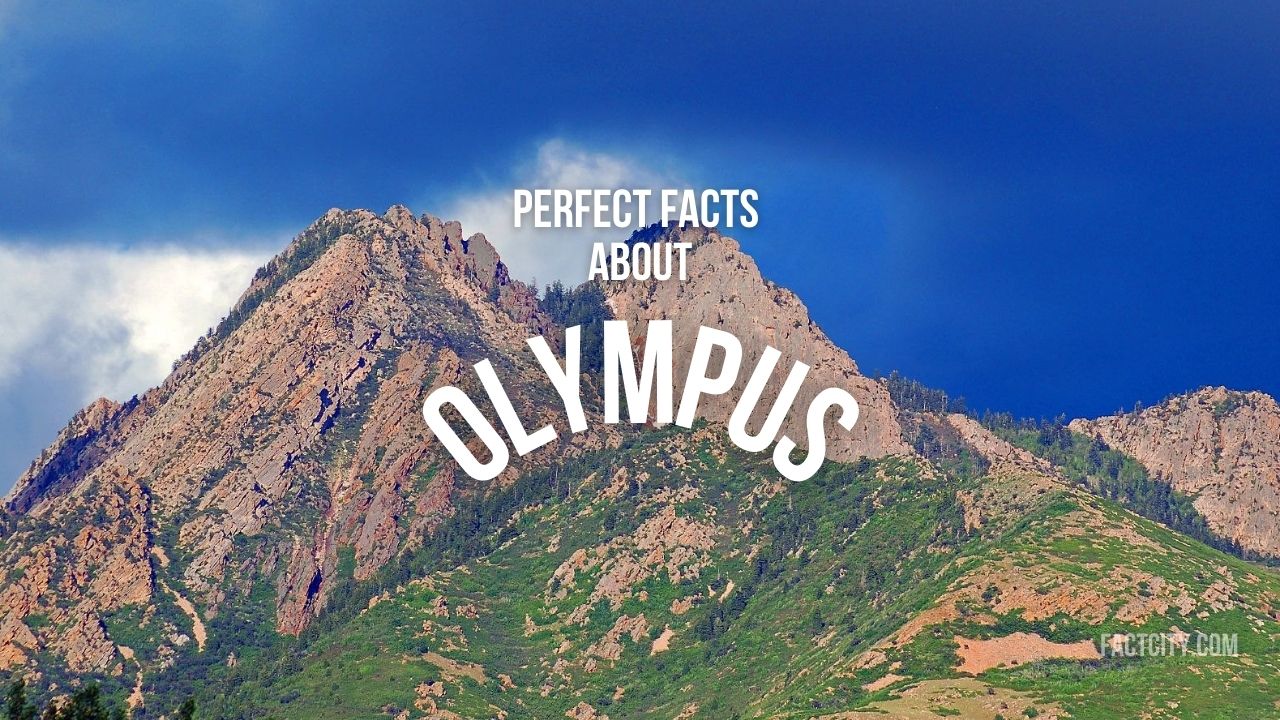
Mount Olympus is the highest mountain in Greece and, in Greek mythology, the home of Zeus and the other great gods. It is a real place that people climb every summer, a protected park full of rare plants and, since 2026, a UNESCO World Heritage Site. Here are 19 facts about Olympus.
1Olympus is a real mountain, the highest in Greece.
Many people know Olympus only from myths, but it is a real mountain range in northern Greece. Its highest point stands about 2,918 metres (9,573 feet) above sea level. A survey published in 2023 measured it at 2,917.7 metres.

2It is the second-highest mountain in the Balkans.
Only Musala in Bulgaria, at about 2,925 metres, is higher on the Balkan Peninsula. Olympus beats it for fame, though.
3It rises almost straight up from the sea.
Olympus stands on the border between Thessaly and Macedonia, about 80 km southwest of Thessaloniki, close to the Aegean Sea. Its summit towers almost 3,000 metres above the coast, so it looks huge even from far away.
4Olympus has 52 peaks.
The massif has 52 peaks and many deep gorges. The highest peak is called Mytikas, which means “nose” in Greek.
5The “Throne of Zeus” is not the highest peak.
Mytikas is often wrongly called the Throne of Zeus. That name really belongs to Stefani, a steep, dramatic peak just over 2,900 metres high, which sits close to Mytikas.
6The summit was first climbed in 1913.
The first recorded modern ascent of Mytikas was on 2 August 1913. The Greek guide Christos Kakkalos reached the top with two Swiss climbers, Frédéric Boissonnas and Daniel Baud-Bovy.
7In myth, it was home to the twelve Olympian gods.
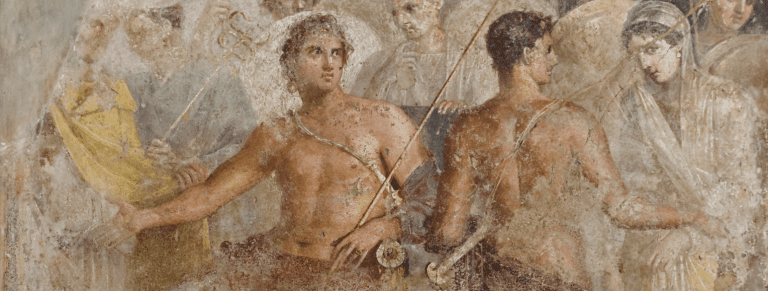
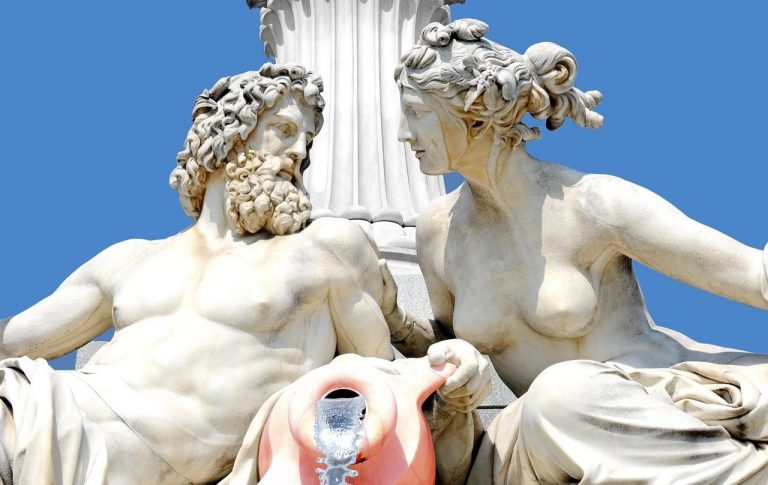
The ancient Greeks believed the most important gods lived on Olympus, which is why they are called the Olympians. They include Zeus, Hera, Athena, Apollo, Artemis, Aphrodite, Ares, Hermes, Hephaestus, Demeter and Poseidon, with Hestia or Dionysus as the twelfth, depending on the list.
8Hephaestus built the gods’ homes.
In Homer’s Iliad, each god has a house on Olympus built by Hephaestus, the god of fire and metalwork. He also built Hera a private chamber of her own.
9Its gates were made of cloud.
The Iliad describes the gates of the sky on Olympus as a thick cloud. They were guarded by the Horae (the Hours), goddesses who opened and closed them for the gods.
10The gods fought the Titans from Olympus.
In the poet Hesiod’s story of the Titanomachy, the young gods fought from Mount Olympus and the older Titans from Mount Othrys, further south. The war lasted ten years and ended with the Titans locked away in Tartarus.
11The Muses were said to come from its foothills.
Ancient tradition placed the nine Muses, goddesses of the arts, in Pieria at the northern foot of Olympus. High on the mountain, at about 2,550 metres, is a wide stretch of land called the Plateau of the Muses.
12A sacred city of Zeus lies at its foot.
Dion, near the base of Olympus, was the most important sanctuary of Zeus in ancient Macedonia. Around 400 BC, King Archelaus started a festival of games there in honour of Zeus and the Muses.
13The Olympic Games were not held on Olympus.
The ancient Olympics took place at Olympia, in the Peloponnese in southern Greece, hundreds of kilometres away. Olympia was a sanctuary of Olympian Zeus, which is how the two places share a name.
14It was Greece’s first national park.
Olympus became Greece’s first national park in 1938. Its forests, alpine meadows and rocky slopes have been protected for more than 85 years.

15UNESCO made it a Biosphere Reserve in 1981.
In 1981, UNESCO named Olympus a Biosphere Reserve, a title for places where nature and people live side by side and conservation is studied.
16Nearly 2,000 kinds of plant grow there.
Olympus supports about 1,983 types of plant, more than a quarter of all of Greece’s flora. More than 20 of them grow naturally nowhere else in the world.
17Chamois live on its cliffs.
The Balkan chamois, a nimble wild goat-antelope, lives on the mountain’s steep rocks. Olympus is also home to brown bears and rare birds of prey.
18It became a World Heritage Site in 2026.
In July 2026, UNESCO added the wider area of Mount Olympus to the World Heritage List as a mixed site, for both its nature and its culture. It became Greece’s 21st World Heritage Site and its third mixed site, after Meteora and Mount Athos.
19The biggest volcano on Mars is named after it.
Olympus Mons, Latin for “Mount Olympus”, is a giant volcano on Mars. It rises more than twice as high as Mount Everest, making it one of the tallest mountains in the Solar System.
FAQs about Olympus
What is Mount Olympus called today?
It is still called Olympus (Olympos in Greek). Its highest peak is Mytikas, and the peak known as the Throne of Zeus is Stefani.
Can you climb Mount Olympus?
Yes. Olympus is the most popular hiking summit in Greece. Most climbers start from the town of Litochoro, on the mountain’s eastern side.
Did the ancient Greeks think the gods really lived on Mount Olympus?
Yes. In Greek myths, Zeus and the other Olympian gods lived in palaces on the mountain, above the clouds, and gathered there for feasts and councils.
Sources and further reading
- Wikipedia: Mount Olympus
- Theoi Greek Mythology: Olympus, home of the gods
- Greek News Agenda: The Greater Olympus Area inscribed on the UNESCO World Heritage List
Explore more: facts about Zeus, facts about the Greek gods and facts about Greece.
Do you know any fun facts about Olympus? Share them in the comments below!
Spotted something wrong? Suggest a correction
We check every suggestion and update articles when facts change. Thank you for helping keep facts.uk accurate.
Leave a Reply