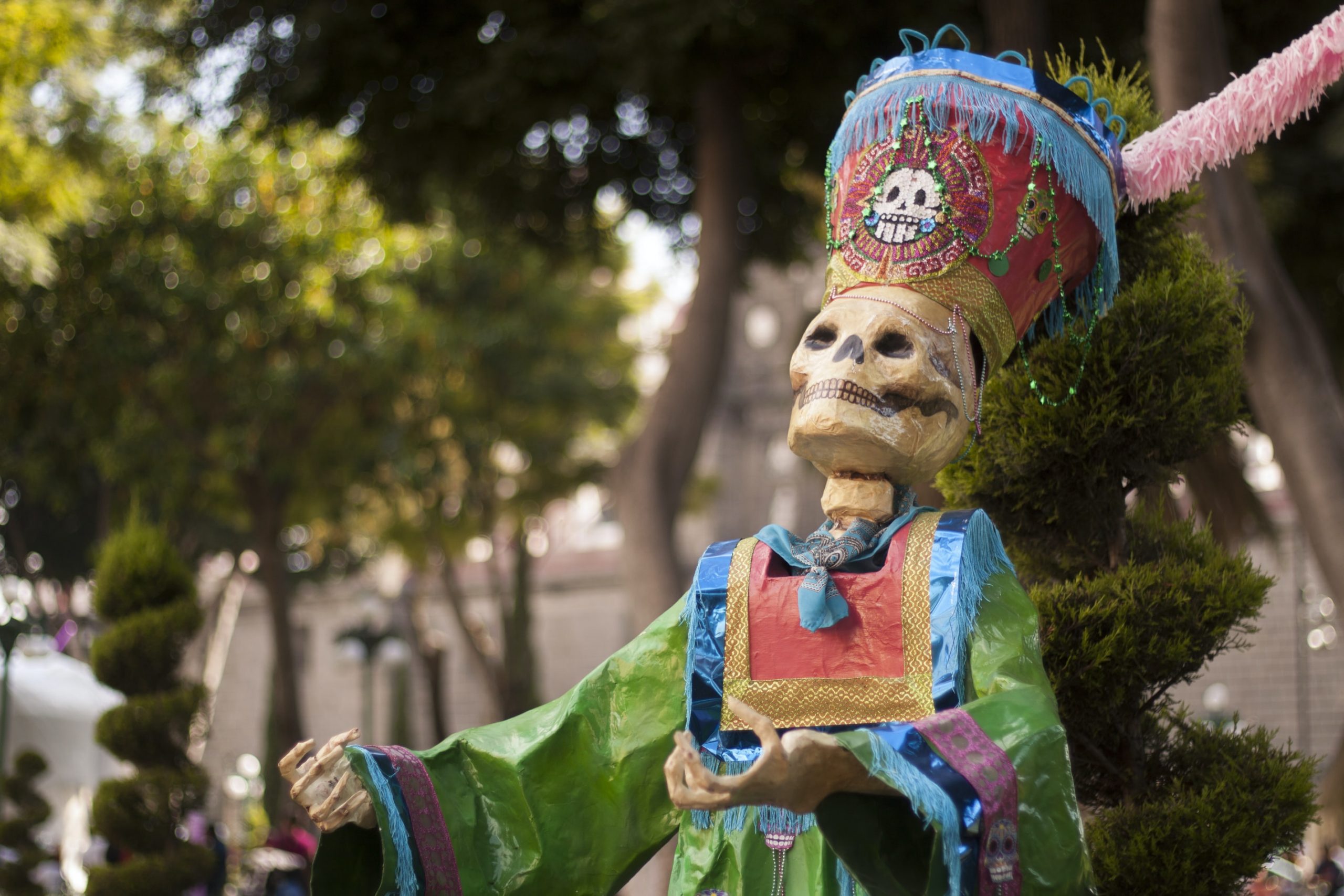
The Day of the Dead, or Día de Muertos, is Mexico’s most colourful festival. Every year on 1 and 2 November, families welcome back the spirits of loved ones who have died, with flowers, candles, food and music. It is not a sad occasion, and it is not Mexican Halloween. Here are 12 facts about the Day of the Dead.
1It is held on 1 and 2 November.
Traditionally, 1 November is for children who have died, sometimes called Día de los Angelitos (Day of the Little Angels), and 2 November is for adults. In some places the preparations and celebrations begin in the last days of October.
2It is not Mexico’s version of Halloween.
The two fall at the same time of year, but they have different roots and a different spirit. Halloween is about scares and costumes, while the Day of the Dead is a family celebration of the lives of people who have died.
3It blends Indigenous and Catholic traditions.
The Aztecs and other peoples of ancient Mexico held festivals for the dead long before the Spanish arrived. After the Spanish conquest in the 1500s, these customs merged with the Catholic feasts of All Saints’ Day and All Souls’ Day, which fall on the same two dates.

4Families build altars called ofrendas.
An ofrenda is a home altar decorated with photos of the dead, candles, flowers and the food and drink they loved in life. Many include water for the spirits’ thirst after their long journey, salt and colourful cut-paper banners called papel picado.
5Marigolds show the spirits the way home.
The bright orange Mexican marigold, called cempasúchil, is the flower of the Day of the Dead. Families scatter its petals to make paths from the street or the cemetery to the ofrenda, because its colour and strong scent are said to guide the spirits home.
6There is a special bread for the dead.
Pan de muerto, “bread of the dead”, is a soft, sweet bread baked in the weeks before the festival. It is usually round, dusted with sugar and decorated with strips of dough shaped like bones.
7Sugar skulls carry the names of the dead.
Calaveras de azúcar are skulls made of moulded sugar and decorated with bright icing. They are placed on ofrendas or given as gifts, often with a name written across the forehead.

8La Catrina began as a joke about snobs.
The famous elegant skeleton in a feathered hat was drawn by the Mexican printmaker José Guadalupe Posada in the early 1910s. It mocked Mexicans who copied European fashions and forgot their roots. The artist Diego Rivera later gave her the name La Catrina and painted her in a famous mural in 1947.
9People write funny poems about the living.
Calaveras literarias, or “literary skulls”, are short, cheeky poems that imagine friends, teachers or politicians as if they had died. Newspapers in Mexico still publish them every year.
10Some families spend the night in the cemetery.
Graves are cleaned and covered in flowers and candles. In some places, such as the island of Janitzio on Lake Pátzcuaro, families keep a candlelit vigil beside the graves through the night, sharing food, stories and music.
11A James Bond film started Mexico City’s parade.
The 2015 film Spectre opened with a huge Day of the Dead parade in Mexico City, but no such parade existed at the time. It proved so popular that the city held a real one in 2016, and it now draws crowds of hundreds of thousands every year.
12UNESCO lists it as world heritage.
In 2008, UNESCO added Mexico’s Indigenous festivity dedicated to the dead to its list of the Intangible Cultural Heritage of Humanity. The festival also inspired the films The Book of Life (2014) and Pixar’s Coco (2017).

FAQs about the Day of the Dead
When is the Day of the Dead?
On 1 and 2 November every year. The first day honours children who have died and the second honours adults.
Is the Day of the Dead sad?
No. People remember the dead with love and often with humour, celebrating their lives with food, music and decoration rather than mourning.
What is the flower of the Day of the Dead?
The Mexican marigold, or cempasúchil. Its bright orange petals are used to decorate altars and graves and to make paths for the spirits.
Sources and further reading
Explore more: facts about Halloween.
Do you know any fun facts about the Day of the Dead? Share them in the comments below!
Spotted something wrong? Suggest a correction
We check every suggestion and update articles when facts change. Thank you for helping keep facts.uk accurate.
Leave a Reply