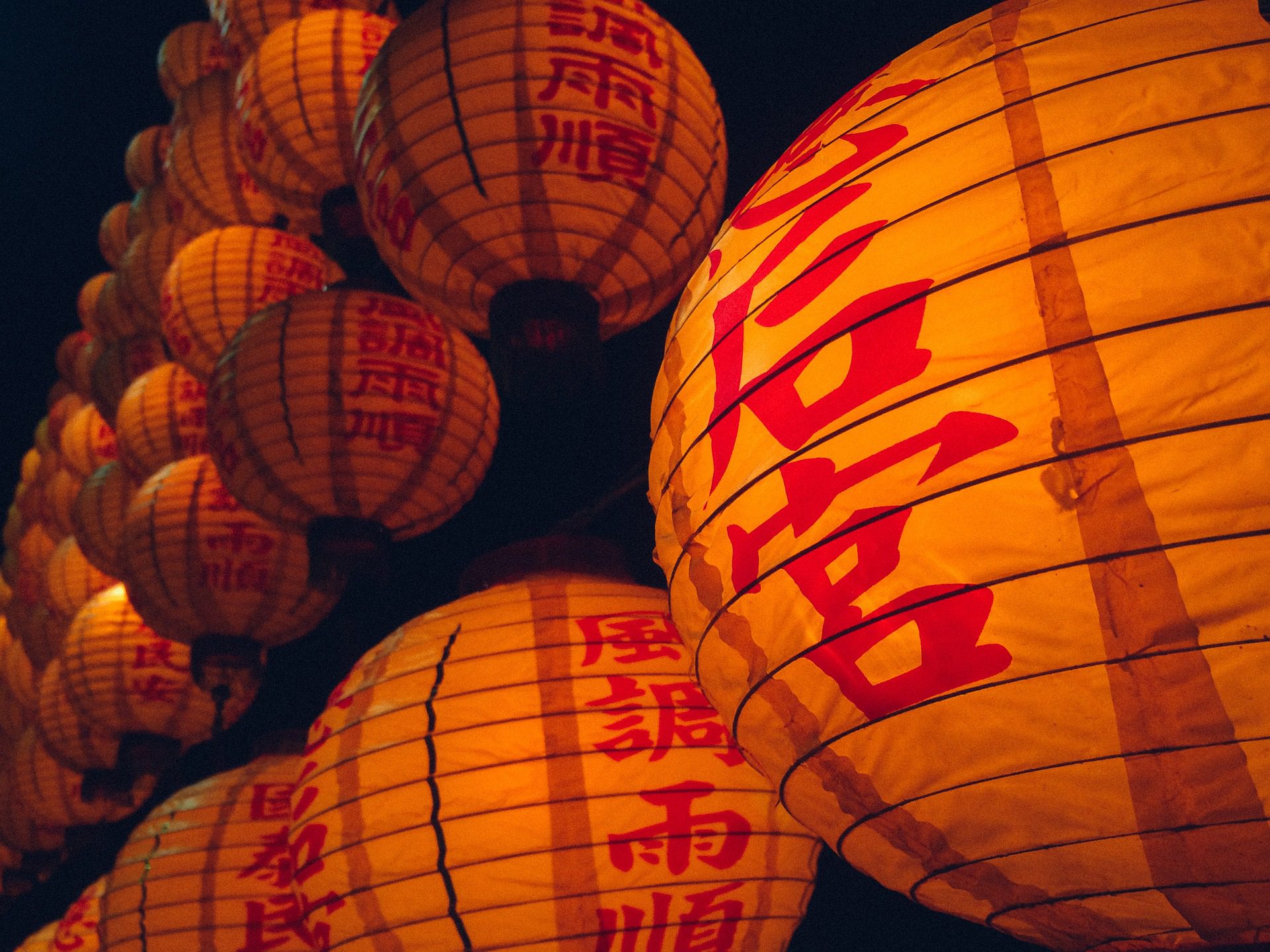
Chinese New Year is the most important festival in the Chinese calendar, celebrated by families in China and by Chinese communities around the world, including in the UK. It is a time for family dinners, red decorations, lanterns and wishes for good luck in the year ahead. Here are 17 facts about Chinese New Year.
1The date changes every year because it follows the Moon.
The Chinese calendar is lunisolar, which means it is based on both the phases of the Moon and the Earth’s orbit around the Sun. New Year’s Day is the new moon that falls between 21 January and 20 February. In 2026 it fell on 17 February, and in 2027 it falls on Saturday 6 February.
2In China it is usually called the Spring Festival.
The Chinese name is Chunjie, which means “Spring Festival”. Even though it takes place in winter in the UK, it marks the start of spring in the traditional Chinese calendar.
3UNESCO added the Spring Festival to its heritage list in 2024.
In December 2024, UNESCO inscribed the Spring Festival on its Representative List of the Intangible Cultural Heritage of Humanity. The listing covers the customs people follow to “cross the year”, from cleaning the house to visiting relatives.
4The celebrations last about 15 days and end with the Lantern Festival.
The festival runs from New Year’s Day until the first full moon of the year. The last day, the 15th day of the first month, is the Lantern Festival, when streets and homes are lit with lanterns. In 2027 the Lantern Festival falls on 20 February.

5The reunion dinner on New Year’s Eve is the most important meal.
On New Year’s Eve, families gather for a big dinner together and then stay up late to welcome the new year. Many people travel a very long way to be home for this meal.
6Homes are cleaned before the New Year, not during it.
In the days before the festival, people clean their homes, buy supplies and prepare food. Traditionally, sweeping or taking out the rubbish on New Year’s Day is avoided, because it is thought to carry good fortune out of the house. Some families wait until the fifth day to sweep again.
7Some people avoid washing their hair on New Year’s Day.
A traditional taboo says you should not wash your hair or clothes on the first day of the year, because the first two days are said to be the birthday of the Water God. Other traditional taboos include breaking plates or glasses and saying unlucky words such as “death” or “illness”.
8The colour red comes from the legend of a monster called Nian.
According to legend, a beast called Nian attacked villages every year before spring. People discovered that it was afraid of loud noises, bright lights and the colour red. That is why red decorations, lanterns and firecrackers are so closely linked with the festival. The word “nian” also means “year” in Chinese.
9Children are given money in red envelopes.
Older relatives give children and young unmarried people money in red envelopes, called hongbao in Mandarin. Traditionally the amount should be an even number, as even numbers are thought to be luckier at this time of year.

10Fish is served because its name sounds like “plenty”.
The Chinese word for fish, yu, sounds like the word for surplus or abundance. Fish is often eaten at the New Year’s Eve dinner, and some families leave a little uneaten so that they will have more than enough in the year ahead.
11Each year is linked to one of 12 animals.
The animals of the Chinese zodiac always come in the same order: Rat, Ox, Tiger, Rabbit, Dragon, Snake, Horse, Goat, Monkey, Rooster, Dog and Pig. 2026 is the Year of the Horse, and the Year of the Goat begins on 6 February 2027.
12A famous legend says the order was decided by a race.
In the best-known version of the story, the Jade Emperor held a race across a river. The clever rat rode on the ox’s back and jumped off at the finish to come first, leaving the ox in second place. The real history of the zodiac is unclear, but it was firmly established by the later Han dynasty, around 2,000 years ago.
13Year names repeat every 60 years.
As well as the 12 animals, the calendar uses five elements: wood, fire, earth, metal and water. Together they create a cycle of 60 named years, which is five rounds of the 12 animals. The current 60-year cycle began on 2 February 1984, and 2026 was a Fire Horse year, a combination last seen in 1966.
14Vietnam has a Year of the Cat instead of the Rabbit.
Lunar New Year is also celebrated outside China, for example as Tet in Vietnam. The Vietnamese zodiac shares 10 of the 12 Chinese animals but has a cat in place of the rabbit and a buffalo in place of the ox.
15It sets off the world’s biggest annual travel rush.
The 40-day travel season around the festival is called chunyun. In 2026, official figures recorded about 9.4 billion trips between regions of China, a record, compared with around 9 billion in 2025.
16A New Year’s Eve TV show holds a Guinness World Record.
China Central Television’s New Year’s Eve Gala, also called the Spring Festival Gala, has been shown on the eve of Chinese New Year since the early 1980s. Guinness World Records lists the 2012 show as the most watched national network TV broadcast, reaching 498,659,000 viewers in China.
17London hosts one of the biggest celebrations outside Asia.
Every year, London marks Chinese New Year with a parade, lion dancing and stage shows in Trafalgar Square and Chinatown. The Mayor of London has described it as one of the biggest Chinese New Year celebrations outside Asia.
FAQs about Chinese New Year
When is Chinese New Year in 2027?
Chinese New Year 2027 is on Saturday 6 February. It begins the Year of the Goat, and the celebrations end with the Lantern Festival on 20 February 2027.
What animal is the Chinese year in 2026?
2026 is the Year of the Horse, more precisely the Fire Horse. It began on 17 February 2026 and ends on 5 February 2027.
How long does Chinese New Year last?
Traditionally the festival lasts about 15 days, from New Year’s Day until the Lantern Festival at the first full moon. Official public holidays are shorter, usually around a week in mainland China.
Sources and further reading
- UNESCO: Spring festival, social practices of the Chinese people in celebration of traditional new year
- Royal Museums Greenwich: Lunar New Year dates and animals of the zodiac
- Confucius Institute for Scotland: Taboos during Chinese New Year
- Guinness World Records: Most watched national network TV broadcast (reach)
Explore more: facts about China, facts about the Chinese Year of the Dragon and facts about fireworks.
Do you know any fun facts about Chinese New Year? Share them in the comments below!
Spotted something wrong? Suggest a correction
We check every suggestion and update articles when facts change. Thank you for helping keep facts.uk accurate.

Leave a Reply