Black Friday, the day after American Thanksgiving, has become one of the biggest shopping days of the year in the UK as well as the US. In 2026 it falls on Friday 27 November. But the name has a surprisingly gloomy history, and the deals are not always what they seem. Here are 12 facts about Black Friday.
1It is always the day after Thanksgiving.
Black Friday falls on the Friday after the fourth Thursday in November, so it is always between 23 and 29 November. In the US, many people have the day off work.
2The first “Black Friday” was a financial crash.
The name was first used for Friday 24 September 1869, when two speculators, Jay Gould and Jim Fisk, tried to corner the gold market in New York and caused prices to collapse.
3Police in Philadelphia gave the shopping day its name.
In the 1950s and 1960s, Philadelphia police called the day after Thanksgiving “Black Friday” because of the huge crowds and traffic jams as shoppers and football fans poured into the city.

4The “in the black” story came later.
A popular explanation says shops go from making a loss (“in the red”) to a profit (“in the black”) on this day. The story appeared in the 1980s, long after the name was already in use.
5It reached the UK in the 2010s.
Amazon began promoting Black Friday deals in the UK in 2010, and Asda, then owned by the American chain Walmart, followed in 2013. Within a few years it was one of the busiest shopping days of the British year.
6Early Black Fridays in Britain were chaotic.
In 2014, police were called to supermarkets across the UK as shoppers scrambled for cut-price televisions. Since then, most British Black Friday shopping has moved online.
7It has grown into Black November.
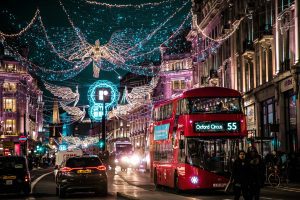
Many retailers now run Black Friday offers for a week or even the whole of November, rather than a single day.
8Many deals are not as good as they look.
When the consumer group Which? tracked Black Friday deals, it found that the vast majority were the same price or cheaper at other times of the year.
9Cyber Monday follows it.
The term Cyber Monday was coined in 2005 by the US National Retail Federation for the Monday after Thanksgiving, when people returned to work and shopped online.

10Small Business Saturday comes in between.
Small Business Saturday, encouraging people to shop at independent local businesses, began in the US in 2010 and has been held in the UK since 2013, usually on the first Saturday in December.
11Some people buy nothing at all.
Buy Nothing Day, a protest against overconsumption, began in Canada in 1992 and is held on Black Friday in North America and on the following Saturday in many other countries.
12You have extra rights when buying online.
In the UK, the Consumer Contracts Regulations usually give you 14 days to cancel most online orders after your goods arrive, and Black Friday purchases are no exception.
FAQs about Black Friday
When is Black Friday 2026?
Friday 27 November 2026, the day after American Thanksgiving.
Why is it called Black Friday?
Police in Philadelphia used the name in the 1950s and 1960s to describe the crowds and traffic after Thanksgiving. The idea of shops going “into the black” came later.
Sources and further reading
Explore more: facts about Thanksgiving and facts about Friday.
Do you know any facts about Black Friday? Share them in the comments below!
Spotted something wrong? Suggest a correction
We check every suggestion and update articles when facts change. Thank you for helping keep facts.uk accurate.