This article is general information, not medical advice. If you are worried about your health, speak to a GP or pharmacist, or call NHS 111.
Homeopathy is one of the best-known forms of alternative medicine, used by millions of people around the world. It is also one of the most criticised. Major scientific reviews have found no good evidence that it works better than a placebo for any health condition. Here are 15 facts about where homeopathy came from, how it works in theory and what the research actually shows.
1It was invented by a German doctor in the 1790s.
Homeopathy was developed by Samuel Hahnemann (1755 to 1843), a German physician. He set out its main idea in an essay published in 1796, at a time when everyday medicine included bloodletting and toxic doses of mercury.

2It all started with a malaria remedy.
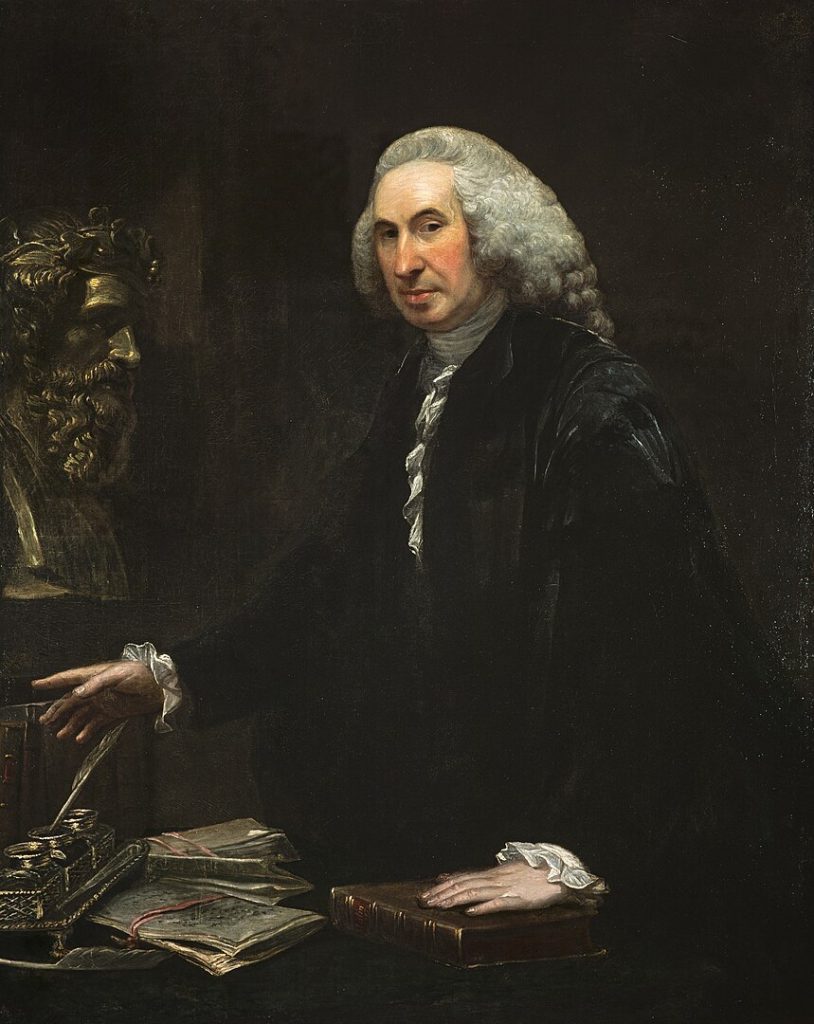
In 1790 Hahnemann was translating a book by the Scottish doctor William Cullen, who claimed that cinchona bark cured malaria because it was bitter. Hahnemann doubted that, took some bark himself, and reported feeling symptoms similar to malaria. From this he concluded that a substance which causes symptoms in a healthy person can cure the same symptoms in a sick one.
3Its core idea is “like cures like”.
The name comes from the Greek words homoios (similar) and pathos (suffering). A homeopath might, for example, offer a remedy made from onion to someone with streaming eyes and a runny nose, because cutting onions causes those same symptoms.
4Remedies are diluted again and again.
Homeopathic remedies are made by repeatedly diluting a substance in water or alcohol and shaking it hard between each step, a process called “potentisation”. Homeopaths believe that the more a remedy is diluted, the stronger it becomes.
5Many remedies contain none of the original substance.
A common strength is “30C”, which means the substance has been diluted 1 in 100, thirty times over. That is a dilution of 1 in 1060. Beyond about 12C, it becomes unlikely that a single molecule of the original substance remains, so a 30C pill is, chemically, just sugar.
6Doctors were calling it nonsense within decades.
In 1842 the American doctor and writer Oliver Wendell Holmes published an essay called Homoeopathy and Its Kindred Delusions. A few years later Sir John Forbes, a physician to Queen Victoria’s household, described homeopathy as “an outrage to human reason”.
7It once had its own NHS hospital.
The Royal London Homoeopathic Hospital joined the NHS when it was founded in 1948. It was later renamed the Royal London Hospital for Integrated Medicine, and stopped offering NHS-funded homeopathy in 2018.

8MPs said the NHS should stop paying for it.
In 2010 the House of Commons Science and Technology Committee reviewed the evidence and concluded that homeopathic remedies perform no better than placebos. It recommended that the NHS stop funding them.
9The NHS in England stopped funding it in 2017.
In 2017 NHS England advised that homeopathy should no longer be prescribed, calling it “at best a placebo and a misuse of scarce NHS funds”. The British Homeopathic Association challenged the decision in the High Court and lost in 2018.
10An Australian review found no reliable evidence it works.
In 2015 Australia’s National Health and Medical Research Council screened more than 1,800 papers and assessed 176 studies in detail. It concluded that there were no health conditions for which there was reliable evidence that homeopathy was effective.
11France stopped reimbursing it in 2021.
France, where homeopathy has long been popular, cut the share of homeopathic remedy costs paid by its national health insurance in 2020 and ended reimbursement completely on 1 January 2021, after its health authority found insufficient evidence of benefit.
12It is a big part of healthcare in India.
India is one of the world’s biggest users of homeopathy. It is officially recognised there and overseen by the government’s Ministry of AYUSH, alongside systems such as Ayurveda and yoga.
13Sceptics have “overdosed” on it in public.
In 2010, as part of the “10:23” campaign, hundreds of people in the UK and elsewhere swallowed whole bottles of homeopathic pills at the same moment. Nobody came to any harm, which was the point: the campaigners wanted to show that the pills contain nothing active.
14The biggest risk is what people stop doing.
Because the remedies are so diluted, they rarely cause direct harm. The danger is using homeopathy instead of effective treatment. Doctors have warned against “nosodes”, homeopathic products marketed as an alternative to vaccines, because they do not protect against infection.

15Homeopaths do not need to be registered in the UK.
Unlike doctors or pharmacists, homeopaths in the UK are not regulated by law, so anyone can call themselves one. The NHS advises always seeing a GP about symptoms that do not go away, and never stopping prescribed medicine without talking to your doctor.
FAQs about homeopathy
Does homeopathy work?
Large reviews, including those by the House of Commons Science and Technology Committee and Australia’s NHMRC, found no good evidence that homeopathy works better than a placebo for any health condition.
Is homeopathy available on the NHS?
Not in England. NHS England advised in 2017 that it should no longer be prescribed.
Is homeopathy the same as herbal medicine?
No. Herbal medicines contain measurable amounts of plant ingredients, which can have real effects and side effects. Homeopathic remedies are usually diluted so much that none of the original ingredient remains.
Who invented homeopathy?
The German physician Samuel Hahnemann, in the 1790s.
Sources and further reading
- NHS: complementary and alternative medicine
- House of Commons Science and Technology Committee: Evidence Check 2, Homeopathy (2010)
- NHMRC: Information Paper on homeopathy (2015)
- Britannica: homeopathy
Explore more: facts about acupuncture and facts about malaria.
Do you know any fun facts about homeopathy? Share them in the comments below!
Spotted something wrong? Suggest a correction
We check every suggestion and update articles when facts change. Thank you for helping keep facts.uk accurate.



Leave a Reply