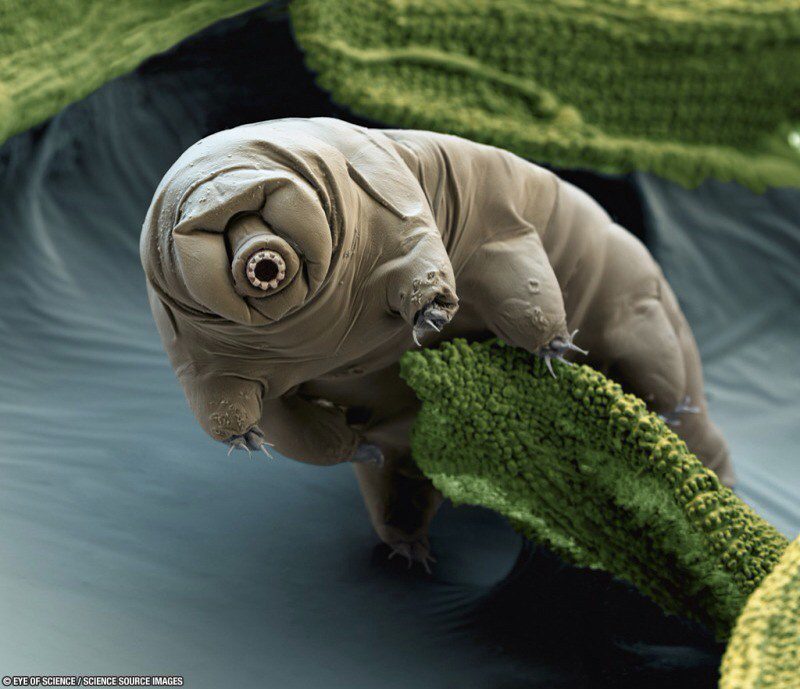
Tardigrades, also called water bears or moss piglets, are tiny eight-legged animals that live almost everywhere on Earth, including the moss on British walls and roofs. They are famous for drying out and coming back to life, and they have survived frozen moss, extreme pressure and even open space. Here are 19 facts about tardigrades.
1Tardigrades are tiny animals, not bears.
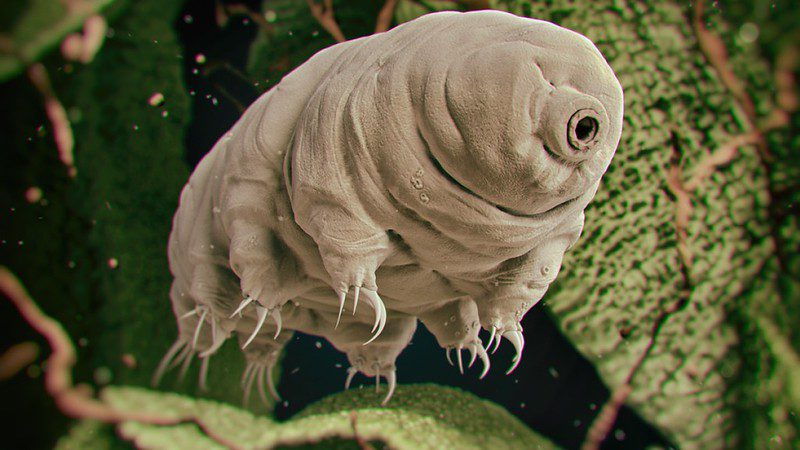
Tardigrades are invertebrates, and most are between 0.1 mm and 1.2 mm long. They have plump bodies and eight stubby legs, and each foot ends in tiny claws that help them grip moss and plants.
2A German pastor called them “little water bears” in 1773.
Johann August Ephraim Goeze first described them in 1773 and named them kleiner Wasserbär, meaning “little water bear”, because of their shape. In 1777 the Italian scientist Lazzaro Spallanzani gave the group the name Tardigrada, which means “slow steppers”.
3There are about 1,300 known species.
Tardigrades have been found everywhere from the deep sea to sand dunes and Antarctic moss. In the UK they can turn up almost anywhere damp, but they are easiest to find in moss and lichen.
4You need a microscope to see one.
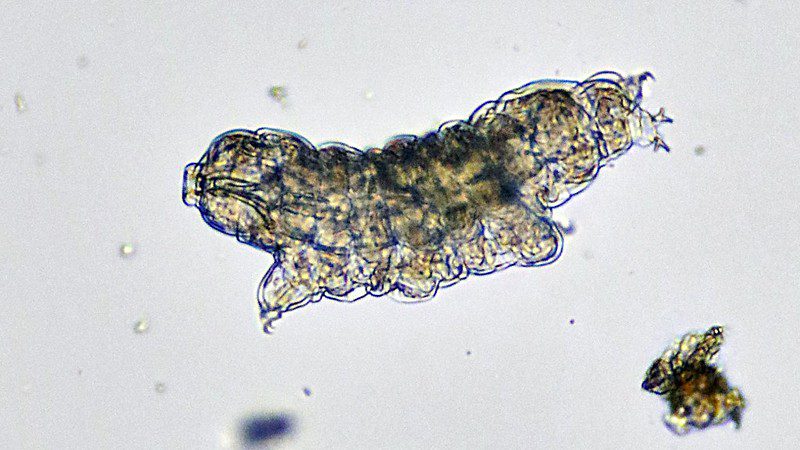
Most tardigrades are too small to spot clearly with the naked eye. A simple way to find them is to soak a clump of moss in water and look at the water under a microscope.
5They need a film of water to be active.
Tardigrades count as aquatic animals even when they live on land. They need a thin layer of water around their bodies to move, feed and breed.
6When they dry out, they curl up into a “tun”.
If their home dries out, many tardigrades pull in their legs, lose almost all of their body water and shrink into a tough little ball called a tun. Their metabolism almost stops, and they can stay like this for years until water returns. This survival state is called cryptobiosis.
7Tardigrades frozen for over 30 years have come back to life.
Japanese scientists thawed a sample of Antarctic moss collected in 1983 and kept at -20°C. In 2014 they revived two tardigrades and hatched one egg from it, and one revived adult and the hatchling went on to lay eggs of their own.
8They were the first animals shown to survive open space.
In September 2007, about 3,000 dried tardigrades spent 12 days outside a capsule on the European Space Agency’s Foton-M3 mission. Exposed to the vacuum of space and cosmic radiation, some survived and were later able to reproduce.
9They can survive extreme cold and heat for short periods.
In their tun state, tardigrades have survived temperatures from about -272°C, almost absolute zero, up to 151°C. They only cope with these extremes for a short time, not for days on end.
10Heat is their weak spot.
A 2020 study of a tardigrade from a Danish roof gutter found that half of the dried animals died after one hour at about 83°C. Active, wet tardigrades were far more fragile, and many died after a day or two at just 37°C.
11They can survive pressures of 6,000 atmospheres.
That is more than five times the pressure at the bottom of the Mariana Trench, the deepest part of the ocean.
12Scientists have fired them out of a gun.
In a 2021 study, frozen tardigrades were shot at sand targets with a light gas gun. They survived impacts at up to about 825 metres per second (nearly 3,000 km/h), but at higher speeds they were destroyed.
13A tardigrade protein protects DNA from radiation.
In 2016, Japanese researchers found a protein called Dsup (“damage suppressor”) in the tardigrade Ramazzottius varieornatus. When human cells grown in a lab were given the protein, they suffered around 40% less DNA damage from X-rays.
14Most suck the juice out of plant cells, but some are hunters.
Tardigrades have a straw-like mouth with two sharp stylets. Most pierce the cells of moss, algae and lichen and suck out the contents. Some species are carnivores that eat tiny worms called nematodes, rotifers and even other tardigrades.
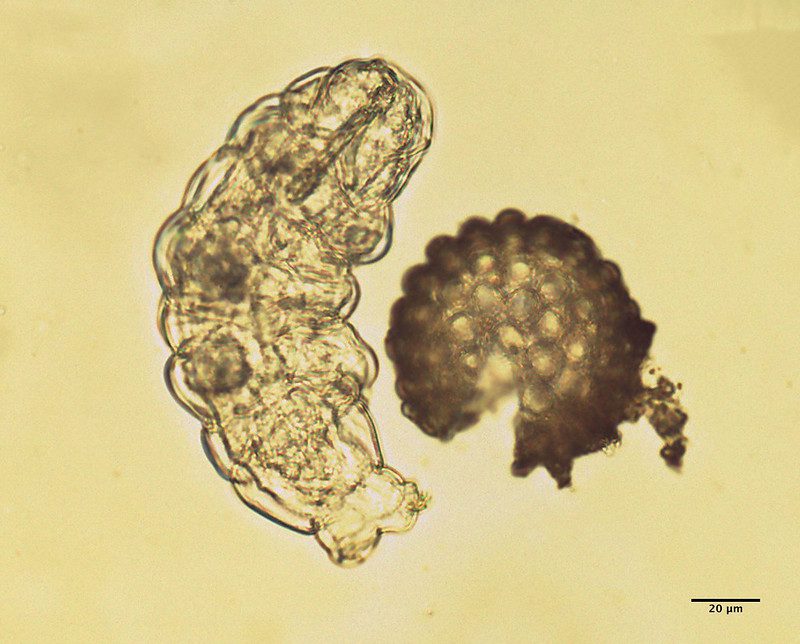
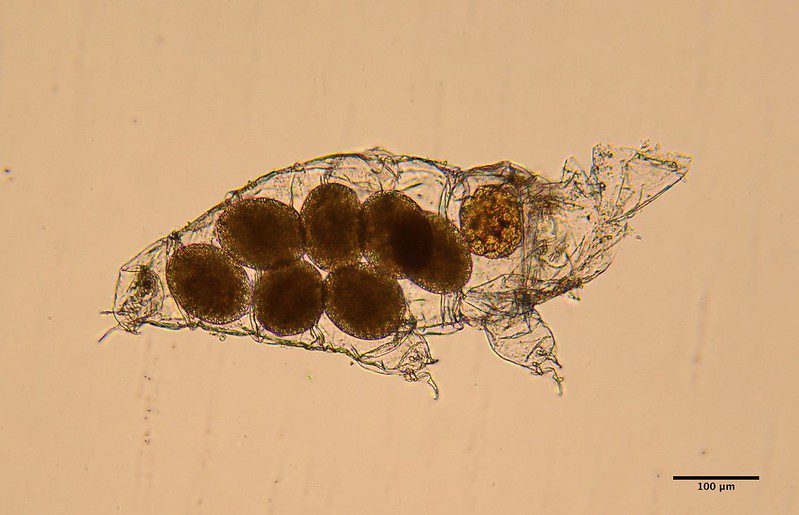
15They grow by moulting, and often lay eggs in their old skin.
A tardigrade has a tough outer cuticle that it must shed to grow. Many species lay their eggs inside the shed skin, which acts as a protective case while the eggs develop.
16Some species do not need males.
Depending on the species, tardigrades reproduce sexually or by parthenogenesis, where females lay eggs that develop without being fertilised. Some species have no known males at all.
17They have no lungs or heart.
Tardigrades take in oxygen straight through their body surface, and fluid in their body cavity carries food and oxygen around. Many species have two simple eyespots that sense light, but studies suggest they see little or no colour.
18Only four fossil tardigrades have ever been found.
All four are preserved in amber. Two of them, Beorn leggi and Aerobius dactylus, sit in one piece of Cretaceous amber found in Canada, and a 2024 study of them suggests tardigrades first appeared more than 500 million years ago.
19Thousands of tardigrades may be lying on the Moon.
On 11 April 2019, the Israeli lander Beresheet crashed on the Moon. It carried a “lunar library” that included thousands of dried tardigrades. They may still be intact, but without water they cannot become active, so they will not be spreading across the Moon.
FAQs about tardigrades
Are tardigrades immortal?
No. Active tardigrades usually live from a few months to about two years, and they can be killed by heat, crushing or long exposure to harsh conditions. They simply survive far more than most animals by drying out into a tun.
Are tardigrades harmful to humans?
No. Tardigrades are harmless to people. They are far too small to bite us and feed on plant cells or other microscopic animals.
Where can I find tardigrades in the UK?
Look in damp moss and lichen, for example on walls, roofs and tree trunks. Soak the moss in water and check the water under a microscope.
Sources and further reading
- Buglife: Water Bear aka Moss Piglet
- European Space Agency: Tiny animals survive exposure to space
- National Institute of Polar Research: Animals revived after being in a frozen state for over 30 years
- Harvard Gazette: Big discovery about microscopic water bears
Explore more: facts about bacteria, facts about the Moon and facts about space.
Do you know any fun facts about tardigrades? Share them in the comments below!
Spotted something wrong? Suggest a correction
We check every suggestion and update articles when facts change. Thank you for helping keep facts.uk accurate.

Leave a Reply