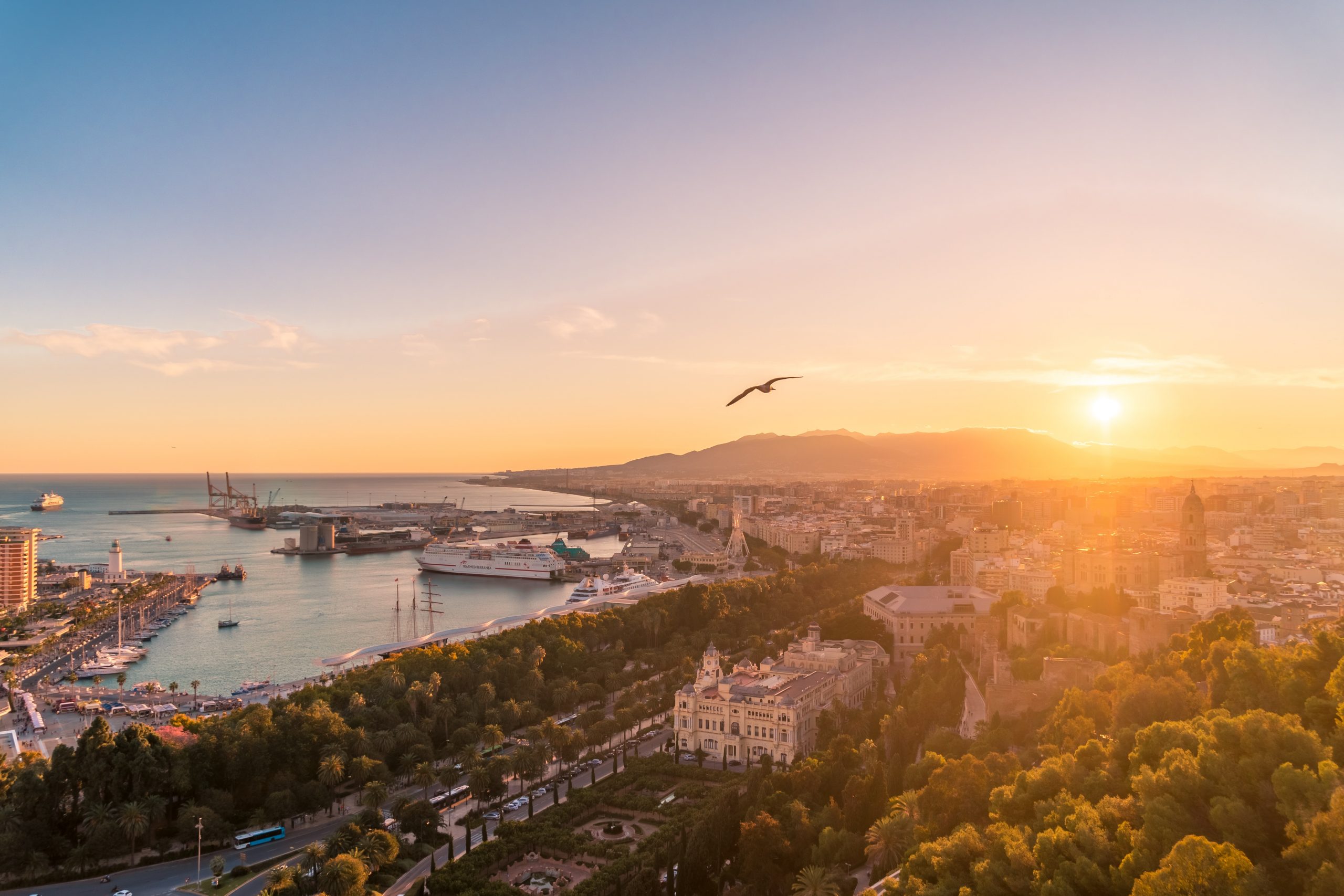
Bienvenidos a España (Welcome to Spain), a country full of stone castles, snow-capped mountains, vast monuments, sophisticated cities, and charming beaches – all of which have made it a favoured travel destination. Enjoying life, free time and siestas are a huge part of everyday Spanish culture.
Spaniards truly know how to relax and enjoy whenever possible. A famous saying is “Barriga llena, corazón contento” meaning “A full belly and a happy heart”. Pour yourself a glass of sangria, and enjoy these 42 fun facts about Spain!
1‘Spain’ isn’t the country’s official name.
Though you can call the country Spain, its official name is the Kingdom of Spain. The official name of the country in Spanish is Reino de España.
2Spain is easy to find.
The coordinates for Spain are 40.0000° N, 4.0000° W.
3Spain is seriously stacked.
Spain’s population was 47.78 million in 2022, the 30th highest in the world.
4Quality of life in Spain is reportedly fantastic.
The average life span here is 83.49 years (2019). This is slightly higher than the life expectancy in Italy and other nearby countries.
5Spain has its own language, and is in the European Union.
The official language of Spain is, of course, Spanish! Si! Euro is the official currency here. Make sure you stock up so you can enjoy plenty of tapas!
6Spain is seriously sandy.
If you combined all Spanish beaches into one stretch, it would be 8000 kilometres long (approx. 4,970 miles).
7Lots of people speak Spanish.
While English is the most widely spoken language in the world, for most it is a second language. In terms of Mother Tongue, Spanish is the second-most spoken in the world.
8Spain isn’t always hot and humid.
The Spanish climate is diverse, with temperate and clear hot summers, but more cloudy along the coast. The winters are often much colder and cloudy.
9People flock to Spain in droves.
Spain is an incredibly popular tourist destination. In 2017, the country had more than 82 million visitors from abroad.
10Spain has its own dialling code.
Want to call friends or family here? The international dialling code for Spain is +34.
11Spain is a continental heavyweight.
It ranks as one of the four largest countries in Europe. Its neighbours are Morocco, France, and Portugal, but it also shares a border with Gibraltar, a territory owned by the United Kingdom.
12Spain has an interesting division system.
Spain developed a province system in 1833 and officially recognised that system in 1978.
A Royal Decree established 50 provinces in the country and gave each province the authority to design and hang its own flag. Those provinces include regions on the mainland and the Spanish islands.
13Madrid is the place to be.
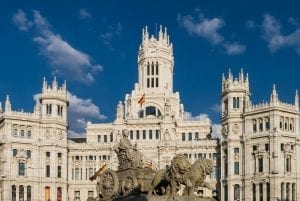
Madrid is the Capital of Spain. This city is in the central portion of the country. It ranks as both the largest city in Spain in terms of overall size as well as the largest in terms of residents.
14Madrid has an enormous train system.
The Madrid subway is the second largest underground system in Europe and the sixth-largest system in the world.
15Spain is also known for its peaks.
Mount Teide is the highest mountain in Spain and the nation’s highest elevation. It stands approximately 12,195 feet tall (3,718 metres). Mount Teide is located on Tenerife, Canary Islands.
16Spain is ‘going green’.
Spain leads the way when it comes to renewable energy. It was the first country in the world to have wind as the greatest source of its electricity.
17Spanish people double up on names.
There is a Spanish tradition to have two surnames. The first one is the father’s surname and the second one is the mother’s surname.
18Life in Spain runs at a different pace!
The Spaniards have a completely different life rhythm from other Europeans. They typically have lunch between 1 and 3pm, and dinner around 10pm.
19Spain is hugely important in the art world.
Spanish culture greatly influenced modern art from the late 1800s, with artists like Antoni Gaudí (Art Nouveau), Pablo Picasso (expressionism, cubism, and surrealism), Joan Miró (surrealism), and Salvador Dalí (surrealism).
Spain is also famous for its litreary giant Federico García Lorca.
20Name a Spanish dance – you’re probably wrong!
The Spanish flamenco is not actually a dance, it’s a musical style, which sometimes has dancing in it.
21More and more of us are heading to Spain.
Spain is a popular tourist spot and sees the number of tourists visiting increase almost every year. More than 82 million people visit Spain on an annual basis.
22The beach scene is incredible.
Several of the best beaches in Europe can be found on the coasts of the Spanish mainland as well as the Spanish islands, such as the Balearics, and Canary Islands.
23So is the Spanish nightlife!
Spain has the highest amount of bars in all of Europe, with one bar for every 132 inhabitants and with cafés and bars open during the day, evening and at night.
24Spain has an ‘ancient’ restaurant.
The restaurant called Botin in Madrid has been opened since 1725, which is a world record in terms of a restaurant that’s still operating.
25Spain is an oil giant.
Although Italy is perhaps more famous for olive oil, Spain actually produces the most – about 44% of the total amount of olive oil in the world, with the Andalusia region producing the most.
26Spain is a festival country.
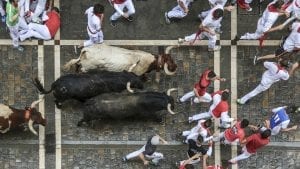
Spain is renowned for its lively festivals, including San Fermín (“running of the bulls”) in Pamplona and Tomatina (“tomato battle”) in Buñol.
More than 150,000 tomatoes are usually thrown at La Tomatina.
27It’s impossible to ‘sing’ the Spanish national anthem.
The national anthem of Spain has no words.
28It’s legal to streak in Spain!
There are no laws about public nudity in Spain.
29Spain is known for its cattle running.
Bullfighting is one of the popular sports in Spain.
30Spain’s made a huge mark on international litreature.
Don Quixote, the famous book written by the Spanish author Miguel de Cervantes in 1605, was voted the “most meaningful book of all time” in 2002 by a panel of top authors.

31Spain’s well-decorated in international football.
From 2008 to 2013, the Spanish national football team was named FIFA Team of the Year.
Spain won its first World Cup football title in 2010, which made the country the 8th country to have ever won.
32Spain is immensely important to world heritage.
As of July 2019, there are an incredible 47 UNESCO World Heritage Sites in Spain.
33Think you’ve had a Spanish tortilla? Think again.
Tortillas in Spain are not the same as tortillas elsewhere. Tortilla Española refers to a very popular egg and potato dish. Spaniards use the word “tortitas” to refer to flour/corn tortillas.
34Bread is a big deal.
Most households buy fresh bread every day. Traditionally, they are long baguettes called barras or pistolas. Bread is present (and required) at almost every meal.
35Spain changed the culinary map.
Tomatoes, potatoes, avocados, tobacco, and cacao (for chocolate) were all imported into Europe by Spain.
36Spain is wine country.
Though Spain is more famous for its red wine than white, the majority of its vineyards have white grapes.
37Spain is known for its national cuisine.
Spain is one of the world’s biggest producers of saffron, an important ingredient in paella, the most popular dish and Spain’s national dish.
38Spain has its own national drink.
If Spain had a national drink, it would be sangria. This alcoholic drink mixes wine with thin slices of fresh fruit. You can have a glass or two with lunch or dinner.
39Spain celebrates New Year in a curious way.
Spanish tradition on New Year’s Eve is to eat 12 grapes with family when the clock turns 12. The goal is to eat 1 grape each time the clock hits a beat. If you succeed, it’s said that you’ll get lucky for the rest of the year.

40Spain has an enormous salt lake.
Spain is home to Mar Menor, which is also considered as the largest salt lake in Europe.
41It’s a very fruity country!
Spain grows grain, vegetables, olives, wine grapes, sugar beets, and citrus fruits.
42Spain is a strong trade partner.
Its industry consists of textiles and apparel (including footwear), food and beverages, metals and metal manufactures, chemicals, shipbuilding, automobiles, machine tools, tourism, clay and refractory products, footwear, pharmaceuticals, and medical equipment.
Spain also exports machinery, motor vehicles; food and wine, pharmaceuticals, medicines, and other consumer goods.
FAQs about Spain
On which side of the road do drivers drive in Spain?
Drivers drive on the right side of the road in Spain. The steering wheel on Spanish cars is on the left hand side of the vehicle.
What are the national animals of Spain?
The ‘Torro’, or in English, the bull. Bulls are considered to represent the symbol of virtue. The national bird of Spain is the Iberian eagle..
Does Spain have a national flower?
Yes, the national flower of Spain is the Red Carnation – some Spanish people refer to the flowers representing the passion between lovers.
Do you know any fun facts about Spain? Share them in the comments below!
Are you fascinated with all things Spanish? Check out these fun facts about Barcelona
Spotted something wrong? Suggest a correction
We check every suggestion and update articles when facts change. Thank you for helping keep facts.uk accurate.
Leave a Reply