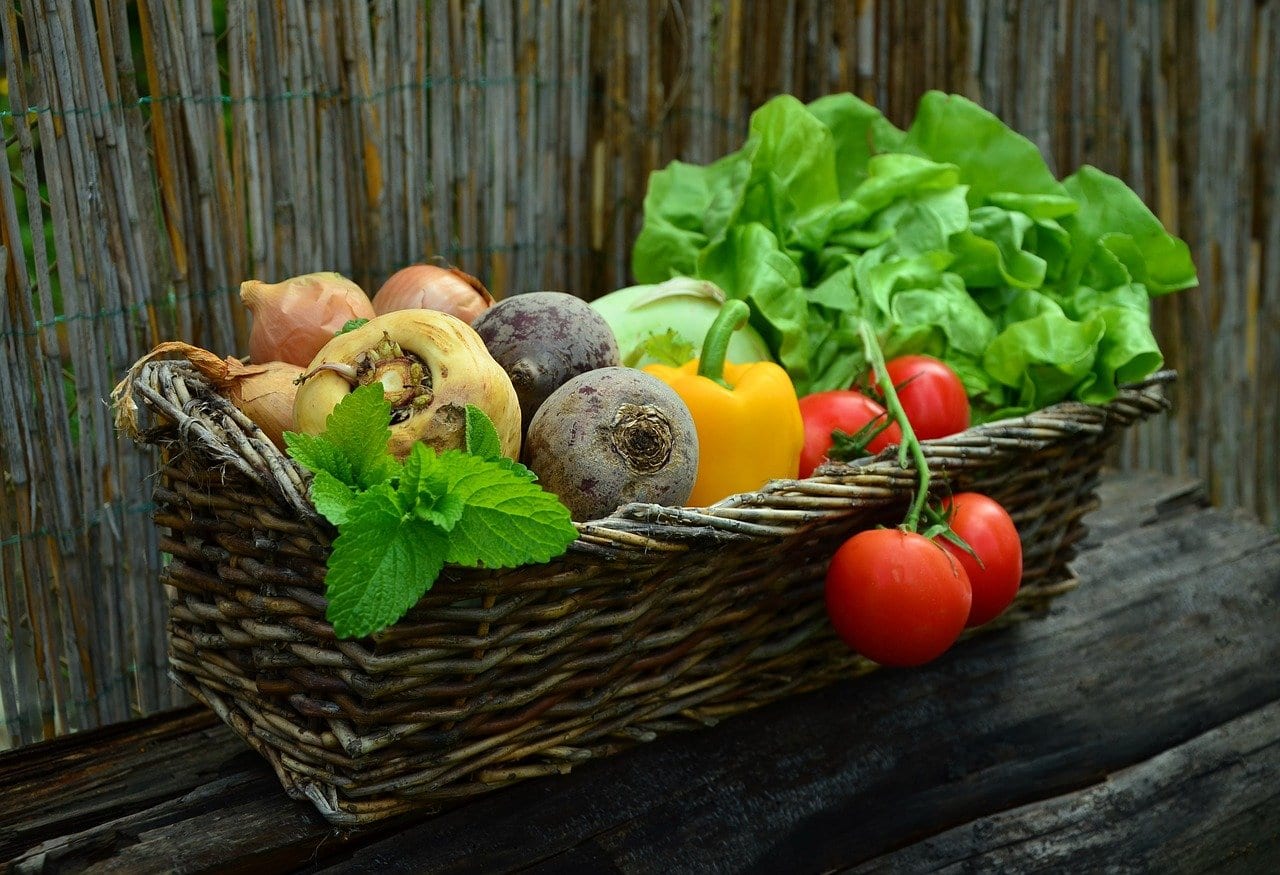
Vegetables are the parts of plants we cook and eat, from roots and leaves to stems, flowers and seeds. Behind the everyday carrot or potato are stories of court cases, wartime secrets, famine and even space travel. Here are 18 facts about vegetables.
1“Vegetable” is a cooking word, not a scientific one.
Botanists do not use “vegetable” as a category. They talk about roots, stems, leaves, flowers, fruits and seeds. That is why a tomato, a cucumber or a pepper can be a fruit to a scientist and a vegetable in the kitchen.

2A court case made the tomato a vegetable in the United States.
On 10 May 1893, the US Supreme Court ruled in Nix v. Hedden that tomatoes count as vegetables. The case was about import tax: under an 1883 law, imported vegetables were taxed but fruit was not. The judges went with how people normally use the word, not with botany.
3Tomatoes come from South America.
Wild tomatoes grow in the Andes, mainly in Peru and Ecuador. The plant was probably domesticated in Mexico long before Europeans arrived. Spanish explorers brought it to Europe in the 16th century.

4Tomatoes, potatoes, peppers and aubergines are all close relatives.
They all belong to the nightshade family, Solanaceae. The same family includes deadly nightshade and tobacco, which shows how varied it is.
5The American name “eggplant” comes from white aubergines.
Some aubergine varieties have small, white, egg-shaped fruits. These gave the plant its American name, which was first recorded in English in 1767. In the UK we use the French word “aubergine”.

6A green pepper is just an unripe pepper.
Green, yellow, orange and red bell peppers are the same species, Capsicum annuum. Green peppers are picked before they ripen. Left on the plant, they turn red, yellow or orange depending on the variety, and get sweeter.
7Cabbage, broccoli, cauliflower, kale and Brussels sprouts are one species.
All of them, along with kohlrabi, are varieties of Brassica oleracea. Over centuries, farmers bred wild cabbage to enlarge different parts of the plant: the leaves for kale, the flower heads for broccoli and cauliflower, and the side buds for Brussels sprouts. Wild cabbage still grows on coasts in western and southern Europe.

8Carrots will not give you night vision.
During the Second World War, Britain spread the story that RAF pilots could shoot down enemy planes at night because they ate lots of carrots. It helped to hide the real reason: new airborne radar. Carrots do contain beta-carotene, which the body turns into vitamin A, and a lack of vitamin A can cause night blindness. Eating extra carrots does not give anyone better than normal sight.
9The first cultivated carrots were purple and yellow.
Early carrots grown in Central Asia and Persia were mostly purple or yellow. The sweet orange carrot we know was popularised by Dutch growers in the 16th and 17th centuries. The popular story that they bred it to honour William of Orange is probably a myth.

10Onions make you cry because of a chemical gas.
Cutting an onion breaks its cells and lets enzymes mix with sulphur compounds. One enzyme, found by Japanese scientists in 2002, makes a gas called syn-propanethial-S-oxide, which stings the eyes and makes them water. The discovery won an Ig Nobel Prize in 2013.

11Spinach probably comes from Persia.
Spinach is thought to have been domesticated in the area of present-day Iran, and its English name can be traced back to a Persian word. It reached Europe through Moorish Spain, where it was written about in the 11th century.

12Sweet potatoes are not potatoes.
The sweet potato belongs to the morning glory family, Convolvulaceae, while the potato is a nightshade. The part we eat is different too: a sweet potato is a swollen root, but a potato is a tuber, which is a swollen underground stem.

13Potatoes were first grown in the Andes.
People in the Andes mountains of South America domesticated the potato more than 7,000 years ago, in the area around Lake Titicaca in southern Peru and north-west Bolivia. The International Potato Center says there are more than 4,000 varieties of native potato, most of them found in the Andes.
14A potato is about four-fifths water.
A raw potato is roughly 79% water. Most of the rest is starch, which is why potatoes go soft and fluffy when they are cooked.
15Potatoes do not count towards your 5 A Day.
The NHS counts potatoes, yams, cassava and plantain as starchy foods rather than vegetables for 5 A Day. Beans and pulses only count as one portion a day, however many you eat.
16A potato disease caused the Great Famine in Ireland.
From 1845 to 1849, a disease called late blight, caused by the water mould Phytophthora infestans, wiped out Ireland’s potato crops. About one million people died from hunger and disease, and perhaps two million more emigrated.

17Potatoes have been grown in space.
In October 1995, a University of Wisconsin-Madison experiment on the Space Shuttle Columbia grew small potatoes in orbit. It is often described as the first time a vegetable was grown in space.
18Yorkshire forced rhubarb is grown in the dark.
Rhubarb is a vegetable, as we eat its leaf stalks, even though it is usually cooked like fruit. In the Rhubarb Triangle in West Yorkshire, between Wakefield, Morley and Rothwell, it is grown in dark sheds and picked by candlelight. Yorkshire Forced Rhubarb has had protected name status since 2010, so only rhubarb grown there can use the name.

FAQs about vegetables
Is a tomato a fruit or a vegetable?
Both. Botanically, a tomato is a fruit because it grows from the flower and contains seeds. In cooking, and in a famous 1893 US court case, it is treated as a vegetable.
Is a mushroom a vegetable?
Mushrooms are cooked and sold as vegetables, but they are not plants at all. They are fungi, which are a separate kingdom of living things.
How much is one portion of vegetables?
The NHS says an adult portion of fruit or vegetables is 80g, for example 3 heaped tablespoons of cooked vegetables such as carrots, peas or sweetcorn.
Sources and further reading
- NHS: 5 A Day portion sizes
- International Potato Center: Potato
- GOV.UK: Yorkshire Forced Rhubarb protected food name
Explore more: facts about fruit, facts about spinach and facts about growing vegetables.
Do you know any fun facts about vegetables? Share them in the comments below!
Spotted something wrong? Suggest a correction
We check every suggestion and update articles when facts change. Thank you for helping keep facts.uk accurate.
Leave a Reply