Every year on 11 November, people across the UK and the Commonwealth fall silent at 11am to remember those who died serving their countries in the two world wars and later conflicts. Remembrance Day, also known as Armistice Day, is one of the most important days in the British calendar. Here are 18 facts about Remembrance Day and its traditions.
1Remembrance Day is always 11 November.
Remembrance Day, also called Armistice Day, falls on 11 November every year, the anniversary of the end of fighting in the First World War. A two-minute silence is held at 11am.
2The fighting stopped at 11am on 11 November 1918.
The Armistice was signed at about 5am in a railway carriage in the forest of Compiègne, in France. It came into force six hours later, at the eleventh hour of the eleventh day of the eleventh month.
3The first two-minute silence was in 1919.
On the first anniversary of the Armistice, King George V asked the nation to stop for two minutes at 11am. The idea is credited to the Australian journalist Edward George Honey and the South African politician Sir Percy FitzPatrick.
4There is also a Remembrance Sunday.
After the Second World War, the main national services moved to the second Sunday in November, Remembrance Sunday, to remember the dead of both world wars. Since the 1990s, the two-minute silence on 11 November itself has been widely observed again, so the UK now marks both.
5The Cenotaph was first made of wood and plaster.
Sir Edwin Lutyens designed a temporary Cenotaph in Whitehall for the Peace Day parade in July 1919. It was so popular that it was rebuilt in Portland stone and unveiled on 11 November 1920.
6“Cenotaph” means “empty tomb”.
The word comes from Greek. The Cenotaph contains no remains, and stands for all those who died and are buried elsewhere or have no known grave.
7An unknown soldier is buried in Westminster Abbey.
On 11 November 1920, the body of an unidentified British serviceman, brought back from France, was buried in Westminster Abbey to represent all those who had no known grave. His coffin was made from an oak tree at Hampton Court.
8Nobody walks on the Unknown Warrior’s grave.
It is the only tombstone in Westminster Abbey that people do not walk on. Royal brides traditionally leave their wedding bouquets on it.
9The King lays the first wreath.
At the national service at the Cenotaph on Remembrance Sunday, the monarch lays the first wreath, followed by members of the Royal Family, the Prime Minister and other leaders. Thousands of veterans then march past.
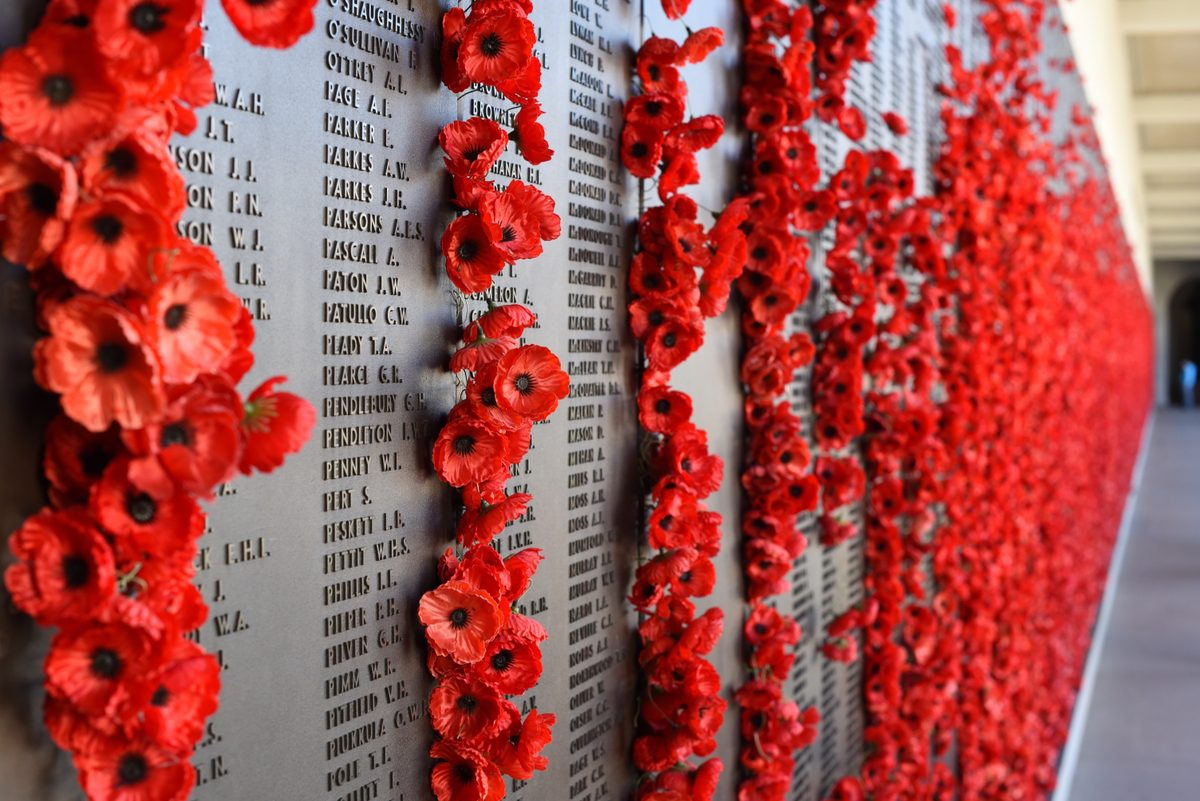
10Poppies grew on the battlefields.
Red poppies flowered in the churned-up soil of the Western Front. The Canadian doctor John McCrae described them in his 1915 poem “In Flanders Fields”, which helped make the poppy a symbol of remembrance.
11An American teacher started the poppy tradition.
Moina Michael, a teacher from Georgia in the US, began wearing a poppy in memory of the dead in 1918. A Frenchwoman, Anna Guérin, then brought the idea of selling poppies to raise money to Britain.
12The first Poppy Appeal was in 1921.
The newly formed British Legion held its first Poppy Appeal in 1921. The poppies sold out, and the money helped ex-servicemen find work and homes.
13Poppies are still made by veterans.
The Poppy Factory in Richmond, south-west London, was set up in 1922 to give work to disabled ex-servicemen, and it still employs veterans today.
14Scottish poppies are different.
Poppies made in Scotland, at the Lady Haig Poppy Factory in Edinburgh, have four petals and no leaf. Poppies in the rest of the UK have two petals and a green leaf.
15The famous words come from a poem written in Cornwall.
The lines recited at services, ending “We will remember them”, come from Laurence Binyon’s poem “For the Fallen”, which he wrote in September 1914 while sitting on the cliffs of north Cornwall.
16The Tower of London was surrounded by 888,246 poppies.
In 2014, for the centenary of the start of the First World War, the art installation Blood Swept Lands and Seas of Red filled the Tower’s moat with 888,246 ceramic poppies, one for every British and colonial military death in the war.
17There are other colours of poppy too.
White poppies, first sold in 1933, stand for remembrance and peace, and purple poppies remember animals that served and died in war, such as horses, dogs and pigeons.
18Other countries remember on 11 November.
Canada, Australia and New Zealand hold Remembrance Day on 11 November, the United States marks Veterans Day, and in France and Belgium, Armistice Day is a public holiday.
FAQs about Remembrance Day
When is Remembrance Day?
Remembrance Day is always on 11 November, with a two-minute silence at 11am.
What is the difference between Remembrance Day and Remembrance Sunday?
Remembrance Day, or Armistice Day, is always 11 November, the anniversary of the end of the First World War. Remembrance Sunday is the second Sunday in November, when the main national service at the Cenotaph takes place.
Why do people wear poppies?
Poppies grew on the battlefields of the First World War and became a symbol of remembrance. Money from the Royal British Legion’s Poppy Appeal supports members of the armed forces, veterans and their families.
Sources and further reading
Explore more: facts about the First World War.
Do you know any facts about Remembrance Day? Share them in the comments below!
Spotted something wrong? Suggest a correction
We check every suggestion and update articles when facts change. Thank you for helping keep facts.uk accurate.