
At its height, the British Empire governed around a quarter of the world’s land and almost a quarter of its people. It grew over more than three centuries, from a handful of trading posts and island colonies to a global power, and it left a mark that is still visible today in languages, borders, sport, law and the Commonwealth.
Here are the facts behind its rise and fall, including the parts that are less often told.
Quick facts about the British Empire
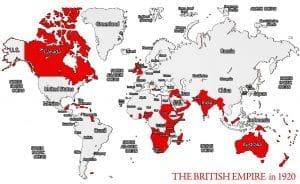
Largest extent: about 35.5 million km² (13.7 million square miles) in 1920
Share of the world’s land: roughly 24%
Population ruled: about 412 million people in 1913, around 23% of the world
Often said to have ended: 1 July 1997, with the handover of Hong Kong
What remains: 14 British Overseas Territories
Its successor: the Commonwealth, a voluntary association of 56 countries
1It was the largest empire in history
By 1920 the empire covered around 35.5 million square kilometres, roughly 24% of the Earth’s land. In 1913 it ruled about 412 million people, close to one in four people alive at the time. No empire before or since has been larger by land area.
2Its roots go back to the Middle Ages
Long before any overseas colonies, England’s medieval kings held large territories in France. Henry II, who came to the throne in 1154, ruled lands stretching from the Scottish border to the Pyrenees. Those French lands were lost piece by piece, and Calais, the last of them, fell in 1558.
3Ireland was England’s first long-term conquest
English involvement in Ireland began with the Anglo-Norman invasion of 1169. By 1500 direct English control had shrunk to a small area around Dublin known as “the Pale”, but the Tudors and Stuarts reconquered the island. Most of Ireland did not leave British rule until the Irish Free State was created in 1922.
4John Cabot reached North America in 1497, but did not found a colony
The Venetian navigator Giovanni Caboto, known in England as John Cabot, sailed from Bristol for Henry VII and landed somewhere in Newfoundland or Cape Breton in 1497. It was the first English-sponsored voyage to mainland North America, but no settlement followed.
5Newfoundland was claimed in 1583
Sir Humphrey Gilbert claimed Newfoundland for Elizabeth I in 1583, which is why it is often called England’s oldest colony. Gilbert died on the voyage home, and the first lasting settlements did not appear until the early 1600s.
6Francis Drake claimed part of California in 1579
During his voyage around the world, Sir Francis Drake landed on the coast of what is now California and claimed it for Elizabeth I as “Nova Albion”. England never followed the claim up.
7The first English colony in America vanished
Sir Walter Raleigh sponsored settlements on Roanoke Island, in today’s North Carolina, in 1585 and 1587. Virginia Dare, born there in 1587, was the first English child born in the Americas. When supply ships finally returned in 1590, the colonists had disappeared, and the “Lost Colony” has never been fully explained.
8Jamestown, founded in 1607, was the first permanent English settlement in North America
Jamestown in Virginia was set up by the Virginia Company of London in 1607. Captain John Smith, one of its early leaders, helped it survive its desperate first years. Tobacco soon made the colony profitable.
9A trading company ended up ruling India
Elizabeth I granted the East India Company its charter on 31 December 1600, and it opened its first trading post in India at Surat in 1613. Over the next 150 years the company grew from a trading business into a power with its own army that collected taxes and governed millions of people.
10Caribbean sugar made Britain rich
England settled St Kitts in 1624 and Barbados in 1627, followed by Jamaica, which it took from Spain in 1655. Sugar from these islands became one of the most valuable trades in the world, and it was built on the forced labour of enslaved Africans.
11Britain became the world’s biggest slave-trading nation
In the 1700s British ships carried more enslaved Africans across the Atlantic than those of any other country, over three million people in total. Parliament banned the British slave trade in 1807, after a long campaign by abolitionists and by enslaved people themselves.
12Slave owners were compensated, and the loan was only paid off in 2015
When slavery was abolished across most of the empire in 1833, the government paid £20 million to slave owners for the loss of their “property”, around 40% of the national budget at the time. The enslaved received nothing and were forced to keep working unpaid as “apprentices” until 1838. The money was borrowed, and the Treasury confirmed that the last of the debt was not repaid until 2015.
13New York used to be Dutch
In 1664 English ships seized the Dutch colony of New Netherland without a fight. Its main town, New Amsterdam, was renamed New York after the King’s brother, the Duke of York.
14Gibraltar has been British since 1713
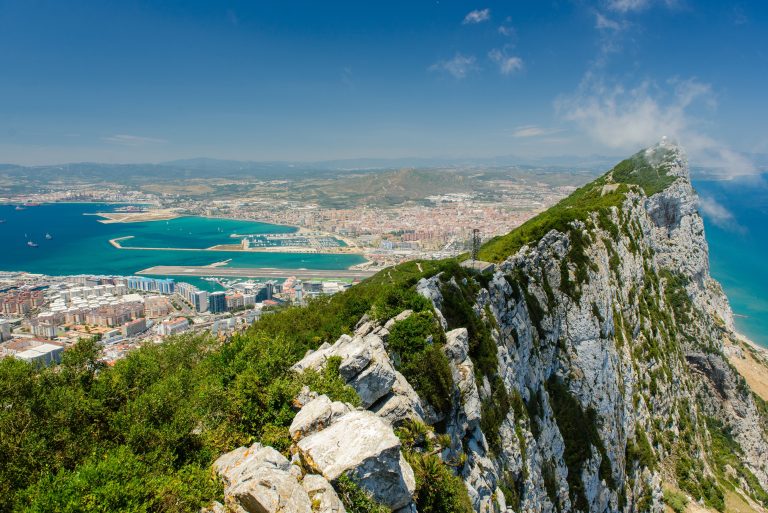
Captured in 1704, Gibraltar was handed to Britain by Spain in the Treaty of Utrecht in 1713. It remains a British Overseas Territory, and in referendums its residents have voted overwhelmingly to stay British.
15Thirteen American colonies broke away
Disputes over taxation and representation led thirteen North American colonies to declare independence on 4 July 1776. Britain recognised the United States in the Treaty of Paris in 1783, the biggest loss the empire had suffered.
16Losing America helped create modern Australia
With America closed to convicts, Britain sent them to Australia instead. The First Fleet arrived at Botany Bay in 1788, and by the time transportation ended in 1868 around 162,000 convicts had been shipped there.
17New Zealand became a colony through a treaty
The Treaty of Waitangi was signed in 1840 between the British Crown and Māori chiefs. The English and Māori versions say different things about sovereignty, and the treaty remains central to New Zealand’s politics today.
18Hong Kong was taken after the Opium War
Britain went to war with China between 1839 and 1842, largely to protect the profitable opium trade from India. Under the Treaty of Nanking in 1842, China handed over Hong Kong Island.
19A rebellion ended the East India Company’s rule
In 1857 Indian soldiers in the company’s army rose up, and the revolt spread across northern India. It was crushed, and in 1858 the British Crown took direct control of India. Queen Victoria was proclaimed Empress of India on 1 January 1877.
20Britain took a huge share of Africa
In the “Scramble for Africa” of the late 1800s, Britain gained Egypt (occupied in 1882), Sudan, Nigeria, Ghana, Kenya, Uganda, and the lands that became Zimbabwe and Zambia, among others. Some imperialists dreamed of a British railway running “from the Cape to Cairo”.
21“The sun never sets on the British Empire” was borrowed from Spain
The saying was first used about the Spanish Empire in the 1500s. It was later applied to Britain because its territories stretched so far around the globe that the sun was always shining on at least one of them.
22The empire was biggest just after the First World War
The empire did not peak in Victorian times. After 1918 Britain took control of former German and Ottoman lands, including Palestine, Iraq, Transjordan and Tanganyika, under League of Nations mandates, pushing it to its greatest size around 1920.
23The “dominions” became equal partners in 1926
The Balfour Declaration of 1926 stated that Britain and the self-governing dominions of Canada, Australia, New Zealand, South Africa, the Irish Free State and Newfoundland were “equal in status”. The Statute of Westminster in 1931 made that legal independence official.
24Churchill said the Atlantic Charter did not apply to the empire
In 1941 Winston Churchill and Franklin D. Roosevelt signed the Atlantic Charter, which promised people the right to choose their own government. A few weeks later Churchill told the House of Commons that it did not change Britain’s policy on India, Burma or the rest of the empire, which angered independence leaders.
25Indian independence came with a violent partition
Pakistan and India became independent on 14 and 15 August 1947. The partition of British India along religious lines forced an estimated 15 million people from their homes, and hundreds of thousands were killed in the violence that followed.
26The Windrush generation came to rebuild Britain
On 22 June 1948 the HMT Empire Windrush docked at Tilbury carrying hundreds of passengers from the Caribbean. Thousands more followed from across the empire and Commonwealth to fill post-war labour shortages, reshaping modern Britain.
27The Suez Crisis showed Britain’s power had faded
In 1956 Britain and France invaded Egypt to take back the Suez Canal. Under heavy pressure from the United States, they were forced to withdraw, a humiliation that showed Britain could no longer act as a world power on its own.
28The “wind of change” swept through Africa
In a speech in Cape Town on 3 February 1960, Prime Minister Harold Macmillan warned that “the wind of change is blowing through this continent”. Within a decade most of Britain’s African colonies were independent, and many Caribbean colonies followed.
29The handover of Hong Kong is often seen as the end of the empire
At midnight on 30 June 1997 Hong Kong was returned to China. Prince Charles represented the Queen at the ceremony, and the handover is widely regarded as the symbolic end of the British Empire.
30Britain still has 14 Overseas Territories
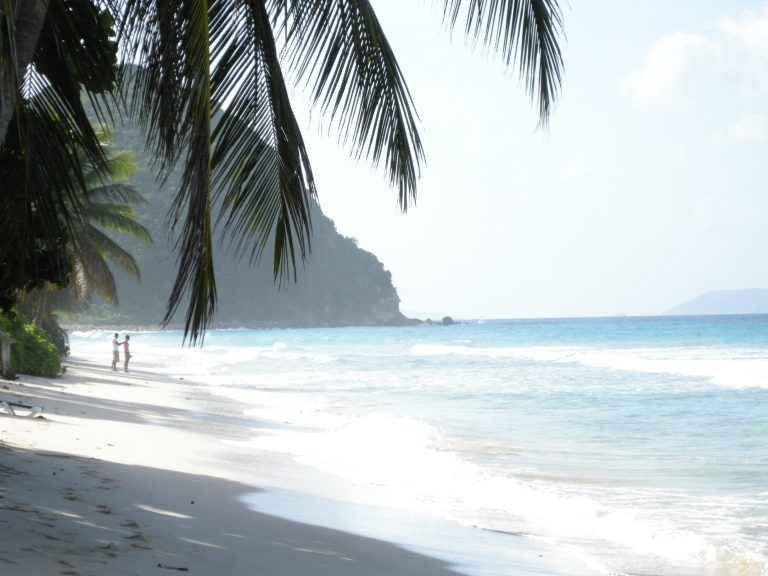
They include Gibraltar, Bermuda, the Falkland Islands, the Cayman Islands, the British Virgin Islands and the British Indian Ocean Territory. In 2025 the UK signed a treaty to hand the Chagos Islands to Mauritius while keeping the Diego Garcia military base, but in September 2026 the government confirmed the deal was on hold without US support. Jersey, Guernsey and the Isle of Man are different again: they are Crown Dependencies, not overseas territories.
31King Charles III is head of state of 15 countries
Queen Elizabeth II came to the throne in 1952 and reigned for 70 years until her death on 8 September 2022. Her son, Charles III, is King of the United Kingdom and 14 other “Commonwealth realms”, including Canada, Australia, New Zealand, Jamaica and Grenada. The number fell from 16 when Barbados became a republic in November 2021, and some realms, such as Jamaica, have taken steps towards doing the same.
32The Commonwealth includes countries Britain never ruled
The modern Commonwealth is a voluntary association of 56 countries with a combined population of around 2.7 billion people, more than 60% of them aged 29 or under. Most members were once part of the empire, but Mozambique, Rwanda, Gabon and Togo joined without any British colonial history. The King is Head of the Commonwealth, a symbolic role.
FAQs about the British Empire
Does the British Empire still exist?
No. Almost all former colonies are independent countries. Britain still has 14 Overseas Territories, but they are largely self-governing and most have chosen to remain British.
Is Canada still a British colony?
No. Canada has been fully independent for decades and took full control of its own constitution in 1982. King Charles III is still Canada’s head of state, but as King of Canada, separate from his role as King of the United Kingdom.
Why did the British Empire end?
Two world wars left Britain heavily in debt, independence movements grew stronger across the empire, and the United States and the United Nations opposed colonial rule. Holding on to colonies became too costly, politically and financially.
When was the British Empire at its largest?
Around 1920, after Britain took control of former German and Ottoman territories following the First World War.
Sources and further reading
- The Commonwealth: facts and figures
- House of Commons Library: the 2025 treaty on the Chagos Archipelago
- ITV News: Chagos Islands deal on hold (September 2026)
- US Office of the Historian: 1941 telegram on Churchill’s Atlantic Charter statement
Explore more: 19 blissful facts about the British Virgin Islands, 14 genuine facts about Gibraltar and 18 glorious facts about Guernsey.
Spotted something wrong? Suggest a correction
We check every suggestion and update articles when facts change. Thank you for helping keep facts.uk accurate.
2 responses to “32 Eye-Opening Facts About the British Empire”
-
Your comments about the queen remaining as head of state in Ireland is incorrect and regretfully typically English. The Queen is disputably head of state in Northern Ireland which covers 24% of the island, but she is not head of state in the 76% which is known as the Republic of Ireland. It would be nice to have this corrected….or am I hoping for too much?
-
Fixed! Thanks very much for your input 🙂
Leave a Reply