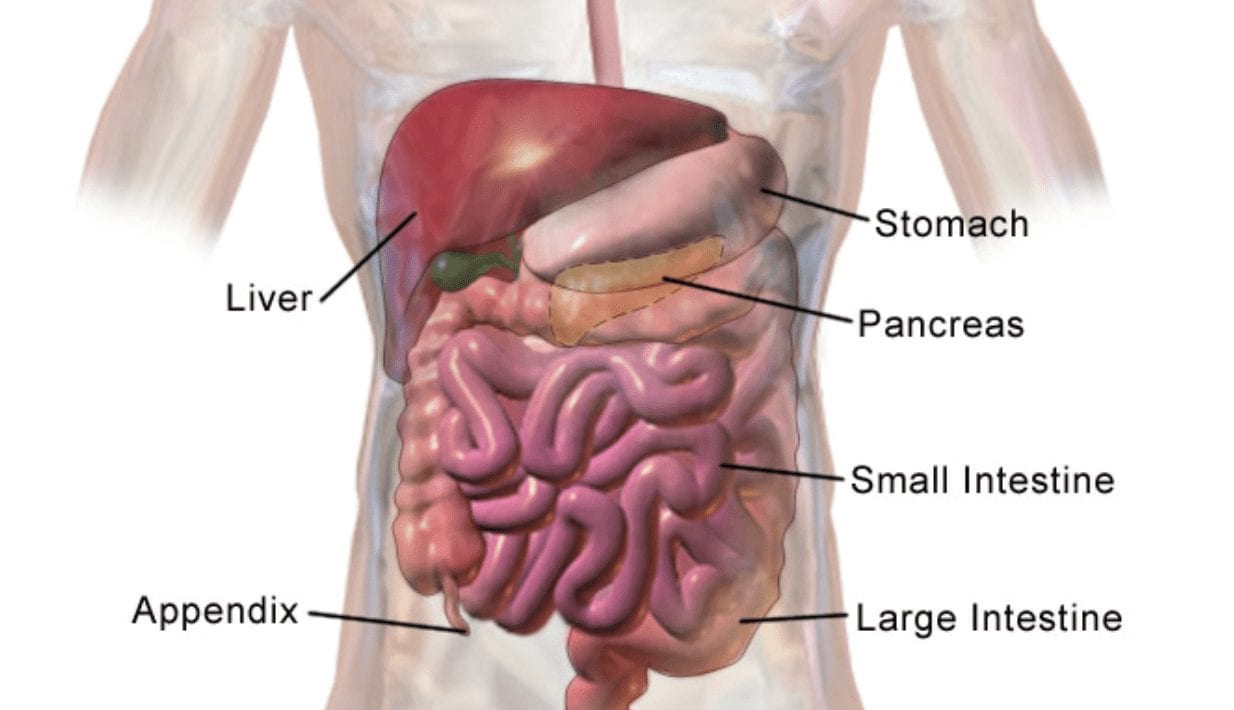
Every meal you eat goes on a journey of several metres through your body, helped by acid, enzymes and trillions of bacteria. Most of the time we hardly notice it. Here are 12 facts about the digestive system and how it works.
1Digestion starts in your mouth.
Chewing breaks food into smaller pieces, and saliva contains an enzyme called amylase that starts breaking down starch straight away. Your mouth makes up to about a litre and a half of saliva a day.
2You could swallow standing on your head.
Food does not just fall down to your stomach. Muscles in the wall of the oesophagus squeeze it along in waves, a movement called peristalsis, so swallowing works even upside down.
3Your stomach is full of strong acid.
Stomach acid is mostly hydrochloric acid, with a pH of around 1.5 to 3.5. It helps break down food and kills many of the germs we swallow.

4Your stomach lining renews itself every few days.
To stop the acid from digesting the stomach itself, its lining is protected by a thick layer of mucus, and the cells on its surface are replaced every few days.
5Most stomach ulcers are caused by a bacterium.
Doctors once blamed ulcers on stress and spicy food. In the 1980s, the Australian doctor Barry Marshall drank a culture of the bacterium Helicobacter pylori to prove it could damage the stomach. He and Robin Warren won the Nobel Prize in 2005. Regular use of some painkillers can also cause ulcers.
6Most digestion happens in the small intestine.
The stomach churns and starts to digest food, but most of the work of breaking it down and absorbing nutrients happens in the small intestine.
7The “small” intestine is about 6 metres long.
It is called small because it is narrow, not because it is short. Its inner surface is covered in tiny folds and finger-like villi, giving it an area of around 30 square metres, about the size of a small flat.
8Your liver makes bile.
The liver, the largest organ inside the body, produces bile, which is stored in the gallbladder and helps to break down fats in the small intestine.

9The large intestine mostly absorbs water.
By the time food reaches the large intestine, most of its nutrients have been absorbed. The large intestine, about 1.5 metres long, takes in water and salts and turns what is left into waste.
10Trillions of bacteria live in your gut.
Your large intestine is home to tens of trillions of bacteria, roughly as many as there are human cells in your body. They help to digest fibre, make some vitamins and protect against harmful germs.
11A meal can take a day or more to pass through.
Food usually takes a few hours to pass through the stomach and small intestine, but it can spend a day or more in the large intestine. The whole journey commonly takes between one and three days.
12A sword swallower helped invent the endoscope.
In 1868, the German doctor Adolf Kussmaul used a professional sword swallower to show that a straight metal tube could be passed down the throat into the stomach, an early step towards modern endoscopes.
FAQs about the digestive system
What are the main parts of the digestive system?
The mouth, oesophagus, stomach, small intestine, large intestine, rectum and anus, helped by the liver, gallbladder and pancreas.
How long is the digestive tract?
In an adult, the whole tract from mouth to anus is roughly 5 to 9 metres long, most of it the small intestine.
Do cows have four stomachs?
Not quite. Cows have one stomach divided into four compartments, which helps them digest tough grass.
Sources and further reading
Explore more: facts about antibiotics.
Do you know any fun facts about the digestive system? Share them in the comments below!
Spotted something wrong? Suggest a correction
We check every suggestion and update articles when facts change. Thank you for helping keep facts.uk accurate.



Leave a Reply