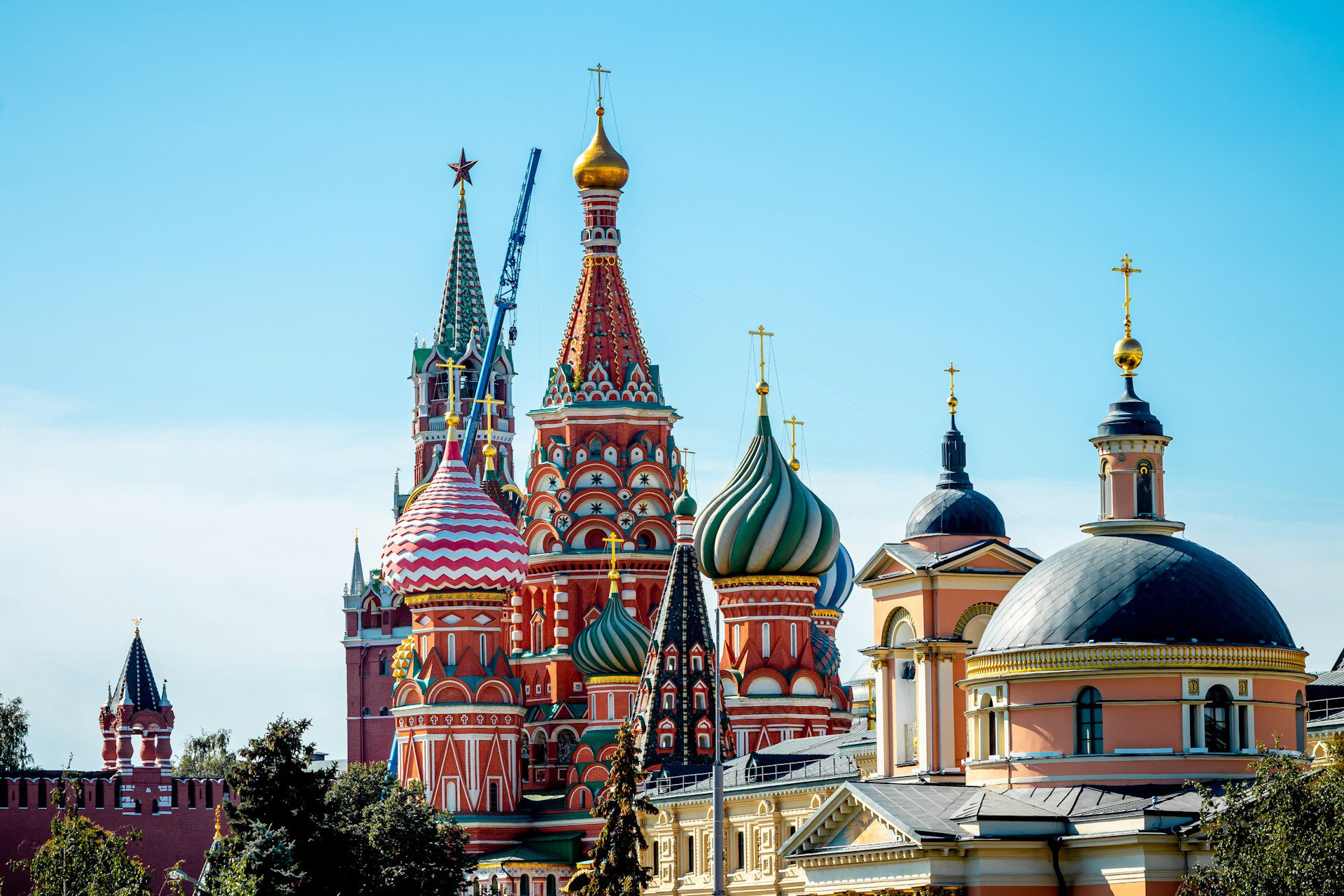
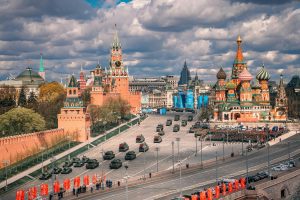
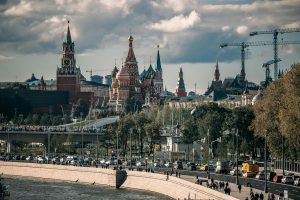
With its swirling, brightly painted onion domes, St Basil’s Cathedral in Moscow’s Red Square is one of the most recognisable buildings in the world. It was built in the 1550s for Ivan the Terrible, and its history is full of legends, some true and some almost certainly not. Here are 20 fascinating facts about St Basil’s Cathedral.
St Basil’s Cathedral at a glance
Location: Red Square, Moscow, Russia
Built: 1555 to 1561
Commissioned by: Ivan IV, known as Ivan the Terrible
Height: about 65 m
Architects: traditionally Barma and Postnik
UNESCO World Heritage Site: since 1990, with the Kremlin and Red Square
1Its real name is much longer.
The cathedral’s official name is the Cathedral of the Intercession of the Most Holy Mother of God on the Moat, often shortened to the Pokrovsky Cathedral. “On the Moat” refers to a moat that once ran alongside the Kremlin walls.
2It celebrated a military victory.
Ivan the Terrible ordered the cathedral to celebrate his capture of the city of Kazan from the Tatars in 1552. Work began in 1555 and finished in 1561.
3“The Terrible” may be a slightly unfair translation.
Ivan’s Russian nickname, Grozny, is closer to “formidable” or “awe-inspiring” than “terrible”. He was, however, a brutal ruler, who killed his own son and heir in a fit of rage in 1581.
4It is really ten churches in one.
The cathedral was built as eight churches arranged around a central ninth church, forming an eight-pointed star when seen from above. A tenth chapel was added later. Each is dedicated to a different saint or religious feast, several of them linked to days of the Kazan campaign.
5It is named after a holy fool.
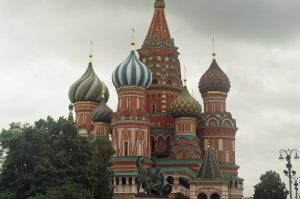
Basil the Blessed was a “holy fool”, a type of Russian holy man who gave up all possessions and behaved strangely to show his faith. He reportedly walked naked through Moscow in all weathers and dared to criticise Ivan the Terrible, who is said to have respected him.
6Basil is buried there.
In 1588 Ivan’s son, Tsar Feodor I, added a chapel over Basil’s grave. The saint’s shrine became so popular that ordinary Muscovites began calling the whole cathedral after him.
7Nobody is quite sure who designed it.
Old records name the architects as Barma and Postnik. Some historians think they were actually the same person, Postnik Yakovlev, who was nicknamed Barma.
8Ivan probably did not blind the architect.
A famous legend says that Ivan had the architects blinded so they could never build anything as beautiful again. There is no evidence for it, and records suggest Postnik went on to work on other buildings, including the Kremlin in Kazan.
9It was not always so colourful.
The cathedral was first built of red brick and white stone. The bright patterns on the domes and walls were mostly added in the 17th century, long after Ivan’s death.
10It was once the tallest building in Moscow.
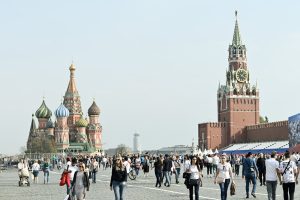
At about 65 metres high, it was the tallest building in Moscow until 1600, when the Ivan the Great Bell Tower in the Kremlin was raised to 81 metres.
11Red Square was not named after communism.
The square got its name centuries before the Soviet Union. In old Russian, the word krasnaya meant “beautiful” as well as “red”, and the name was first used for the area near the cathedral.
12Napoleon is said to have wanted it destroyed.
According to a popular story, when Napoleon’s army retreated from Moscow in 1812, he ordered the cathedral to be blown up, and a sudden rainstorm put out the fuses. Historians are not sure how much of the story is true, but French troops did use the cathedral as a stable.
13It became a museum in the 1920s.
After the Russian Revolution, the Soviet government closed many churches. St Basil’s was turned into a museum in the 1920s and became part of the State Historical Museum in 1928.
14It may have narrowly escaped demolition.
In the 1930s the Soviet authorities demolished many historic Moscow churches, and there were reportedly plans to remove St Basil’s to make more room for parades in Red Square. A popular story credits the architect Pyotr Baranovsky with refusing to help, but historians disagree about how close it came to being destroyed.
15A hidden staircase was found in the 1970s.
During restoration work in the 1970s, workers discovered a narrow internal staircase hidden inside the walls of the cathedral. Visitors can now see it.
16A statue in front of it honours two heroes.
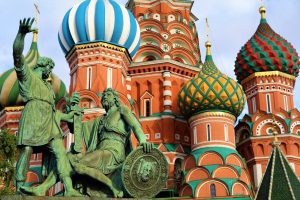
The bronze Monument to Minin and Pozharsky, honouring the two men who led the fight to free Moscow from Polish occupation in 1612, has stood in front of the cathedral since 1931. Before that it stood in the middle of Red Square.
17The bell tower is newer than the cathedral.
The cathedral’s tent-roofed bell tower was built in the 1680s, replacing an older belfry, and houses a collection of bells.
18Ivan the Terrible’s lost library is said to be hidden nearby.
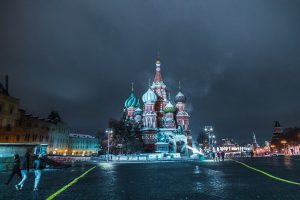
Ivan was said to own a priceless library of ancient manuscripts that vanished after his death. Legends place it in tunnels under the Kremlin or Red Square, and treasure hunters have searched for it for centuries without success.
19Church services are held there again.
Although it is still a museum, services have been held in the cathedral again since the 1990s, especially on the Feast of the Intercession in October.
20Millions know it from Tetris.
St Basil’s Cathedral appears in the artwork of several versions of the Russian video game Tetris, including the hugely popular 1989 Game Boy version, which made it familiar to a whole generation of gamers.
FAQs about St Basil’s Cathedral
Why is St Basil’s Cathedral famous?
For its unique design of brightly coloured onion domes, its place in Red Square and its history as Ivan the Terrible’s victory monument. It has become a symbol of Moscow and Russia.
Who is buried in St Basil’s Cathedral?
Basil the Blessed, the holy fool after whom the cathedral is named, is buried in the chapel added over his grave in 1588.
Is St Basil’s Cathedral in the Kremlin?
No. It stands at the southern end of Red Square, just outside the Kremlin walls.
Sources and further reading
Do you know any fun facts about St Basil’s Cathedral? Share them in the comments below!
Spotted something wrong? Suggest a correction
We check every suggestion and update articles when facts change. Thank you for helping keep facts.uk accurate.