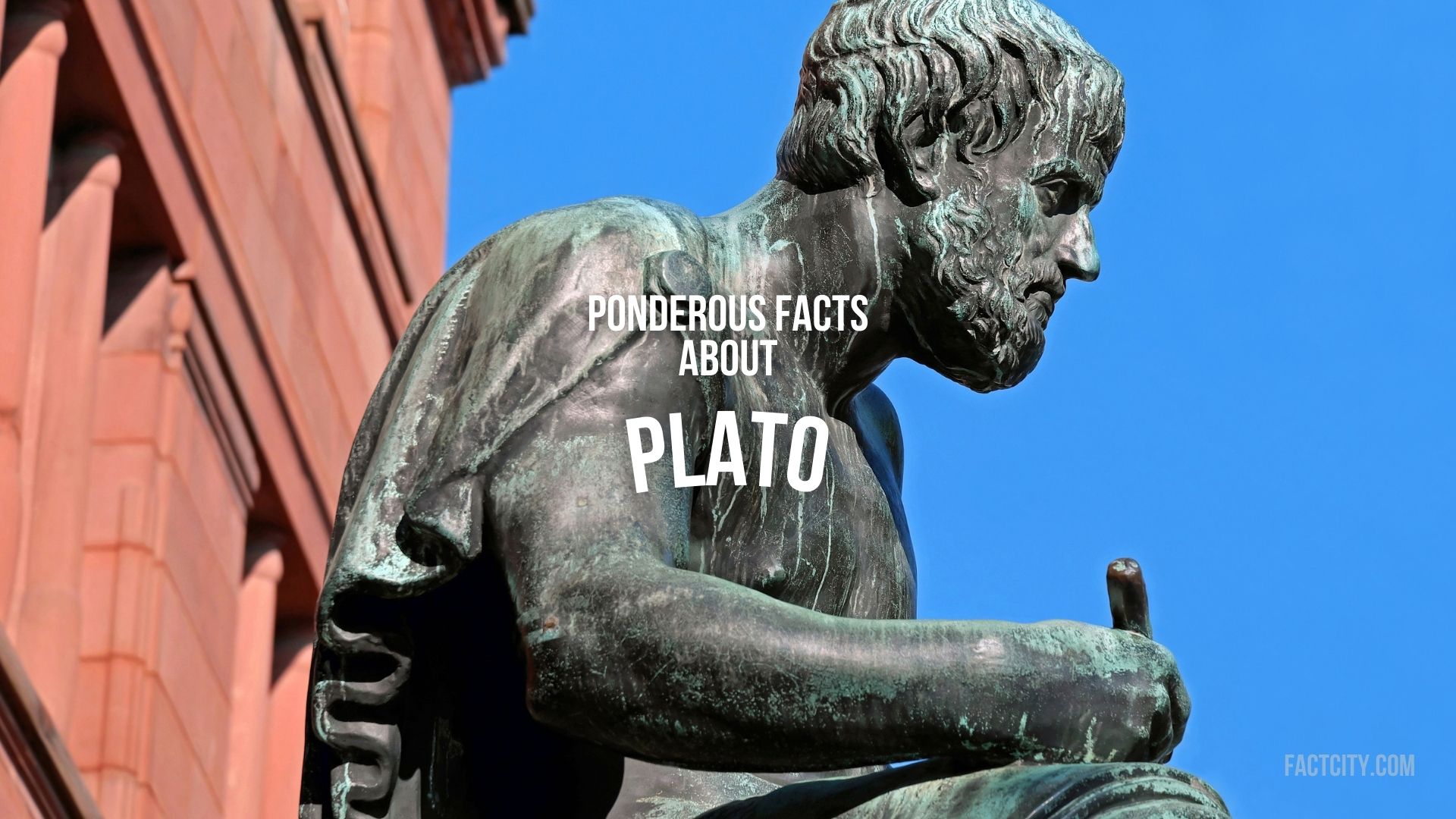
Plato was an ancient Greek philosopher who lived in Athens from about 428 to 348 BC. A student of Socrates and the teacher of Aristotle, he founded the Academy, one of the first places of higher learning in the Western world, and wrote dialogues such as The Republic that still shape how we think about justice, knowledge and love.
Here are 14 fascinating facts about Plato, from his nickname to the lost city he made up.
Plato at a glance
Born: about 428 BC, Athens
Died: about 348 BC, Athens, aged around 80
Teacher: Socrates
Most famous student: Aristotle
Best-known works: The Republic, The Symposium, Phaedo
Founded: the Academy, around 387 BC
1He may be the most influential philosopher who ever lived.
It is hard to talk about Western philosophy without Plato. The philosopher Alfred North Whitehead once said that the whole European tradition of philosophy is really “a series of footnotes to Plato”. His ideas went on to shape Christian theology, science and politics for more than two thousand years.
2Most of what we know about Socrates comes from Plato.
Plato was a devoted follower of the philosopher Socrates, who never wrote anything down. Socrates is the main speaker in most of Plato’s dialogues, so it is often hard to tell where Socrates’ ideas end and Plato’s begin.
3“Plato” was probably a nickname.
According to the ancient biographer Diogenes Laërtius, Plato’s real name was Aristocles, after his grandfather. “Platon” comes from the Greek for “broad”, and the story goes that it referred to his broad shoulders, though others said it described his wide forehead or his broad writing style. Some modern historians think Plato may simply have been his real name.
4He came from one of the grandest families in Athens.
Plato was born into a wealthy, aristocratic Athenian family, and his relatives included leading politicians. A political career would have been the obvious path, but very little is known about his childhood.
5Socrates’ execution turned him away from politics.
In 399 BC, Athens put Socrates on trial for corrupting the young and not respecting the city’s gods, and he was sentenced to death by drinking hemlock. Plato was so disillusioned that he gave up any idea of a political career and spent years travelling, including to Italy and Sicily.
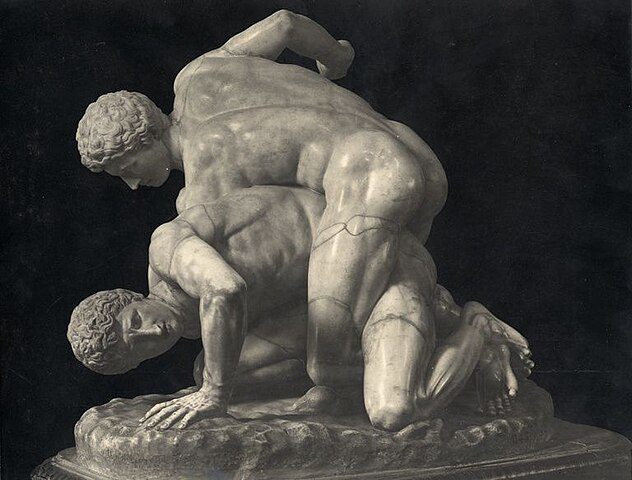
6He was said to be a wrestler.
Ancient writers claimed that Plato wrestled at the Isthmian Games, one of the great athletic festivals of Greece. It may even be how he got his “broad” nickname.
7His school gave us the word “academy”.
Around 387 BC, Plato set up a school in a grove outside Athens named after an ancient hero called Akademos. It became known as the Academy, and the word has meant a place of learning ever since. Students studied mathematics, astronomy and politics as well as philosophy.
8Aristotle studied with him for 20 years.
Plato’s most famous pupil, Aristotle, joined the Academy at about 17 and stayed until Plato’s death, around 20 years later. Aristotle went on to tutor Alexander the Great, so Plato’s influence reached one of history’s greatest conquerors.
9The Republic describes his ideal society.
In The Republic, Plato imagines a perfect city ruled by “philosopher-kings”, people trained for years to rule with wisdom rather than for power or money. It is one of the most widely read books of philosophy ever written.
10The Allegory of the Cave is one of the most famous stories in philosophy.
In The Republic, Plato describes prisoners chained in a cave who see only shadows on a wall and take them for reality. One escapes and discovers the real world outside. The story is about how education can free us from ignorance, and it still turns up in classrooms and films today, including The Matrix.
11He believed the world we see is only a copy.
Plato’s best-known idea, the Theory of Forms, says that the things we see around us are imperfect copies of perfect, unchanging “Forms” that exist beyond the physical world. A circle you draw is never perfectly round, but the Form of a circle is.
12He invented the legend of Atlantis.
The story of Atlantis, a mighty island civilisation that sank beneath the sea in a single day, first appears in Plato’s dialogues Timaeus and Critias. Most historians think Plato made it up to illustrate a point about pride and good government, but people have been searching for it ever since.
13“Platonic love” isn’t quite what Plato meant.
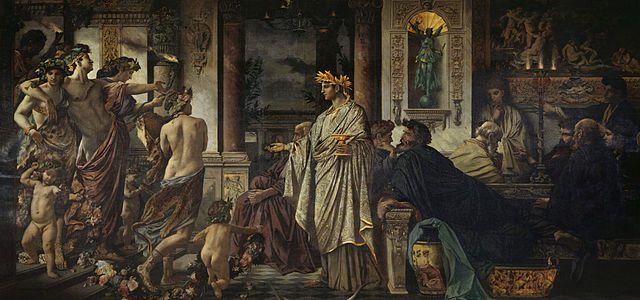
In The Symposium, a dinner party where the guests take turns praising love, Plato describes love rising from attraction to one person towards a love of beauty and wisdom itself. The phrase “platonic love” was coined nearly 2,000 years later, in the 15th century, and today usually means a close friendship without romance.
14Every one of his known works survives.
Plato died around 348 BC, at about 80, and was reportedly buried at the Academy. Unusually for an ancient author, all of his known works, around 35 dialogues and some letters, have survived, although scholars doubt that Plato wrote a few of them.
FAQs about Plato
What is Plato best known for?
For his dialogues, especially The Republic, for founding the Academy in Athens, and for ideas such as the Theory of Forms and the Allegory of the Cave.
Who taught Plato, and who did he teach?
Plato was taught by Socrates, and his most famous student was Aristotle.
Did Plato say “Love is a serious mental disease”?
Not quite. The line is often quoted online, but it doesn’t appear in his works in that form. In the Phaedrus, Plato describes love as a kind of madness, but a divine and positive one.
Was Plato married?
There is no record that Plato ever married or had children.
What is a genuine Plato quote?
“The beginning is the most important part of the work”, from The Republic, is one of his most quoted lines.
Sources and further reading
Explore more: more philosophy facts.
Do you know any interesting facts about Plato? Share them in the comments below!
Spotted something wrong? Suggest a correction
We check every suggestion and update articles when facts change. Thank you for helping keep facts.uk accurate.
Leave a Reply