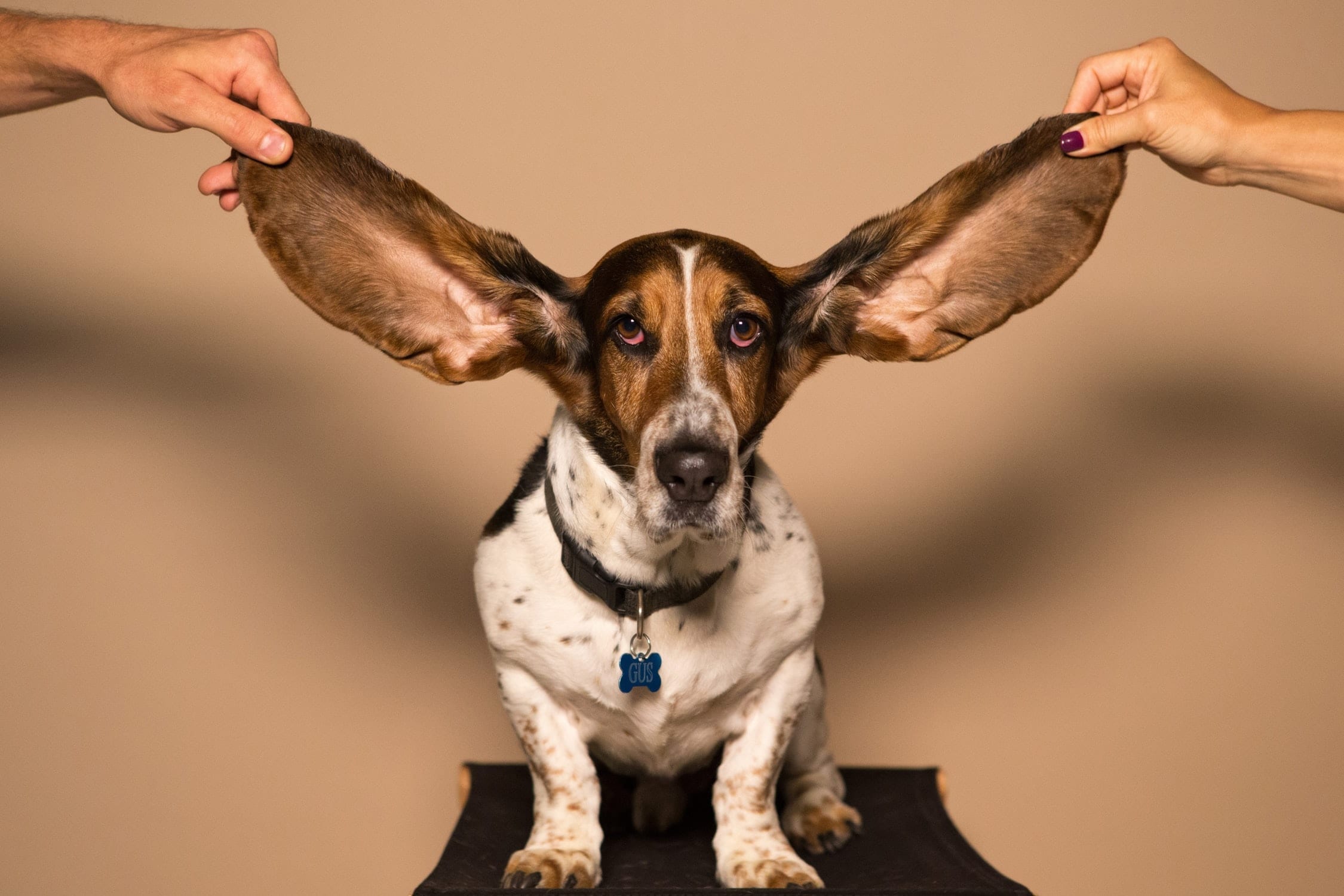
Dogs have lived alongside people for at least 15,000 years. They herd sheep, guide people who are blind, sniff out drugs and disease, and share our sofas. Around 11 million pet dogs live in the UK alone. Here are 22 fun facts about dogs.

1Dogs were the first animals people tamed.
Dogs are descended from ancient wolves and were domesticated by hunter-gatherers at least 15,000 years ago, long before farm animals.
2A dog was buried with people 14,000 years ago.
At Bonn-Oberkassel in Germany, archaeologists found a dog buried with two people about 14,200 years ago. The dog had been cared for through a serious illness, a sign of a close bond.
3There are hundreds of millions of dogs in the world.
Estimates suggest there are around 900 million dogs on Earth, but most of them are free-roaming village and street dogs rather than pets.
4Every dog’s nose print is unique.
The pattern of ridges and creases on a dog’s nose is as individual as a human fingerprint.
5Their sense of smell is extraordinary.
Dogs have up to 300 million smell receptors in their noses, compared with about 6 million in ours. Trained dogs can detect explosives, drugs and even some diseases.

6Dogs have fewer taste buds than we do.
Dogs have about 1,700 taste buds, compared with about 9,000 in humans, but they have special taste buds for water.
7Dogs are not colour-blind.
Dogs can see colours, but fewer than we can. They mainly see shades of blue and yellow, and have trouble telling red from green.
8They sweat through their paws.
Dogs only have sweat glands in their paw pads. They mostly cool down by panting.
9Puppies are born blind and deaf.
Newborn puppies cannot see or hear. Their eyes usually open at around two weeks old, and their ears soon after.
10A border collie learned more than 1,000 words.
Chaser, a border collie from South Carolina, learned the names of more than 1,000 toys and could fetch each one by name. Most dogs can learn around 150 words.
11Looking into a dog’s eyes releases a “love hormone”.
A 2015 study found that when dogs and their owners gaze at each other, levels of oxytocin, the hormone linked with bonding, rise in both.
12Dogs can feel jealous.
In a 2014 study at the University of California, San Diego, dogs snapped at and pushed between their owners and a realistic toy dog that their owners were petting.
13A wagging tail does not always mean a happy dog.
Wagging shows a dog is aroused or alert, not necessarily happy. Scientists have found that wags more to the dog’s right tend to mean positive feelings, and more to the left negative ones.
14Yawning can mean a dog is anxious.
As well as tiredness, yawning can be a sign that a dog is stressed or trying to calm a tense situation.
15Greyhounds can run at 45 mph.
Greyhounds are the fastest dogs, reaching speeds of about 45 mph (72 km/h) over a short distance.
16Basenjis do not bark.
The Basenji, an ancient African breed, cannot bark in the usual way. Instead it makes an unusual yodelling sound.
17The Jack Russell is named after a vicar.
The breed is named after the Reverend John Russell, a fox-hunting vicar in Devon who bred the first of these terriers in the 1800s.

18Yorkshire terriers were bred to catch rats in mills.
Yorkies were developed in Victorian Yorkshire, where they hunted rats in cotton and wool mills, long before they became fashionable lap dogs.

19German Shepherds were bred as working dogs.
The breed was developed in Germany in the 1890s by army officer Max von Stephanitz as the ideal herding dog. Today they work as police, guide and search-and-rescue dogs.

20Rottweilers are named after a German town.
Rottweilers come from the town of Rottweil, where they drove cattle to market and guarded the money their owners carried home.

21The oldest dog on record lived to 29.
Bluey, an Australian cattle dog, lived for 29 years and 5 months, from 1910 to 1939. Most dogs live between 10 and 13 years.
22Dogs in England must be microchipped.
Since 2016, it has been a legal requirement in England for all dogs to be microchipped by the time they are eight weeks old.
FAQs about dogs
What is the most intelligent dog breed?
The border collie usually comes top in studies of dog intelligence, followed by breeds such as the poodle and German Shepherd.
How long do dogs live?
Most dogs live between 10 and 13 years. Small breeds often live longer than large ones.
Can dogs see in colour?
Yes, but they see fewer colours than people, mostly blues and yellows.
Sources and further reading
Explore more: facts about German Shepherds, facts about French Bulldogs and facts about cats.
Do you know any fun facts about dogs? Share them in the comments below!
Spotted something wrong? Suggest a correction
We check every suggestion and update articles when facts change. Thank you for helping keep facts.uk accurate.
One response to “22 Fun Facts About Dogs”
-
I learned a lot from the article. Thanks you.

Leave a Reply