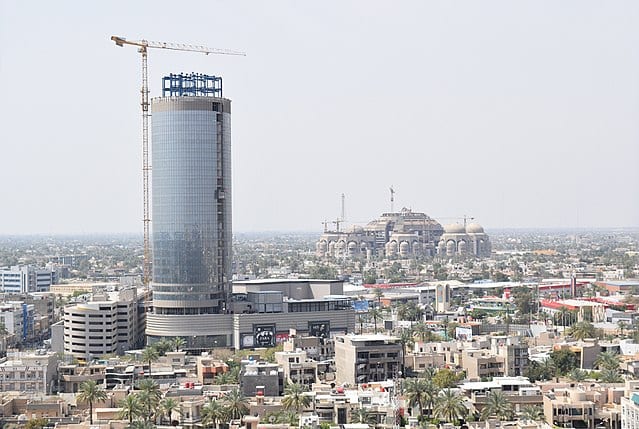
Baghdad is the capital of Iraq and one of the most famous cities in history. It was built as a perfect circle in the 8th century, became one of the largest cities on Earth and was a world centre of learning for hundreds of years. Here are 22 facts about Baghdad.
1Baghdad is the capital of Iraq and sits on the River Tigris.
The city lies on both banks of the Tigris in central Iraq.
2It is by far the biggest city in Iraq.
The United Nations estimated that about 6.4 million people lived in the Baghdad urban area in 2025, more than three times as many as Basra, Iraq’s second city. Iraqi figures that draw the boundary more widely put the city closer to 8 million.
3Modern Baghdad was founded in 762.
The Abbasid caliph al-Mansur chose the site and building work began in the summer of 762. He wanted a new capital for an empire that stretched from North Africa to Central Asia.
4The first city was a perfect circle.
Al-Mansur’s “Round City” was about 2 km across, with the caliph’s palace and the great mosque at its centre. It had four gates named after the places their roads led to: Kufa, Basra, Khorasan and Sham (Syria). It was finished by 766.
5Its official name was the City of Peace.
Al-Mansur called his new capital Madinat al-Salam, which means “City of Peace”. Most people kept using the old name, Baghdad, and that is the one that stuck.
6The name Baghdad is older than the city itself.
A place called Baghdad already existed on the site before al-Mansur arrived, and it appears in pre-Islamic writings. The name is usually thought to come from old Persian words meaning “given by God”, although historians still debate it.
7Baghdad may have been the first city with a million people.
As capital of the Abbasid Caliphate in the 9th and 10th centuries, Baghdad grew enormously. Historians think it was among the first cities in the world to reach about one million people, although early population figures are uncertain.
8The House of Wisdom made Baghdad a centre of learning.
The caliphs’ library, known as the House of Wisdom (Bayt al-Hikma), was at its height under Caliph al-Ma’mun in the early 800s. The mathematician al-Khwarizmi worked in Baghdad in this period. His book on “al-jabr” gave us the word “algebra”, and his own name gave us “algorithm”.
9One of the world’s oldest surviving colleges is in Baghdad.
The Mustansiriya Madrasa was built between 1227 and 1233 by Caliph al-Mustansir. It was one of the great schools of the Islamic world, and its brick building still stands beside the Tigris.
10The Mongols destroyed the city in 1258.
In February 1258 a Mongol army led by Hulegu, a grandson of Genghis Khan, captured Baghdad after a short siege. The last Abbasid caliph in Baghdad was killed and much of the city, including its libraries, was destroyed.
11The Tigris divides Baghdad into two halves.
The eastern side of the city is called Rusafa and the western side is called Karkh. Bridges across the river link the two halves.
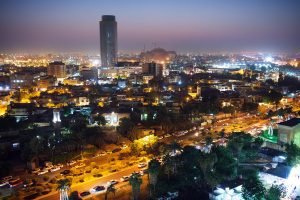
12Baghdad reached 51.8°C in 2020.
On 28 July 2020 the temperature in Baghdad reached about 51.8°C (125°F), the highest ever recorded in the city. In July and August, daytime highs of around 43°C (109°F) are normal.
13Snow fell on Baghdad in 2008.
On 11 January 2008 light snow fell on the city for the first time in living memory. It melted almost as soon as it landed, but crowds rushed outside to see it. Winter nights are cool and can drop close to freezing.
14Baghdad gets very little rain.
The city receives only about 150 to 160 mm (6 inches) of rain a year. Almost all of it falls between November and April, and dust storms are common in the hot, dry months.
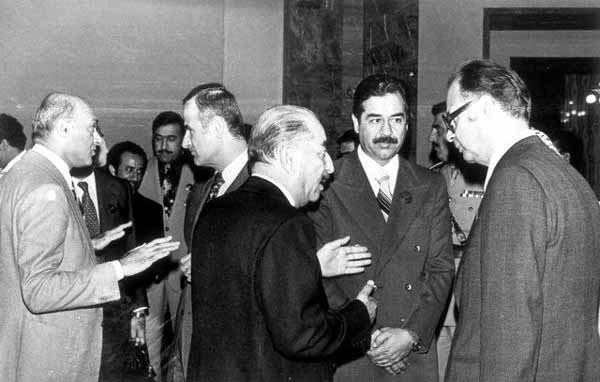
15A huge flood scheme protects the city from the Tigris.
The Tigris used to flood Baghdad in spring. In 1956 engineers finished the Samarra Barrage, north of the city, which sends floodwater into the Tharthar depression in the desert, now a large lake.
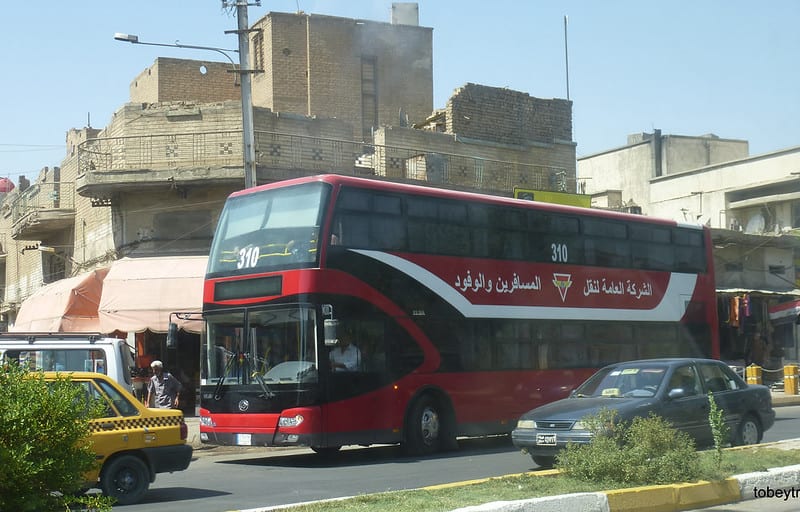
16Red double-decker buses have run in Baghdad since the 1950s.
Baghdad bought British-built double-deckers in the 1950s, after testing a standard London bus on its streets. They became a symbol of the city. Most disappeared after 2003, but new red double-deckers have since been brought back.
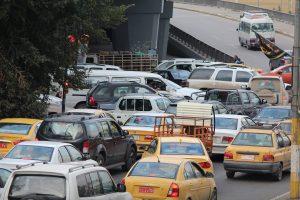
17Baghdad had television in 1956.
Baghdad Television went on air on 2 May 1956, using equipment from the British company Pye. It was Iraq’s first television station and one of the first in the Arab world.
18The University of Baghdad grew out of a law college from 1908.
The university was set up in 1956 and 1957 by joining together older colleges, the oldest being the College of Law, founded in 1908. It is now Iraq’s largest university.
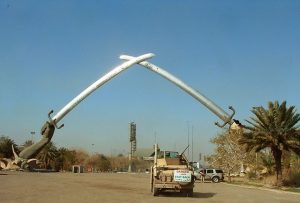
19The Victory Arch is made of two giant hands holding swords.
The Swords of Qadisiyah, often called the Victory Arch or Hands of Victory, opened in 1989 after the Iran-Iraq War. Two huge bronze forearms rise from the ground, each holding a sword about 43 metres long, and the hands were modelled on Saddam Hussein’s own.
20Al-Mutanabbi Street is Baghdad’s famous book market.
The street is named after al-Mutanabbi, a great Arabic poet of the 10th century, and is lined with bookshops and stalls. Writers, artists and readers crowd it on Fridays. A car bomb badly damaged it in 2007, and it has since been restored.
21A falling statue became a symbol of 2003.
On 9 April 2003 crowds in Firdos Square began attacking a 12-metre statue of Saddam Hussein, and US troops then pulled it down with an armoured vehicle. The weightlifter Kadhim al-Jabouri, who struck the first blows with a sledgehammer, later said he regretted it.
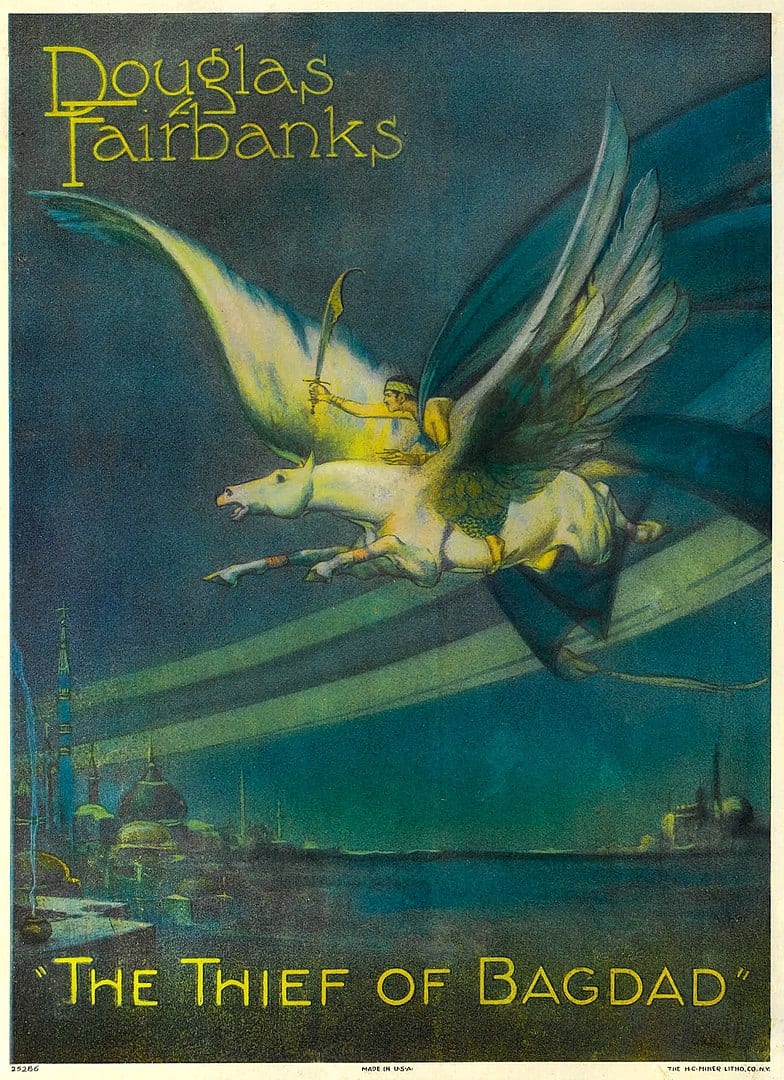
22Two famous films were called The Thief of Bagdad.
Douglas Fairbanks starred in a silent adventure called The Thief of Bagdad in 1924. A British colour version, produced by Alexander Korda, followed in 1940 and won three Oscars, including one for its special effects.
FAQs about Baghdad
What is Baghdad famous for?
Baghdad is famous for being the capital of the Abbasid Caliphate, when it was one of the biggest and most learned cities in the world. It is also known for its round original plan, the House of Wisdom and as the setting for many Arabian Nights stories.
How old is Baghdad?
The city of Baghdad was founded in 762, so it is more than 1,260 years old. A smaller settlement with the same name existed on the site even earlier.
Why is Baghdad called the City of Peace?
When Caliph al-Mansur founded the city, he gave it the official name Madinat al-Salam, Arabic for “City of Peace”. The older name Baghdad stayed in everyday use.
Sources and further reading
- Wikipedia: Round City of Baghdad
- University of Baghdad: Establishment of the University of Baghdad
- AFI Catalog: The Thief of Bagdad (1924)
Explore more: facts about Iraq, facts about Genghis Khan and facts about Tehran.
Do you know any fun facts about Baghdad? Share them in the comments below!
Spotted something wrong? Suggest a correction
We check every suggestion and update articles when facts change. Thank you for helping keep facts.uk accurate.
Leave a Reply