The Mariana Trench is the deepest place on Earth, a crescent-shaped scar in the floor of the Pacific Ocean so deep that Mount Everest could sink into it with more than 2 km of water still above its summit. Nobody reached the bottom until 1960, and only a few dozen people have been there since, yet plastic has made it all the way down. Here are 20 facts about the Mariana Trench.
The Mariana Trench at a glance
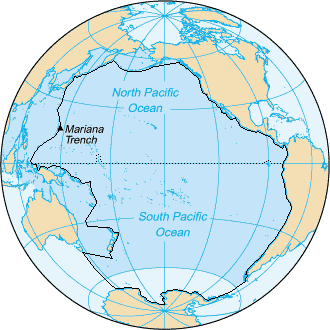
Where: the western Pacific Ocean, east of the Mariana Islands and south of Japan
Deepest point: Challenger Deep, about 10,935 metres (35,876 feet) below sea level
Length: about 2,550 km (1,580 miles)
Average width: about 69 km (43 miles)
Pressure at the bottom: more than 1,000 times that at the surface
1It is the deepest place on Earth.
The deepest known point, called Challenger Deep, lies around 10,935 metres (nearly 11 km) below the surface. Different surveys give slightly different figures, because measuring that far down is extremely difficult, but none has found anywhere deeper.
2Everest would disappear inside it.
Mount Everest is 8,849 metres tall. If you could drop it into Challenger Deep, its summit would still be more than 2,000 metres (over a mile) beneath the waves.
3It is shaped like a crescent.
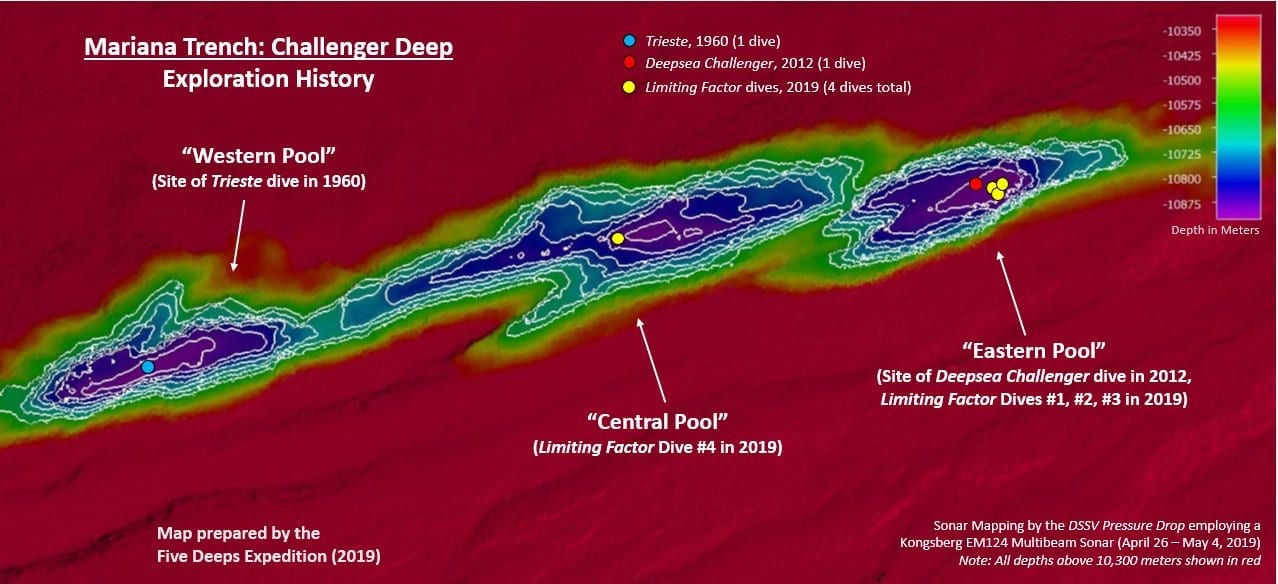
The trench curves for about 2,550 km, more than five times the length of the Grand Canyon, but is only around 69 km wide on average.
4It is named after a Spanish queen.
The trench takes its name from the nearby Mariana Islands, which Spanish missionaries named in the 1660s after Queen Mariana of Austria, who was ruling Spain on behalf of her young son.
5It was made by one plate sliding under another.
The trench marks the place where the Pacific Plate, one of the oldest and heaviest parts of the ocean floor, sinks beneath the smaller Mariana Plate. This process, called subduction, also builds the chain of volcanic islands nearby. It is part of the Pacific Ring of Fire.
6Challenger Deep is named after two ships.
The British research ship HMS Challenger first sounded the trench in 1875, lowering a weighted rope to more than 8,000 metres. In 1951 a later survey ship, HMS Challenger II, found the deepest point, which was named after both.
7The first people reached the bottom in 1960.
On 23 January 1960, the Swiss engineer Jacques Piccard and US Navy lieutenant Don Walsh dived to Challenger Deep in the bathyscaphe Trieste. The descent took nearly five hours and they spent about 20 minutes on the bottom, where a window cracked on the way down.
8Nobody went back for 52 years.
The next person to reach Challenger Deep was the film director James Cameron, who made a solo dive in his submersible Deepsea Challenger in March 2012.
9A businessman visited it again and again.
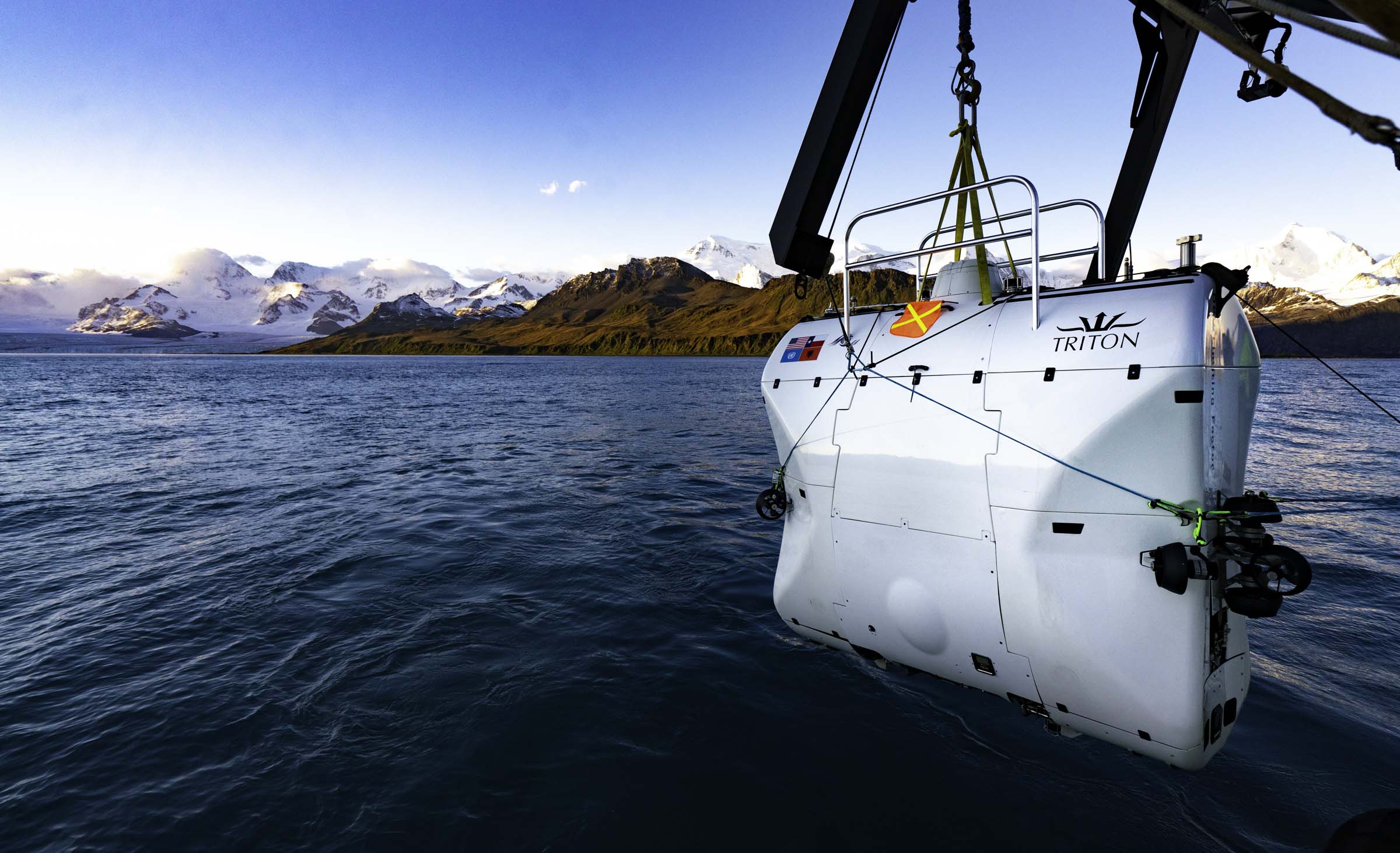
In 2019, the American explorer Victor Vescovo dived to Challenger Deep in the submersible Limiting Factor as part of his Five Deeps Expedition to the deepest point of every ocean. He returned many times afterwards, taking passengers with him.
10An astronaut has been to both extremes.
In 2020, Kathryn Sullivan, the first American woman to walk in space, dived to Challenger Deep with Vescovo. She became the first person to have both walked in space and reached the deepest point in the ocean.
11The pressure is crushing.
At the bottom the water pressure is more than 1,000 times that at sea level, roughly the same as having the weight of an elephant balanced on every postage stamp of your body.
12It is pitch black and near freezing.
No sunlight reaches the bottom, and the water is only around 1 to 4°C (34 to 39°F). Despite that, the trench is far from lifeless.
13Life thrives at the bottom.
Explorers have found shrimp-like amphipods, sea cucumbers and giant single-celled organisms called xenophyophores, which can grow up to 10 cm across, living in the deepest parts of the trench.
14A ghostly fish lives deeper than almost any other.
The Mariana snailfish, a small, pale fish with see-through skin, lives at depths of around 8,000 metres. Its body is soft and jelly-like, which helps it cope with the immense pressure.
15Plastic got there before most people.
A plastic bag has been recorded at a depth of almost 11,000 metres in the trench, and a 2019 study found microplastic fibres in the guts of every amphipod tested from the Mariana Trench.
16Pollution has reached its animals too.
A 2017 study found extremely high levels of banned industrial chemicals, called PCBs, in amphipods from the trench, higher than in crabs from some of China’s most polluted rivers.
17Part of it is a protected monument.
In 2009, the United States created the Marianas Trench Marine National Monument, protecting the seabed and waters around part of the trench and the northern islands.
18Liquid carbon dioxide bubbles up nearby.
At an undersea volcano near the trench, scientists have found a vent nicknamed “Champagne” that releases bubbles of almost pure liquid carbon dioxide, one of only a few places on Earth where this happens.
19We know more about the Moon’s surface.
Only around a quarter of the ocean floor has been mapped in high detail, and the Mariana Trench is one of the hardest places to study. Scientists often say we have better maps of the surface of Mars and the Moon than of our own seabed.
20It starred in a monster film.
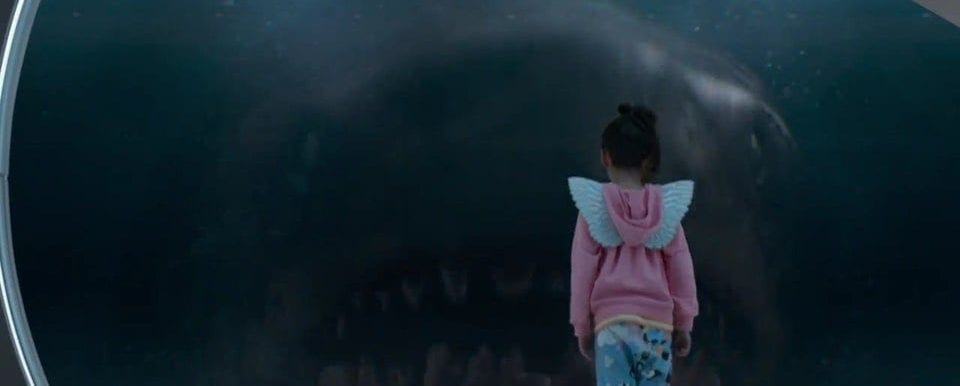
In the 2018 film The Meg, a giant prehistoric shark called a megalodon escapes from beneath the floor of the Mariana Trench. The film made more than $500 million worldwide, although real megalodons died out millions of years ago.
FAQs about the Mariana Trench
How deep is the Mariana Trench?
Its deepest point, Challenger Deep, is about 10,935 metres (35,876 feet), or nearly 11 km, below sea level.
Where is the Mariana Trench?
In the western Pacific Ocean, east of the Mariana Islands, which include Guam, and roughly 2,500 km south of Japan.
How many people have been to the bottom of the Mariana Trench?
Only a few dozen. The first two reached it in 1960, and most of the rest have dived since 2019 in Victor Vescovo’s submersible.
What lives in the Mariana Trench?
Amphipods, sea cucumbers, xenophyophores and, higher up, the Mariana snailfish. Animals there are adapted to total darkness, cold and enormous pressure.
Sources and further reading
- Britannica: Mariana Trench
- NOAA Ocean Exploration
- US Fish and Wildlife Service: Marianas Trench Marine National Monument
Explore more: facts about the Ring of Fire.
Do you know any fun facts about the Mariana Trench? Share them in the comments below!
Spotted something wrong? Suggest a correction
We check every suggestion and update articles when facts change. Thank you for helping keep facts.uk accurate.
One response to “20 Facts About the Mariana Trench, the Deepest Place on Earth”
-
There are hydrothermal vents that reach the temp of 700 degrees F. The three most common organisms down in Challenger Deep are, xenophyophores, amphipods, holothurians. the seafloor is made of molten lava, which explains part of the reason it is so deep.
Leave a Reply