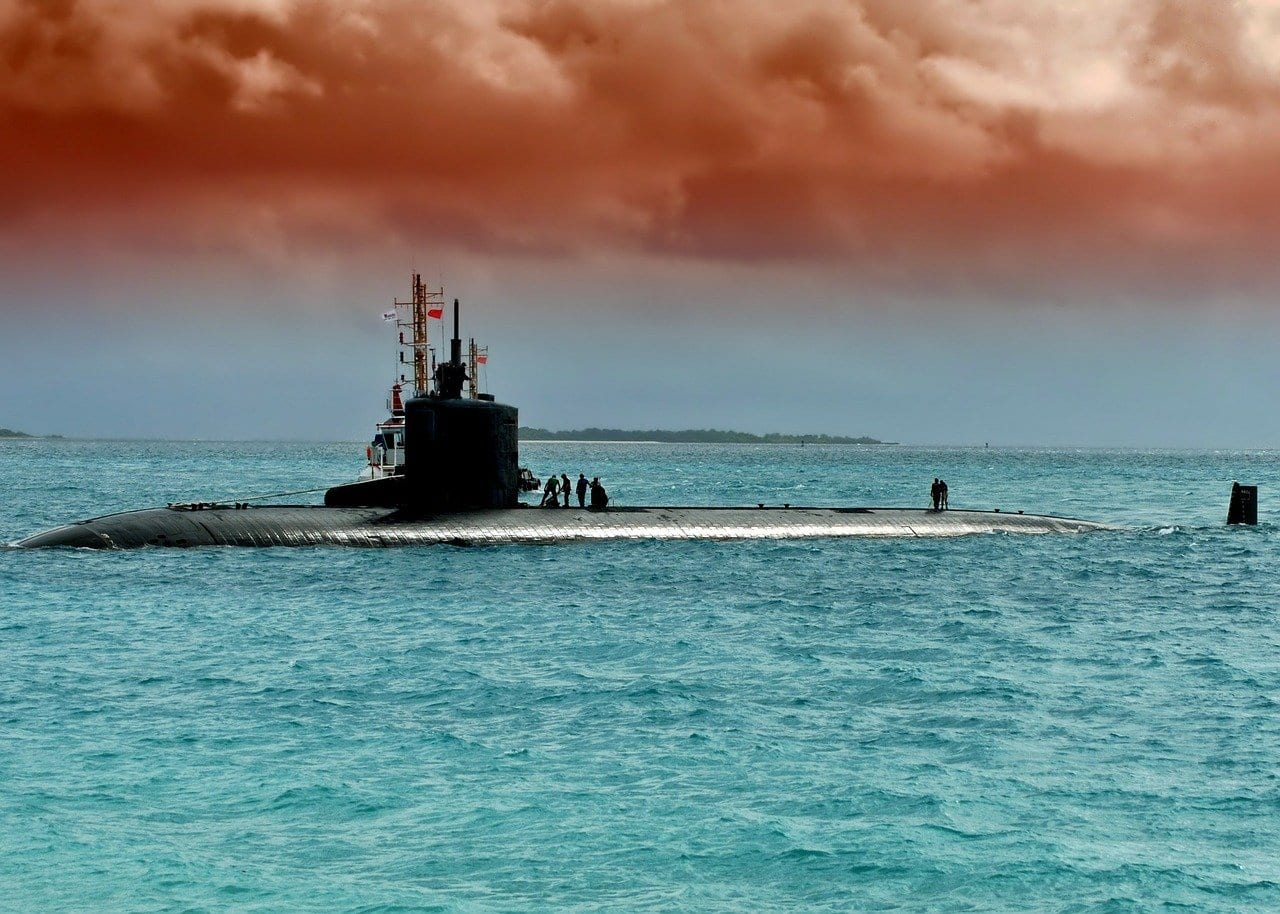
Submarines can stay hidden underwater for months, cross oceans without surfacing and dive to depths that would crush an ordinary ship. People dreamed of them for centuries before they became reality, and they have changed the course of wars. Here are 20 fascinating facts about submarines.
1The earliest “submarine” stories are legends.
Stories say Alexander the Great was lowered into the sea in a glass barrel, and ancient divers were used in sieges such as Syracuse in 415 BC. But these were diving bells and swimmers, not real submarines.
2An Englishman designed the first known submarine.
In 1578 the English mathematician William Bourne published a design for an enclosed boat that could sink and rise by changing its size with leather-covered sides. As far as we know, it was never built.
3The first working submarine was tested in the Thames.
In the 1620s the Dutch inventor Cornelis Drebbel, working for King James I, built a leather-covered wooden rowing boat that travelled underwater along the River Thames. It is said that the king himself watched the trials.
4The first submarine attack was in 1776.
During the American War of Independence, the one-man submarine Turtle, designed by David Bushnell, tried to fix an explosive to the British warship HMS Eagle in New York harbour. It failed, but it was the first known submarine attack.
5The first submarine to sink a warship sank too.
In 1864, during the American Civil War, the Confederate submarine H. L. Hunley sank the Union ship USS Housatonic off Charleston. The Hunley never returned, and its wreck was only raised in 2000.
6The first engine-powered submarine was French.
The French Navy’s Plongeur, launched in 1863, was the first submarine not powered by people. Its engine ran on compressed air.
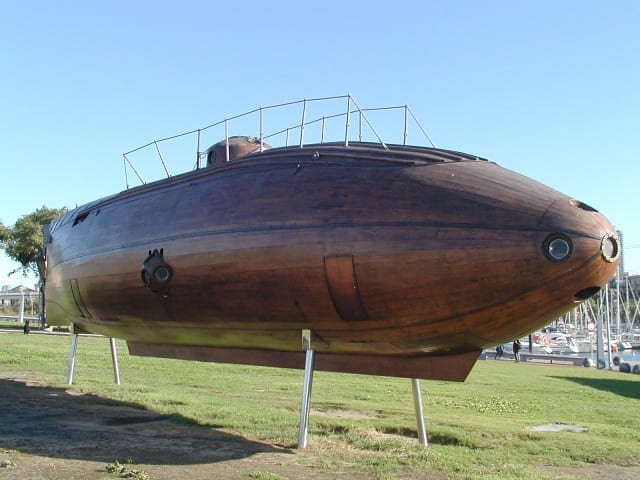
7A Spanish inventor built a submarine with its own air supply.
Narcís Monturiol’s Ictíneo II, launched in Barcelona in 1864, later used a chemical engine that produced oxygen as well as power, an early attempt at a submarine that did not need air from the surface.
8An electric submarine fired torpedoes in 1888.
The Spanish naval officer Isaac Peral built a battery-powered submarine that could fire torpedoes underwater. Launched in 1888, it was one of the first truly practical military submarines.
9The Royal Navy’s first submarine is on display in Gosport.
HMS Holland 1 was launched in 1901, based on a design by the Irish-American inventor John Holland. It sank while being towed to the scrapyard in 1913, was raised in 1982 and is now at the Royal Navy Submarine Museum in Gosport, Hampshire.
10Submarines are “boats”, not ships.
By naval tradition, submarines are always called boats, however big they are.
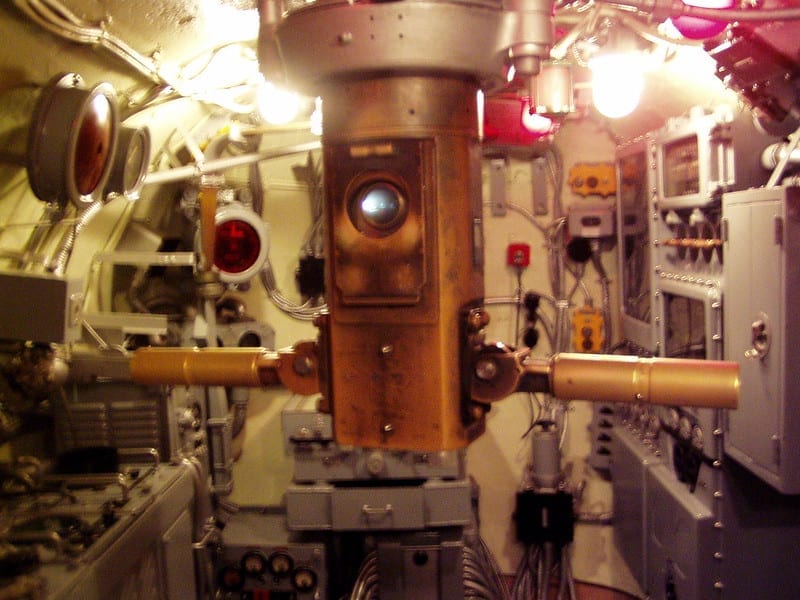
11The periscope let submarines see while hidden.
Periscopes use mirrors or prisms to let a crew see above the surface while the submarine stays submerged. Naval periscopes were developed in the second half of the 1800s and became standard on submarines in the early 1900s.
12Britain had more submarines than Germany in 1914.
At the start of the First World War, the Royal Navy had more than 70 submarines, while Germany had around 20 U-boats ready for service. Germany built many more during the war.
13U-boats sank around 5,000 ships in the First World War.
German U-boats sank nearly 5,000 Allied and neutral ships between 1914 and 1918, including the liner Lusitania in 1915, which helped bring the United States into the war.
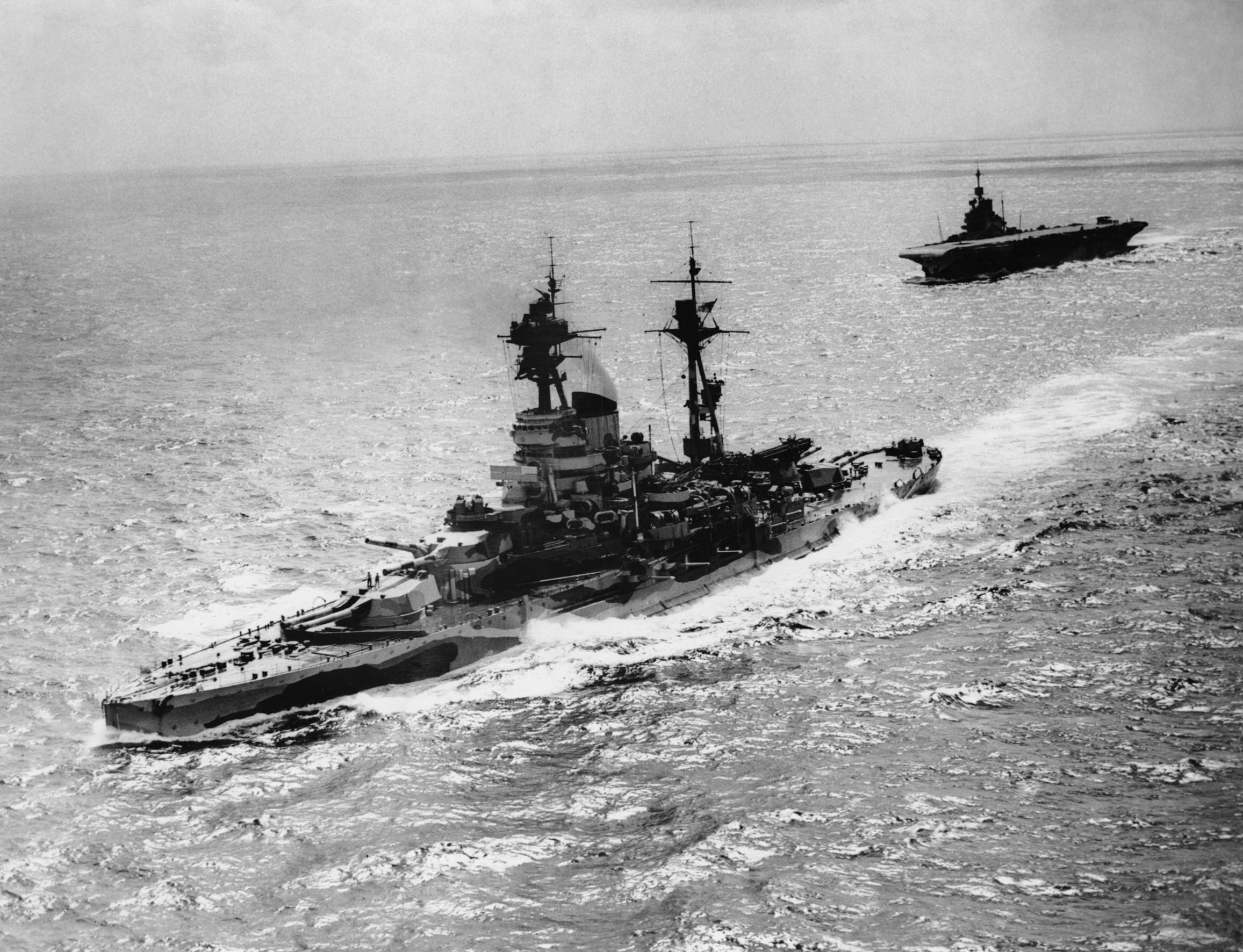
14Most German submariners in the Second World War did not survive.
U-boats sank thousands of Allied ships, but Germany lost around 750 U-boats in combat, and about 30,000 of its roughly 40,000 submariners were killed.
15Code-breakers helped win the Battle of the Atlantic.
The work of code-breakers at Bletchley Park in reading German naval Enigma messages helped the Allies route convoys away from U-boats and hunt them down.
16The first nuclear submarine sailed under the North Pole.
USS Nautilus, the world’s first nuclear-powered submarine, went into service in 1954. On 3 August 1958 it became the first vessel to pass under the North Pole, travelling beneath the Arctic ice.

17A submarine sailed round the world underwater.
In 1960, USS Triton completed the first submerged journey around the world, covering more than 26,000 nautical miles in about 60 days without surfacing.
18The biggest submarines ever built were Soviet.
The Soviet Typhoon-class submarines, built in the 1980s, were around 175 metres long, longer than a football pitch and a half, with two separate pressure hulls side by side.
19A British nuclear submarine is always on patrol.
Since 1969, at least one Royal Navy submarine carrying nuclear missiles has been at sea at all times, in an operation known as Relentless. Today the Vanguard-class submarines, based at Faslane in Scotland, carry Trident missiles.
20Submarines explore as well as fight.
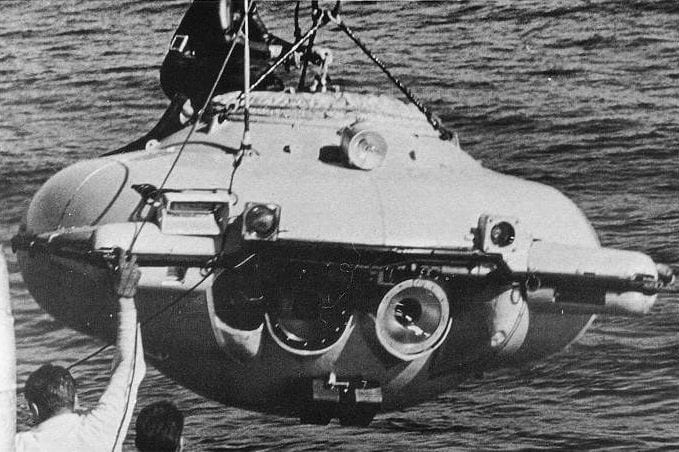
The French ocean explorer Jacques Cousteau used a small two-person submarine nicknamed Denise, launched in 1959, to film the sea floor. Today, research submersibles study everything from deep-sea creatures to shipwrecks.
FAQs about submarines
Who invented the submarine?
William Bourne designed the first known submarine in 1578, and Cornelis Drebbel built the first working one in the 1620s. Modern submarines owe most to inventors such as John Holland in the late 1800s.
How deep can submarines go?
Exact figures for military submarines are secret, but most are thought to operate at depths of a few hundred metres. Specialist research submersibles have reached the bottom of the Mariana Trench, almost 11,000 metres down.
How long can a submarine stay underwater?
Nuclear submarines make their own oxygen and fresh water, so they can stay submerged for months. Their limit is usually how much food they can carry.
Sources and further reading
Explore more: facts about Bletchley Park, facts about the navy and facts about the Mariana Trench.
Do you know any fun facts about submarines? Share them in the comments below!
Spotted something wrong? Suggest a correction
We check every suggestion and update articles when facts change. Thank you for helping keep facts.uk accurate.

Leave a Reply