
Sharks have a fearsome reputation, but they are far more threatened by people than people are by them. They have patrolled the oceans for hundreds of millions of years and play a vital role in keeping marine life healthy. Here are 20 fascinating facts about sharks.
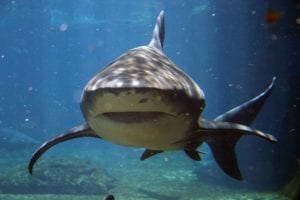
1Sharks are older than trees.
The earliest sharks appeared around 450 million years ago. The first trees did not appear until about 385 million years ago.
2They have survived five mass extinctions.
Sharks have lived through all five of the great mass extinctions in Earth’s history, including the one that wiped out the dinosaurs.
3There are more than 500 species.
Scientists have described more than 500 species of shark, ranging from the dwarf lanternshark, about 20 cm long, to the whale shark.
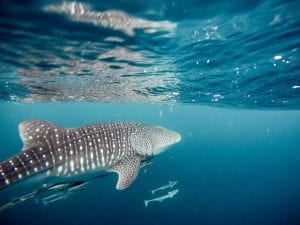
4The whale shark is the biggest fish in the world.
Whale sharks can grow to around 18 metres long. Despite their size, they feed on tiny plankton and small fish, which they filter from the water.
5Britain has the second-largest fish.
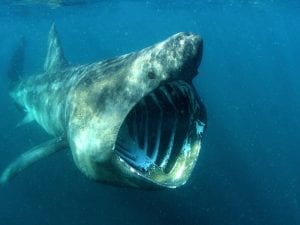
The basking shark, which can reach about 10 metres, visits British waters in summer, especially off Cornwall, the Isle of Man and the west coast of Scotland. Like the whale shark, it eats only plankton.
6The Greenland shark can live for centuries.
A 2016 study using radiocarbon dating estimated that Greenland sharks can live for at least 270 years, and possibly much longer, making them the longest-living vertebrates known.
7Sharks are threatened by people.
A 2021 study found that more than a third of shark and ray species are threatened with extinction, mainly because of overfishing. Scientists estimate that people kill tens of millions of sharks every year.
8The UK has banned the trade in shark fins.
The Shark Fins Act 2023 made it illegal to import or export detached shark fins into or out of the UK, to help stop the cruel practice of finning.
9You may have eaten shark at the chip shop.
Spiny dogfish, a small shark, has long been sold in British fish and chip shops under names such as “rock salmon” or “huss”.
10Sharks have no bones.
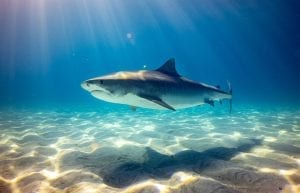
A shark’s skeleton is made of cartilage, the same flexible material in our noses and ears. It is lighter than bone, which helps sharks stay afloat.
11Sharks grow thousands of teeth.
Sharks have rows of teeth that move forward like a conveyor belt as old ones fall out. Some species lose and replace tens of thousands of teeth in a lifetime.
12They can sense electricity.
Tiny jelly-filled pores on a shark’s snout, called ampullae of Lorenzini, detect the weak electrical signals given off by the muscles of other animals, even those hidden in sand.
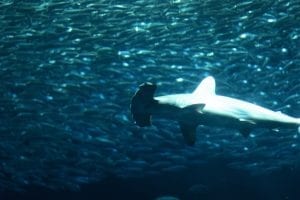
13Hammerheads have almost all-round vision.
The wide head of a hammerhead spaces its eyes far apart, giving it a very wide field of view and helping it scan for prey.
14Sharks have rough skin.
Shark skin is covered in tiny tooth-like scales called denticles, which reduce drag. Engineers have copied the design for swimsuits and ship coatings.
15Some sharks must keep swimming to breathe.
Many sharks need to keep moving to push water over their gills. Others, such as nurse sharks, can pump water over their gills while resting on the seabed.
16Some shark embryos eat each other.
In sand tiger sharks, the largest embryo in each womb eats its smaller siblings before birth, so only the strongest pup is born from each side.
17Female sharks can have babies without a male.
Several species, including bonnethead and zebra sharks, have been found to reproduce by parthenogenesis, where an egg develops without being fertilised.
18Bull sharks can live in rivers.
Bull sharks can survive in fresh water and have been found far up rivers such as the Mississippi and the Amazon.
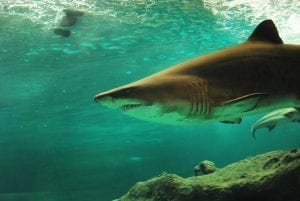
19Great white sharks have a powerful bite.
Scientists estimate that a large great white shark can bite with a force of around 4,000 pounds per square inch, several times stronger than a lion.
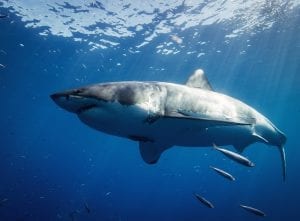
20Shark attacks are extremely rare.
According to the International Shark Attack File, there are usually fewer than 100 confirmed unprovoked shark bites worldwide each year, and fewer than ten deaths. You are far more likely to be struck by lightning.

FAQs about sharks
Are there sharks in UK waters?
Yes. More than 20 species live in or visit British waters, including basking sharks, blue sharks, porbeagles and small sharks such as dogfish. None has ever caused a confirmed fatal attack in the UK.
What is the biggest shark?
The whale shark, which can grow to around 18 metres long. It is also the biggest fish in the world.
How long do sharks live?
It varies by species. Many live for 20 to 30 years, great whites for 70 years or more, and Greenland sharks for centuries.
Sources and further reading
- The Shark Trust
- Florida Museum: International Shark Attack File
- legislation.gov.uk: Shark Fins Act 2023
Explore more: facts about scuba diving and facts about penguins.
Do you know any fun facts about sharks? Share them in the comments below!
Spotted something wrong? Suggest a correction
We check every suggestion and update articles when facts change. Thank you for helping keep facts.uk accurate.


Leave a Reply