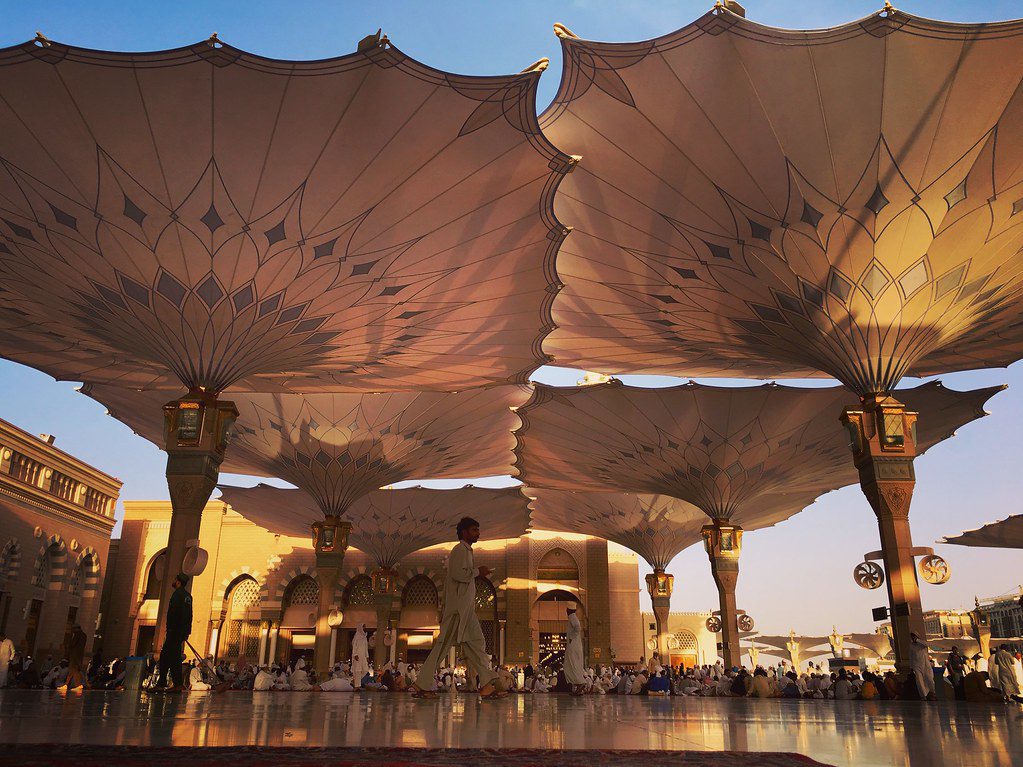
Medina is a city in the Hejaz region of western Saudi Arabia, about 250 km inland from the Red Sea and roughly 450 km north of Mecca. It is the second holiest city in Islam, home to the Prophet’s Mosque and the tomb of the Prophet Muhammad, and nearly 2 billion Muslims around the world turn to its story every year.
Yet Medina is far older than Islam, and its history takes in ancient kings, desert sieges, an Ottoman railway and one of the most remarkable stand-offs of the First World War. Here are the facts.
Medina at a glance
Where: Hejaz region, western Saudi Arabia
Population: about 1.4 million (2022 census)
Height above sea level: about 620 metres
Rainfall: about 60 mm a year
Ancient name: Yathrib
Full name: Al-Madinah al-Munawwarah, “the enlightened city”
1It is the second holiest city in Islam
Only Mecca is holier. Medina is where the Prophet Muhammad built his community, where he died in 632 CE, and where he is buried. For Muslims, a visit to Medina is not part of the Hajj itself, but millions of pilgrims travel there before or after their pilgrimage to Mecca.
2The city is far older than Islam
Before it was Medina, the city was called Yathrib. The earliest known written mention comes from an inscription of the Babylonian king Nabonidus in the 6th century BCE, and the oasis is thought to have been settled from around the 9th century BCE. Its springs, wells and fertile soil made it a natural stopping point on the incense trade routes of ancient Arabia.
3A journey to Medina starts the Islamic calendar
In 622 CE, facing persecution in Mecca, Muhammad and his followers migrated to Yathrib. This journey, the Hijra, is so important that the Islamic calendar counts its years from it. Dates in the Islamic calendar are marked AH, from the Latin Anno Hegirae, “in the year of the Hijra”.
4“Medina” simply means “the city”
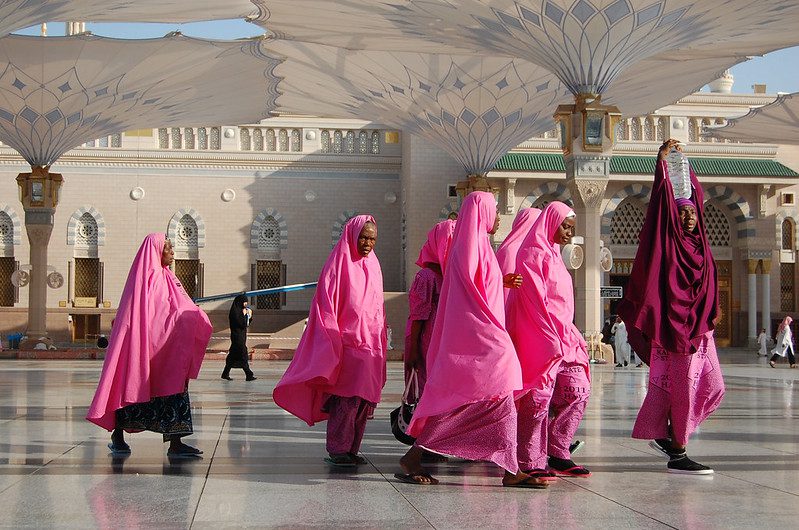
After the Hijra, Yathrib became Madinat al-Nabi, “the city of the Prophet”. Over time this was shortened to al-Madinah, “the city”. Today its full name is Al-Madinah al-Munawwarah, “the enlightened city” or “the radiant city”. The same Arabic word gives us the medinas, the old walled quarters of cities from Morocco to Tunisia.
5The Prophet’s Mosque began as a simple courtyard
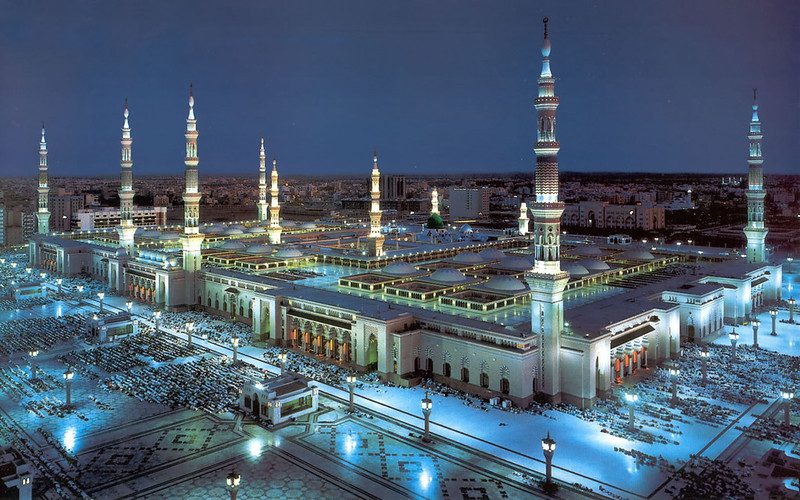
Al-Masjid an-Nabawi was first built by Muhammad and his companions in 622, with walls of mud brick and a roof of palm trunks and leaves. Centuries of expansion, especially under Saudi rule, have turned it into one of the largest buildings in the world, able to hold around a million worshippers at the busiest times. Its courtyards are shaded by 250 giant umbrellas that open automatically during the day.
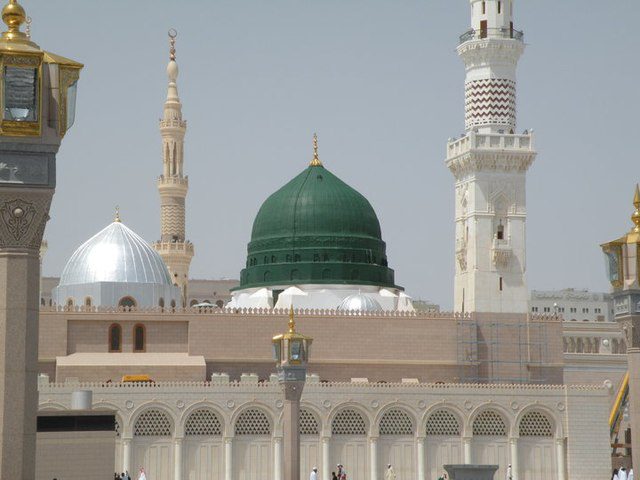
6The Green Dome marks the Prophet’s tomb
The Prophet Muhammad was buried in the room where he died, which is now inside the mosque. The first dome over the tomb was built in 1279. It was painted green in the 19th century, and the Green Dome has been the city’s most recognisable landmark ever since.
7Medina is home to the oldest mosque in Islam
The Quba Mosque, on the southern edge of the city, was built by Muhammad when he first arrived from Mecca, which makes it the first mosque in Islam. It is mentioned in the Quran, and tradition says the Prophet visited it every Saturday. A project called Darb as-Sunnah is turning the 3 km route between Quba and the Prophet’s Mosque into a pedestrian avenue.
8Non-Muslims can visit the city, but not its sacred centre
The central area around the Prophet’s Mosque, known as the Haram, is open only to Muslims. It is much smaller than the restricted area in Mecca, and the rest of the city, including hotels, shops and restaurants outside the centre, can be visited by anyone. Non-Muslims who live and work in Medina do so outside the Haram.
9It barely ever rains, but floods still happen
Medina gets only about 60 mm of rain a year, almost all of it between November and May, and summer temperatures regularly pass 40°C. Even so, the city sits where several desert valleys meet, including Wadi al-Aqiq, and a sudden storm can send water rushing through them. Flash floods have been part of Medina’s history for centuries.
10Medina is famous for its dates
The oasis has grown date palms for thousands of years, and well over 100 varieties are grown around the city today. The most famous is the Ajwa, a small, dark, soft date that is mentioned in the Hadith and is especially prized by pilgrims, who take boxes of it home as gifts.
11A volcano once threatened the city
Medina sits on the edge of Harrat Rahat, a vast field of ancient lava. In 1256 an eruption there sent lava flowing towards the city, and it stopped only a few kilometres short. Accounts from the time describe the glow being visible from far away at night.
12Its defenders once dug a trench to save it
In 627 CE an army of around 10,000 men from Mecca and its allies marched on Medina. On the advice of Salman the Persian, the Muslims dug a deep trench across the open northern approach to the city. The attackers could not cross it, and after a siege of about a month they gave up. It is remembered as the Battle of the Trench.
13The Ottomans built a railway to reach it
Medina came under Ottoman rule in 1517. In 1908 the Ottomans completed the Hejaz Railway, which ran about 1,300 km from Damascus to Medina and cut the pilgrim journey from weeks to days. During the First World War it was a favourite target for Arab raiders and T.E. Lawrence. It never reopened beyond Jordan, and rusting engines and stations still sit in the desert.
14Its Ottoman commander refused to surrender after the war ended
From 1916, during the Arab Revolt, Medina was besieged. Its Ottoman governor, Fakhri Pasha, held out for more than two and a half years and refused to give up the city even after the Ottoman Empire signed an armistice in October 1918. He was finally arrested by his own officers, and the city surrendered on 10 January 1919, making it one of the longest sieges in history.
15Saudi rule began in 1925
After the Ottomans left, Medina was ruled by the Hashemite Kingdom of Hejaz. Forces of Ibn Saud, the founder of modern Saudi Arabia, took the city on 5 December 1925. Since 1986 the Saudi king has used the title “Custodian of the Two Holy Mosques”, referring to the great mosques of Mecca and Medina.
16A bullet train now links Medina and Mecca
The Haramain High Speed Railway opened in 2018. Its trains reach 300 km/h and cover the roughly 450 km between the two holy cities in about two and a half hours, a journey that once took camel caravans around ten days. Medina also has its own international airport, used by millions of pilgrims each year.
FAQs about Medina
Where is Medina?
Medina is in the Hejaz region of western Saudi Arabia, about 250 km inland from the Red Sea and around 450 km north of Mecca.
Why is Medina important?
It is the second holiest city in Islam. The Prophet Muhammad lived there from 622 CE until his death in 632, and he is buried in the Prophet’s Mosque.
Can non-Muslims visit Medina?
Yes, but not the central sacred area around the Prophet’s Mosque, which is open only to Muslims. The rest of the city can be visited by anyone.
How far is Medina from Mecca?
About 450 km. The Haramain High Speed Railway makes the journey in around two and a half hours; by road it takes about four to five hours.
How many people live in Medina?
About 1.4 million people lived in the city at the 2022 Saudi census. The number of people in the city rises sharply during the pilgrimage seasons.
What was Medina called before?
Yathrib. It was renamed after the Prophet Muhammad settled there in 622 CE.
Sources and further reading
Explore more: facts about Saudi Arabia, facts about Lawrence of Arabia and facts about Baghdad.
Do you know any interesting facts about Medina? Share them in the comments below!
Spotted something wrong? Suggest a correction
We check every suggestion and update articles when facts change. Thank you for helping keep facts.uk accurate.
Leave a Reply