This article explains how the stock market works and its history. It is not financial advice. The value of shares can fall as well as rise, and you could get back less than you put in.
A share is a small piece of ownership in a company. Buying shares gives you a stake in the company’s future profits, and the risk that its value will fall. Stock markets have created fortunes, wiped them out and shaped the modern world. Here are 14 fascinating facts about stocks and shares.
1The first public shares were sold in 1602.
The Dutch East India Company (VOC) is generally regarded as the first company to sell shares to the general public, in Amsterdam in 1602. Investors could trade their shares with each other, creating one of the first stock exchanges.
2The London Stock Exchange began in a coffee house.
In the 1690s, traders who had been thrown out of the Royal Exchange for being too rowdy met at Jonathan’s Coffee House in Change Alley in the City of London. In 1698 John Castaing began publishing a list of share prices there, which was the beginning of the London Stock Exchange.
3The New York Stock Exchange began under a tree.
On 17 May 1792, 24 brokers signed the Buttonwood Agreement, named after the buttonwood tree outside 68 Wall Street where they met. It was the start of what became the New York Stock Exchange.
4The FTSE 100 started at 1,000.
The FTSE 100 index, which tracks the 100 largest companies listed in London, was launched on 3 January 1984 with a starting value of 1,000.
5The “Big Bang” changed the City overnight.
On 27 October 1986, the London Stock Exchange scrapped fixed commissions, let outside firms buy member companies and moved from face-to-face trading on the floor to screens. The changes became known as the Big Bang.
6The biggest one-day fall came in 1987.
On Black Monday, 19 October 1987, the Dow Jones Industrial Average fell by 22.6%, still its largest fall in a single day. In London, many traders were already rattled because the Great Storm had closed the market the previous Friday.
7Apple’s third founder sold out for $800.
Ronald Wayne co-founded Apple with Steve Jobs and Steve Wozniak in April 1976, with a 10% stake. Less than two weeks later he sold it back to them for $800. Had he kept it, it could have been worth many billions of dollars.
8Microsoft helped rescue Apple.
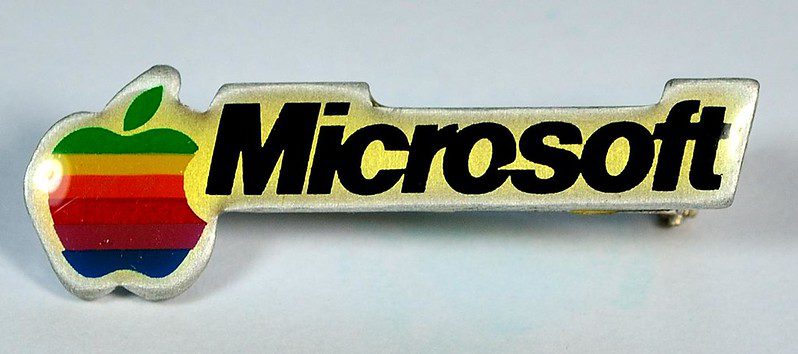
In 1997, when Apple was struggling, Microsoft invested $150 million in Apple shares and agreed to keep making Microsoft Office for the Mac. Steve Jobs announced the deal on stage, to boos from some of the audience.
9Walt Disney’s housekeeper became a millionaire.
Thelma Howard worked as the Disney family’s housekeeper for 30 years, and every Christmas Walt Disney gave her shares in his company. She held on to them, and when she died in 1994 they were reportedly worth more than $9 million.
10A company boss gave away his fortune to save Sega.
Isao Okawa, the chairman of video game company Sega, wrote off Sega’s debts to him and gave the company his own shares, worth around $700 million, shortly before he died in 2001. The gift helped Sega survive its move away from making consoles.
11Women were barred from the London Stock Exchange until 1973.
Women first worked on the New York Stock Exchange trading floor in 1943, filling jobs left by men during the Second World War, and Muriel Siebert became the first woman to buy a seat on the exchange in 1967. The London Stock Exchange did not admit women as members until 1973.
12Somali pirates once had their own “stock exchange”.
In 2009 news agency Reuters reported that people in the Somali town of Haradheere were buying “shares” in pirate gangs, receiving a cut of the ransoms. It was a stark example of the kind of venture no regulated market would touch.

13September has historically been a weak month.
Studies of US share prices have found that September has been the worst month on average for the stock market over many decades, a pattern known as the September effect. Nobody fully knows why, and it does not happen every year.
14Gains in an ISA are free of UK tax.
In the UK, shares held inside a stocks and shares ISA are free of income tax on dividends and capital gains tax on profits, up to the annual ISA allowance. The money is still invested, so its value can still go down.
FAQs about stocks and shares
What is the difference between stocks and shares?
In everyday use they mean much the same thing. “Shares” usually means units of ownership in a particular company, while “stocks” is often used more generally for shares in companies.
How do people buy shares in the UK?
Most people buy shares through an investment platform or stockbroker, which should be authorised by the Financial Conduct Authority. You can check a firm on the FCA register.
Is investing in shares risky?
Yes. Share prices can fall as well as rise, and you can lose money. MoneyHelper’s guides explain the risks and how to avoid investment scams.
Sources and further reading
Explore more: facts about Bitcoin and facts about mortgages.
Do you know any fun facts about stocks and shares? Share them in the comments below!
Spotted something wrong? Suggest a correction
We check every suggestion and update articles when facts change. Thank you for helping keep facts.uk accurate.

Leave a Reply