This is a sponsored article, published in partnership with a commercial partner. Links in it are paid links.
Only a handful rewrote the rules. So what separates the most revolutionary inventions from the merely clever ones? Reach, mostly. A great invention spreads, gets improved, and slips so deeply into daily life that nobody remembers the world without it.
Big inventions also create fresh problems, and those problems breed new tools. The internet linked billions of people, then left them exposed to tracking and data theft. That is one reason VeePN keeps VPN servers running across many countries, and if you ever need an Indian IP address, you can visit the official website to see the local options. Privacy tools are just a young branch on a very old tree.
The Wheel: Humanity Starts Rolling
Around 3500 BCE, someone in Mesopotamia fixed a round disc to an axle. Potters got there first, which surprises people. Carts came later. Once goods could roll, trade grew, cities grew, and armies learned to move faster than their enemies.
Simple idea. Enormous payoff. Nearly every machine since, from clocks to turbines, borrows the same turning logic, and you could argue that the wheel is the quiet grandparent of the whole industrial age.
A Quick Map of the Turning Points
Here is a short timeline of the milestones this article covers:
- c. 3500 BCE: the wheel, which moved trade and people
- c. 1440: movable-type printing, which moved ideas
- 1769: Watt’s steam engine patent, which moved factories
- 1879: the practical electric light, which moved the night
- 1903: powered flight, which shrank distances
- 1928: penicillin, which changed medicine
- 1969: the first ARPANET link, the seed of the internet
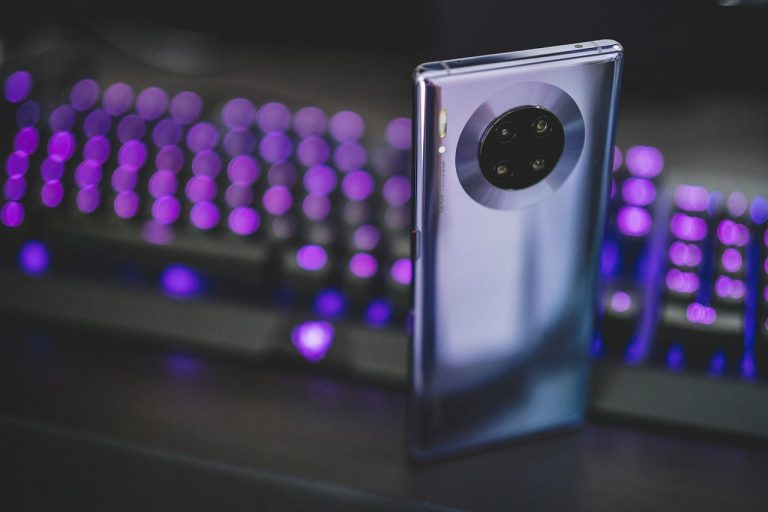
- 2007: the modern touchscreen smartphone, which put it all in a pocket
The Printing Press: Knowledge Gets Loose
Before Johannes Gutenberg built his movable-type press around the 1440s, books were luxury items copied painfully slowly by hand, numbered only in the thousands across Europe. Within fifty years, workshops opened in 236 European towns and produced roughly 20 million books. Cheap pages let ordinary artisans learn math, farming, and law without hiring private tutors.
“Printing, gunpowder, and the compass… these three have changed the whole face and state of things throughout the world.” — Francis Bacon, 1620
Why did print change history faster than almost anything before it? Ideas stopped vanishing when one scholar died or one library burned. Scientists across borders could test each other’s drawings, fix errors in public, and build on yesterday’s breakthroughs.
Steam and Electricity: Power on Demand
James Watt did not invent the steam engine, but his 1769 improvements made it efficient enough to change everything. Factories no longer had to sit beside rivers. Locomotives and steamships followed, and a journey that once took weeks shrank to a few days.
Electricity went further. Edison’s bulb of 1879 chased away the dark, and power grids soon ran homes, hospitals and offices. Today about 91 percent of the world has electricity.
Penicillin and Vaccines: Living Longer
In 1928, Alexander Fleming noticed that mold on a forgotten dish was killing the bacteria around it. That mold gave us penicillin.
Global life expectancy sat near 32 years in 1900. Now it is above 70. Sanitation, antibiotics and vaccines share the credit, and the World Health Organization says immunization alone prevents an estimated 3.5 to 5 million deaths every year.
Flight: The World Gets Smaller
On December 17, 1903, the Wright brothers stayed airborne for twelve seconds and covered about 120 feet. That is shorter than the wingspan of a Boeing 747. Hardly impressive on paper.
But look at what happened next. In 2019, airlines carried around 4.5 billion passengers in a single year. Breakfast in one country and dinner in another went from fantasy to ordinary Tuesday.
The Internet and the Smartphone: Everything, Everywhere
The internet began as ARPANET, a small research link between American universities in 1969. Tim Berners-Lee added the web in 1989. By 2024, the International Telecommunication Union estimated that about 5.5 billion people were online, roughly two thirds of humanity. Add the smartphone, and more than four billion people now carry a computer in their pocket.
Convenience has a price, of course. Public Wi-Fi at airports and cafés is easy to snoop on. One simple fix is a VPN extension for Chrome that encrypts your browser traffic in a few clicks. After that, checking your bank account over a latte feels a lot less risky.
What Comes Next?
“Any sufficiently advanced technology is indistinguishable from magic.”
— Arthur C. Clarke
Artificial intelligence, gene editing and fusion energy all hope to join the list of the most revolutionary inventions. Maybe one will. Maybe none will. History suggests we only spot the true game changers years later, when we try to imagine life without them.
Final Thoughts: So Which One Wins?
There is no single champion. The wheel started movement, print spread knowledge, electricity lit our homes, and medicine gave us extra decades.
What they share is simple: each one hands ordinary people a bit more control over time, distance or health.
Spotted something wrong? Suggest a correction
We check every suggestion and update articles when facts change. Thank you for helping keep facts.uk accurate.