


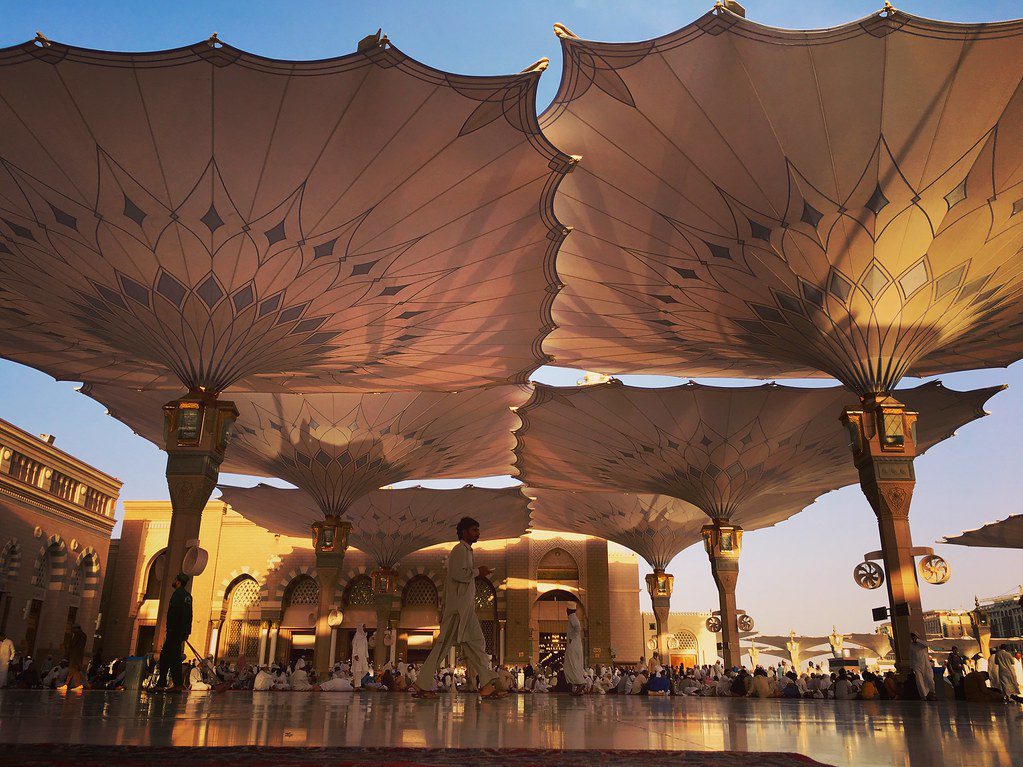
Medina is one of the most significant cities on Earth. For more than 1.8 billion Muslims worldwide, it is a place of deep spiritual importance – second only to Mecca in holiness. Yet beyond its religious status, Medina is a city of fascinating contradictions: a desert metropolis fed by date palms, a place of ancient origins shaped by one of history’s most consequential migrations, and a modern urban centre that still enforces laws dating back centuries.
Whether you are Muslim or not, the story of Medina is worth knowing. Here are 12 facts about this remarkable city that go well beyond the surface.
1. Medina is far larger than most people realise
When people picture Medina, they often think of its famous mosque and the city centre. The reality is considerably grander. The Medina region covers 58,680 square miles – that is around 151,990 square kilometres. To put that in perspective, it is larger than the entire country of England and Wales combined.
The city itself sits at roughly 620 metres above sea level, on a fertile volcanic plain surrounded by the Hejaz Mountains. That elevated position, and the presence of underground water sources, made it an attractive settlement long before Islam existed.
2. The city is much older than its Islamic history suggests
Medina is so closely associated with the Prophet Muhammad that it is easy to assume the city began with him. In fact, historians believe the settlement predates Muhammad’s arrival by at least 1,500 years. Archaeological evidence points to habitation stretching back to antiquity, with the city known in earlier times as Yathrib.
It was in 622 CE that Muhammad led his followers from Mecca to Yathrib, an event known as the Hijra. This migration is considered so foundational to Islam that it marks the beginning of the Islamic calendar. The city was renamed Madinat al-Nabi – “the city of the Prophet” – and has been known as Medina ever since.
3. The name “Medina” simply means “city”
The word Medina comes from the Arabic root ‘madinah’, which translates directly as ‘city’. It is a common word across the Arabic-speaking world – you will find medinas (old city districts) from Morocco to Jordan. What makes this Medina unique is that its name became inseparable from its identity as the Prophet’s city. Over time, the full name was shortened simply to “Medina,” and no further explanation was needed.
4. Rainfall here is almost nonexistent
Medina sits in one of the most arid environments on the planet. Average annual rainfall is just 35mm – roughly 1.4 inches. January is technically the wettest month, but even then, precipitation rarely exceeds 10mm. The city receives between 9.5 and 12 hours of direct sunshine per day, depending on the season.
Temperatures regularly exceed 40°C in summer. Water has historically been an enormously valuable commodity here, and the region’s ability to sustain agriculture at all is largely due to underground aquifers and ancient irrigation techniques developed over millennia.

5. Medina grows at least 139 varieties of date
Despite the extreme heat and minimal rainfall, Medina is one of the world’s great centres of date cultivation. The city grows at least 139 distinct varieties of date palm, and dates have been central to the region’s economy and culture for thousands of years.
Dates from Medina are exported globally and are considered among the finest in the world. The Ajwa date – a dark, wrinkled variety grown specifically in Medina – holds particular religious significance in Islam, with references to it found in the Hadith. During Ramadan and Hajj seasons, demand for Medinan dates surges dramatically.
6. A university was founded here specifically to educate the world’s Muslims
In 1961, the Islamic University of Medina was established with an explicit international mission. Unlike most universities, which primarily serve their domestic population, this institution was designed from the outset to attract students from Muslim communities across the globe.
Its curriculum is centred on Islamic studies, Arabic language, and Sharia law. Today it draws students from over 130 countries, making it one of the most internationally diverse religious universities in the world. Tuition, accommodation, and a monthly stipend are provided to students – an arrangement that reflects the institution’s role as a vehicle for religious education and diplomacy.
7. There is a zone in the city that non-Muslims may not enter
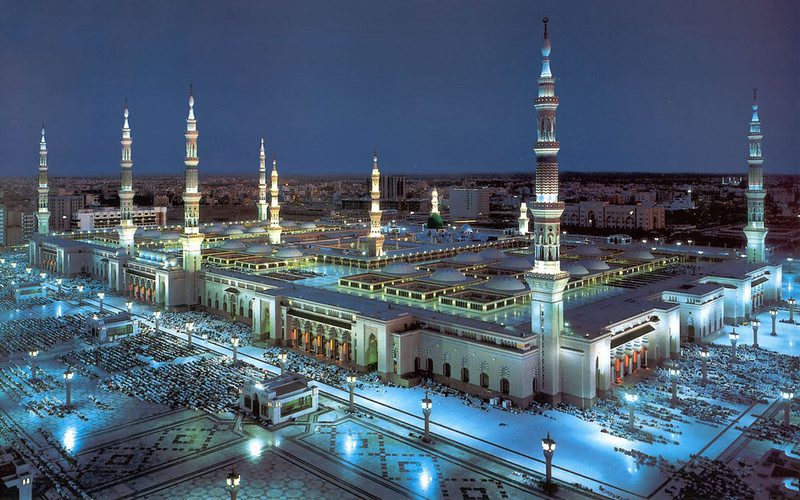
At the heart of Medina lies a restricted zone that is closed to non-Muslims. This area is demarcated by a ring road – the King Abdullah Ring Road – approximately 9 kilometres in diameter. Within it sits the Al-Masjid an-Nabawi (the Prophet’s Mosque), one of the largest mosques in the world and the burial site of the Prophet Muhammad.
The restriction is not new. It has historical roots in Islamic tradition and has been codified into Saudi law. Checkpoints are maintained on the roads leading into the restricted zone. For Muslims, entry is unrestricted – and millions make the journey every year.
8. The Prophet’s Mosque is among the largest buildings on Earth
Al-Masjid an-Nabawi was originally built by Muhammad himself after his arrival in 622 CE. It began as a modest structure. Over the centuries – and particularly under Saudi governance in the 20th and 21st centuries – it has been expanded on an extraordinary scale.
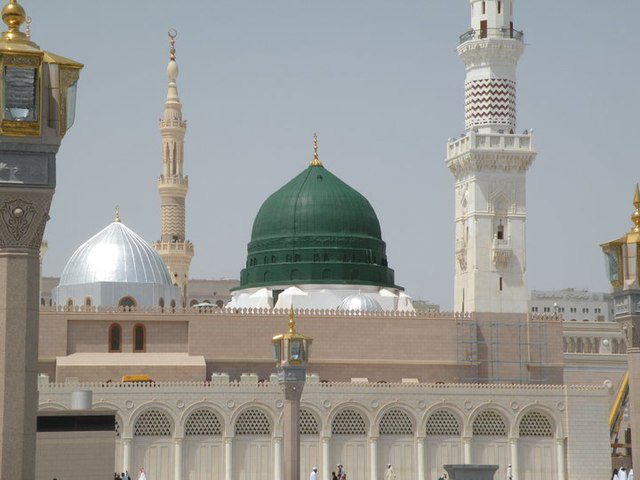
Today the mosque covers over 400,000 square metres and can accommodate up to one million worshippers simultaneously. Its iconic green dome marks the tomb of the Prophet Muhammad beneath it. It is one of the most visited sites on Earth, receiving tens of millions of visitors each year during Hajj and Umrah seasons.

9. Pork is entirely prohibited throughout the city
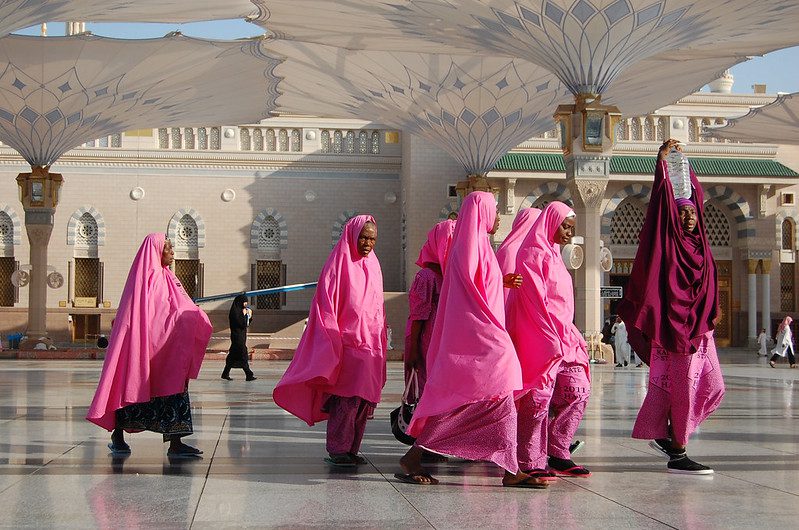
Medina operates under strict Islamic law. The sale and consumption of pork is completely prohibited – not just in restaurants, but across the entire city. Alcohol is similarly banned throughout Saudi Arabia as a whole.
Visitors from non-Muslim backgrounds should not expect to find Western-style menus. That said, Medina’s food culture is rich and diverse. Lamb, chicken, and fish dishes dominate, and the city’s cuisine draws influences from across the Muslim world – from North Africa to South Asia – reflecting centuries of pilgrimage traffic from every corner of the globe.
10. The Ottomans built a railway specifically to control the pilgrimage routes
In the early 20th century, the Ottoman Empire completed the Hejaz Railway – a line running from Damascus all the way to Medina, passing through what is now Jordan and Saudi Arabia. The project was partly practical, intended to ease the Hajj journey, and partly political, designed to strengthen Ottoman control over the holy cities.
Construction was completed in 1908. Within 16 years, Ottoman rule over the region had collapsed. The railway was damaged during the Arab Revolt of World War One – famously sabotaged by T.E. Lawrence (Lawrence of Arabia) – and never fully restored. Sections of the track still exist today, scattered across the desert as a remarkable piece of industrial heritage.

11. Medina was once ruled by the Ottoman Empire for centuries
Medina came under Ottoman control in 1517, when Sultan Selim I brought the Hejaz region into the Empire’s fold. For nearly four centuries, the Ottomans administered the city and considered the guardianship of the holy cities a cornerstone of their legitimacy as the leaders of the Islamic world.
Ottoman control ended in 1925 when Ibn Saud – the founder of modern Saudi Arabia – captured Medina. The city has been governed by the Saudi state ever since, and the title “Custodian of the Two Holy Mosques” remains central to the identity of the Saudi monarchy today.
12. Football has deep roots in Medina
Medina has a passionate football culture. Al-Ansar FC, one of the city’s most prominent clubs, was founded in 1953 – eight years before the Islamic University was established. The club has competed in the Saudi Professional League and carries strong local support.
Football in Medina, as elsewhere in Saudi Arabia, has undergone something of a transformation in recent years. Significant investment in Saudi football – including high-profile international player signings across the country – has raised the profile of the sport at every level, including in Medina.
FAQs about Medina
What languages are spoken in Medina?
Arabic is the official and dominant language. English is widely taught in schools and used in commercial settings. Other languages commonly heard include Urdu, Farsi, Turkish, and Malay - a reflection of the city's status as a destination for pilgrims from across the Muslim world.
How many people live in Medina?
The population of Medina city was approximately 1.48 million as of 2020. However, this figure fluctuates significantly throughout the year. During the Hajj season, the population of the wider region swells dramatically as millions of pilgrims arrive.
What does Medina mean?
Medina derives from the Arabic word madinah, meaning simply city. The full historical name was Madinat al-Nabi — the city of the Prophet - given after Muhammad's migration there in 622 CE. Over time, the name was shortened to Medina, and no further clarification was needed.
Can non-Muslims visit Medina?
Non-Muslims may visit parts of Medina, including hotels, restaurants, and many public areas. However, they are not permitted to enter the central restricted zone — approximately 9km in diameter — which contains the Prophet's Mosque and surrounding sacred areas.
How far is Medina from Mecca?
Medina is approximately 450km (around 280 miles) north of Mecca. By road, the journey takes roughly four to five hours. The two cities are connected by high-speed rail via the Haramain High Speed Railway, which opened in 2018 and reduces travel time to around two hours.
Do you know any interesting facts about Medina? Share them in the comments below!