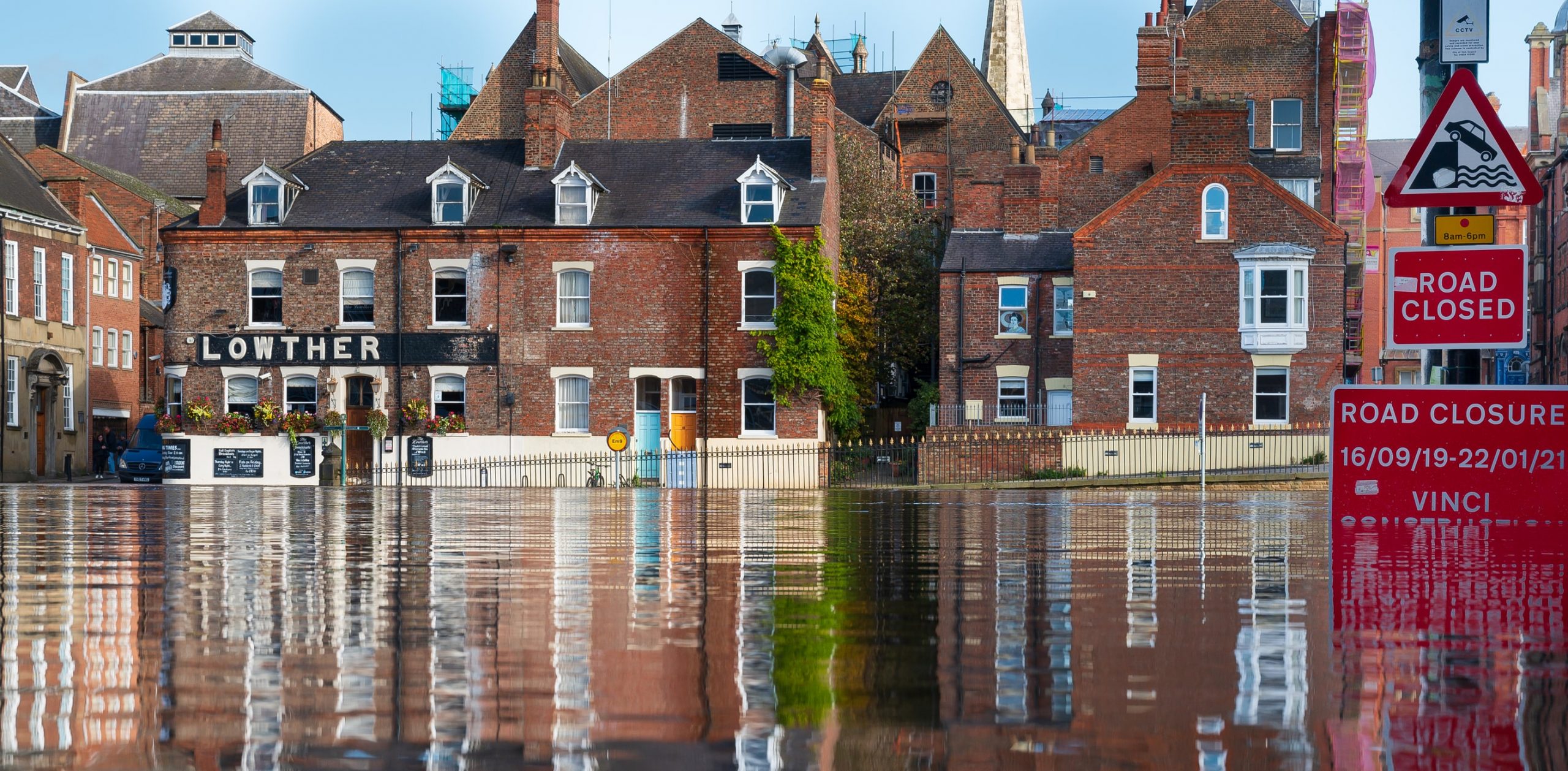
Floods are the most common natural disaster on Earth, and one of the deadliest: a single flood in China in 1931 may have killed millions. Just 15 cm of fast-flowing water can knock you off your feet. Here are 17 facts about floods, from what causes them to the barrier that protects London.
Floods at a glance
What: water covering land that is normally dry
Main types: river, surface water, coastal, flash and groundwater floods
Deadliest on record: the 1931 China floods
UK risk: about 6.3 million properties in England are in areas at risk
Most dangerous place to be: in a vehicle in moving water
1Floods are the most common natural disaster.
According to the UN Office for Disaster Risk Reduction, floods made up about 44% of all recorded natural disasters between 2000 and 2019, affecting around 1.6 billion people.
2There are several different kinds of flood.
River (or fluvial) floods happen when rivers burst their banks. Surface water (or pluvial) floods happen when heavy rain can’t drain away fast enough. Coastal floods are caused by storm surges and high tides, and groundwater floods by water rising up from underground.
36.3 million properties in England are at risk.
The Environment Agency’s 2024 national assessment found that around 6.3 million properties in England are in areas at risk of flooding from rivers, the sea or surface water. With climate change, that could rise to around 8 million by the middle of the century.

4Surface water is the biggest risk in England.
Most people picture rivers overflowing, but more homes in England are at risk from surface water flooding, caused by intense rain on hard surfaces such as roads and roofs, than from rivers and the sea combined.
5A little water can be deadly.
About 15 cm (6 inches) of fast-moving water can knock an adult off their feet. Around 30 cm (1 foot) can float many cars, and 60 cm (2 feet) can sweep away most vehicles, including SUVs.

6Most flood deaths in the US happen in cars.
The US National Weather Service says more than half of all flood-related drownings happen when a vehicle is driven into dangerous floodwater. Its safety slogan is “Turn Around, Don’t Drown”.
7Flash floods can arrive in minutes.
A flash flood can follow within minutes or a few hours of heavy rain, a dam failure or a sudden release of water, giving people little or no warning. In October 2024, flash floods around Valencia in Spain killed more than 220 people.
8The deadliest flood may have killed millions.
In the summer of 1931, the Yangtze, Huai and Yellow rivers in China flooded after months of heavy rain. Estimates of the death toll, including deaths from disease and famine afterwards, range from about 400,000 to as many as 4 million, making it one of the deadliest natural disasters in history.
9One huge flood was caused on purpose.
In 1938, China’s Nationalist government broke the dykes of the Yellow River to slow the advancing Japanese army. The flood that followed killed hundreds of thousands of Chinese civilians and left millions homeless.
10The 1953 North Sea flood changed two countries.
On the night of 31 January 1953, a storm surge struck the coasts of eastern England and the Netherlands. It killed 307 people in England and more than 1,800 in the Netherlands, and led to the building of the Thames Barrier and the Dutch Delta Works.
11The Thames Barrier protects London.
The Thames Barrier became operational in 1982 and was opened by Queen Elizabeth II in 1984. Its steel gates can be raised to stop surge tides from the North Sea, and it has been closed more than 200 times to protect London.

12A quarter of the Netherlands lies below sea level.
About 26% of the Netherlands is below sea level and around 60% is at risk of flooding, protected by dykes, dunes, storm barriers and pumps. The Dutch have been holding back the sea for more than 1,000 years.
13Nobody died in the Boscastle flood.
On 16 August 2004, torrential rain sent a wall of water through the village of Boscastle in Cornwall, washing away cars and badly damaging buildings. Around 100 people were rescued, many by helicopter, and remarkably nobody was killed.
14Even deserts flood.
Deserts often flood because hard, dry ground can’t soak up sudden rain. In September 2024, rare storms in Morocco filled Lake Iriqui, in the Sahara, for the first time in around 50 years.

15A third of Pakistan was underwater in 2022.
Record monsoon rains and melting glaciers in 2022 left around a third of Pakistan underwater at the peak. More than 1,700 people died and about 33 million were affected.
16Some floods were once a blessing.
For thousands of years, the Nile flooded every summer, spreading rich silt across the fields of Egypt and making farming possible in the desert. The Ancient Egyptian calendar even began with a season called Akhet, “the inundation”. The yearly flood ended after the Aswan High Dam was completed in 1970.
17Hurricane Katrina flooded 80% of New Orleans.
When Hurricane Katrina struck in August 2005, its storm surge broke through the levees protecting New Orleans, leaving about 80% of the city underwater. More than 1,300 people died, and it remains one of the costliest disasters in US history.

FAQs about floods
What causes floods?
Mostly heavy or prolonged rain, rivers overflowing, storm surges at the coast, melting snow and ice, and occasionally dam or levee failures. Paved surfaces and blocked drains make surface flooding worse.
What is the most dangerous type of flood?
Flash floods, because they arrive quickly with little warning and the water moves fast enough to sweep away people and cars.
Is floodwater dangerous to touch?
Yes. Floodwater is often contaminated with sewage, chemicals and debris, and can hide open drains and sharp objects. Avoid walking or driving through it, and wash your hands thoroughly after any contact.
How can I check if my home is at risk of flooding?
In England, use the government’s long-term flood risk checker on GOV.UK. Scotland, Wales and Northern Ireland have their own flood maps, and you can sign up for free flood warnings.
Sources and further reading
- GOV.UK: check your long-term flood risk
- Environment Agency: national flood risk assessment (2024)
- US National Weather Service: Turn Around, Don’t Drown
Explore more: more facts about hurricanes.
Do you know any interesting facts about floods? Share them in the comments below!
Spotted something wrong? Suggest a correction
We check every suggestion and update articles when facts change. Thank you for helping keep facts.uk accurate.

Leave a Reply