
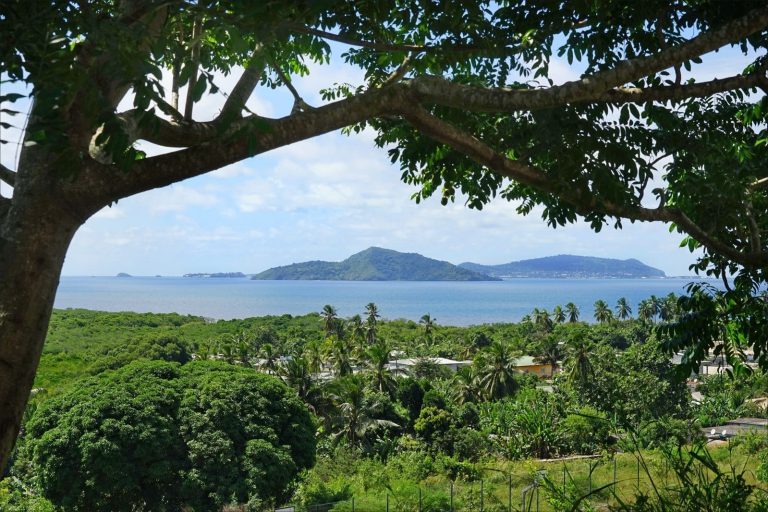
Réunion is a volcanic island in the Indian Ocean, east of Madagascar, that is fully part of France and the European Union. It has one of the world’s most active volcanoes, record-breaking rain and the boy who made vanilla farming possible. Here are 18 facts about Reunion.
1Réunion is part of France, not a separate country.
Réunion became an overseas department of France in 1946. French laws apply there just as they do in mainland France, and its people are French citizens.

2It is in the European Union and uses the euro.
Réunion is one of the EU’s nine “outermost regions”, far from mainland Europe but still inside the EU. Its currency is the euro, so a coffee in Saint-Denis is paid for with the same money as one in Paris.
3Its nearest neighbour is Mauritius.
Réunion lies about 175 kilometres (94 nautical miles) south-west of Mauritius and about 679 kilometres east of Madagascar.

4Nobody lived on Réunion until the 17th century.
The island was uninhabited before Europeans arrived. Permanent settlement began in 1665, when the French East India Company sent the first settlers.
5The island has had several names.
It was named Île Bourbon in 1649 and renamed Île Bonaparte in 1806, after Napoleon. The name Réunion, first used during the French Revolution, has been used ever since 1848.
6Réunion was briefly under British control.
British forces captured the island in July 1810 during the Napoleonic Wars. It was handed back to France under the Treaty of Paris of 1814.
7Almost 900,000 people live on the island.
Réunion covers about 2,512 square kilometres (970 square miles), roughly one and a half times the size of Greater London. The French statistics office INSEE estimated its population at 896,200 on 1 January 2025. The capital is Saint-Denis, on the north coast.
8French is the official language, but most people speak Creole.
French is the only official language, yet Réunion Creole is the language most people use day to day.
9Piton de la Fournaise is one of the most active volcanoes on Earth.
The “Peak of the Furnace” rises to 2,621 metres and has had more than 150 recorded eruptions since the 17th century. A volcano observatory has watched it closely since 1978.
10Its highest point is over 3,000 metres high.
Piton des Neiges, the “Peak of the Snows”, reaches about 3,070 metres (10,070 feet). It is an older volcano at the centre of the island, surrounded by three huge natural amphitheatres called cirques: Cilaos, Mafate and Salazie.
11Much of the island is a UNESCO World Heritage Site.
The “Pitons, cirques and remparts of Reunion Island” were added to the World Heritage List in 2010. The site covers the core of Réunion National Park, with its peaks, steep cliffs and forests full of plants found nowhere else.
12One part of the island has no roads at all.
The Cirque de Mafate can only be reached on foot or by helicopter. Its small hamlets are linked only by mountain footpaths.
13Réunion holds the world record for the most rain in 24 hours.
According to the World Meteorological Organization, 1,825 mm (71.8 inches) of rain fell at Foc-Foc on 7 to 8 January 1966, during Tropical Cyclone Denise. Réunion also holds the world records for the most rain in three days and in four days.

14An older rainfall “record” turned out to be a mistake.
A figure of 1,870 mm in 24 hours at Cilaos in March 1952 was once quoted as the world record. Meteorologists now consider it an old error, so it no longer counts.
15The east is far wetter than the west.
Trade winds blow in from the south-east and drop most of their rain on the eastern side of the mountains. The western coast, sheltered from the wind, is much drier and sunnier.
16A 12-year-old boy on Réunion changed the vanilla trade.
In 1841 Edmond Albius, an enslaved boy of about 12, found a quick way to pollinate vanilla flowers by hand. Vanilla plants outside Mexico rarely produced pods without their natural pollinators, and his simple method is still used to grow almost all vanilla today.
17Sugar cane took over from coffee.
Coffee was once the main crop, but cyclones and floods in 1806 and 1807 badly damaged it and sugar cane took its place. The island is also known for rum and for geranium oil, which is used in perfume.

18Women on Réunion live to about 84 on average.
INSEE gives life expectancy at birth in 2024 as 84.1 years for women and 78.5 years for men.
FAQs about Réunion
Is Réunion a country?
No. Réunion is an overseas department and region of France, so it is part of France and of the European Union.
What currency is used in Réunion?
The euro, the same currency as in France and most other EU countries.
How far is Réunion from Mauritius?
About 175 kilometres. Mauritius lies to the north-east, and the flight between the two islands is short.
Sources and further reading
- INSEE: Bilan démographique 2024 à La Réunion
- Guinness World Records: Greatest rainfall in 24 hours
- Wikipedia: Réunion
- Wikipedia: Piton de la Fournaise
Explore more: facts about Mauritius, facts about Madagascar and facts about volcanoes.
Do you know any fun facts about Réunion? Share them in the comments below!
Spotted something wrong? Suggest a correction
We check every suggestion and update articles when facts change. Thank you for helping keep facts.uk accurate.
Leave a Reply