
Kenya is home to the Great Migration, some of the oldest stone tools ever found, the world’s fastest marathon runners and the mobile money system that changed banking across Africa. Here are 17 facts about Kenya, from how it got its name to why it drinks tea rather than its own famous coffee.
Kenya at a glance
Capital: Nairobi
Population: 47.6 million at the 2019 census, and over 50 million today
Official languages: Swahili and English
Currency: Kenyan shilling
Independence: 12 December 1963, from Britain
1It is named after a mountain.
Kenya takes its name from Mount Kenya, an extinct volcano that rises to 5,199 metres (17,057 feet), making it the second-highest mountain in Africa after Kilimanjaro. Even though it sits almost on the equator, its peaks have glaciers, although they are shrinking fast.
2The equator runs straight through it.
The equator crosses Kenya from west to east, so the country lies in both the northern and southern hemispheres. Roadside signs mark the line in several towns, including Nanyuki, at the foot of Mount Kenya.
3It shares borders with five countries.
Kenya borders Ethiopia to the north, Somalia to the east, Tanzania to the south, Uganda to the west and South Sudan to the northwest. To the southeast it has around 500 km of coastline on the Indian Ocean, with the old trading towns of Mombasa and Lamu.
4It became independent in 1963.
Kenya was a British colony until 12 December 1963, a date now celebrated every year as Jamhuri (Republic) Day. Independence followed the Mau Mau uprising of the 1950s, and Jomo Kenyatta became the country’s first prime minister and then its first president.
5More than 40 ethnic groups live there.
The largest groups include the Kikuyu, Luhya, Kalenjin, Luo and Kamba, each with its own language and traditions. The Maasai, famous for their red shukas (cloth wraps) and beadwork, are among the best known outside Kenya, although they make up only a small share of the population.
6The world’s oldest known stone tools were found there.
In 2015, archaeologists announced that stone tools found at Lomekwi, near Lake Turkana, were about 3.3 million years old. That makes them older than the earliest known members of our own genus, Homo, so they may have been made by an earlier human ancestor.
7One of the most complete early human skeletons was found there too.
In 1984, a team led by Richard Leakey found the skeleton of “Turkana Boy”, a young Homo erectus who died about 1.5 million years ago. It is one of the most complete early human skeletons ever discovered.
8Nairobi means “cool water”.
The capital takes its name from a Maasai phrase, Enkare Nairobi, meaning “cool water”, after a stream that ran through the area. It began as a railway depot in 1899 and is now a city of about 4.4 million people and one of East Africa’s biggest business hubs.

9You can see lions with skyscrapers behind them.
Nairobi National Park lies only about 7 km from the city centre. It is home to lions, leopards, giraffes, buffalo and one of Kenya’s most important rhino sanctuaries, and it is one of the very few national parks anywhere that sits right next to a capital city.
10It hosts part of the Great Migration.
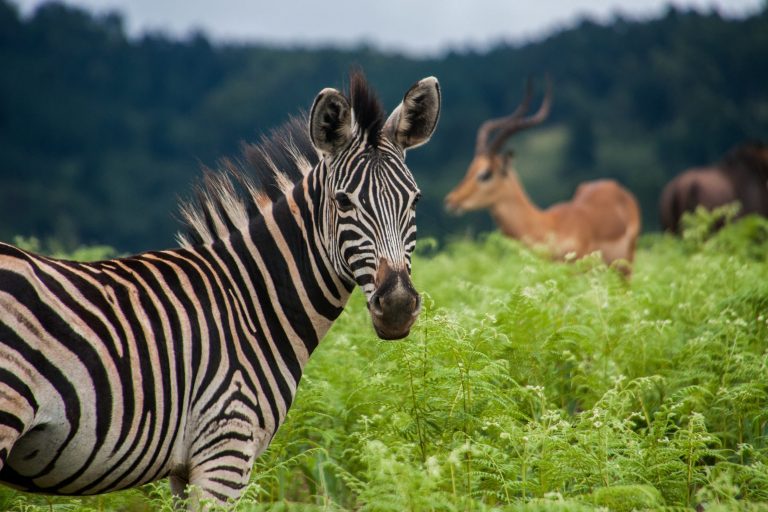
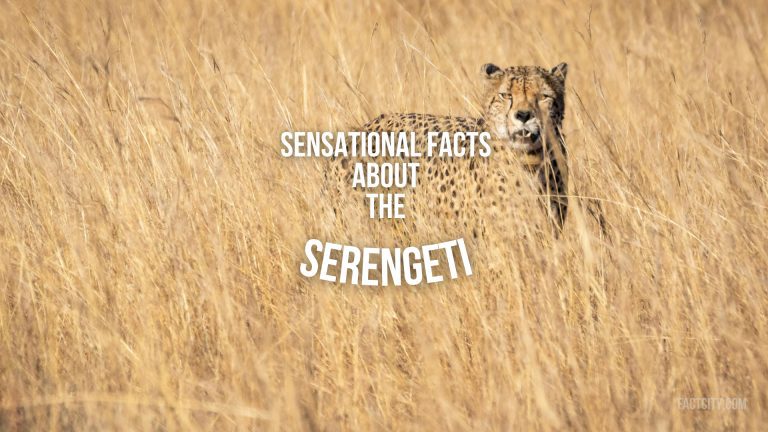
Every year, more than a million wildebeest, along with hundreds of thousands of zebras and gazelles, move between Tanzania’s Serengeti and Kenya’s Maasai Mara in search of fresh grass. They are usually in the Mara from around July to October, and their crossings of the crocodile-filled Mara River are one of the great wildlife sights on Earth.

11It produces many of the world’s best distance runners.
Kenyan athletes, many of them from the Kalenjin community in the highlands of the Rift Valley, have dominated distance running for decades. In 2019, Eliud Kipchoge became the first person to run a marathon in under two hours, in a specially organised event in Vienna, and in 2023 Kelvin Kiptum set the official men’s marathon world record of 2:00:35 in Chicago.
12It led the world in mobile money.
M-Pesa, launched in Kenya in 2007, lets people send and receive money by text message, without a bank account. It is now used by most Kenyan adults and has been copied around the world.

13Kenya’s first Nobel Prize winner planted millions of trees.
Wangari Maathai founded the Green Belt Movement, which planted tens of millions of trees across Kenya. In 2004 she became the first African woman to win the Nobel Peace Prize.
14It is one of the world’s biggest tea exporters.
Kenya is one of the world’s largest exporters of black tea, much of it grown in the highlands around Kericho, and tea is one of its biggest sources of foreign income. Kenyan coffee is prized abroad too, but at home most people drink tea, usually brewed with milk and sugar as chai.
15It has the world’s largest permanent desert lake.
Lake Turkana, in Kenya’s dry north, is the largest permanent desert lake in the world. Its waters are tinted green by algae, earning it the nickname the “Jade Sea”, and it is home to one of the largest populations of Nile crocodiles in Africa.
16Its flag includes a Maasai shield.
The Kenyan flag has black, red and green stripes separated by thin white bands. Black stands for the people, red for the blood shed in the struggle for independence, green for the land and white for peace, and in the centre is a traditional Maasai shield with two crossed spears.

17It has two rainy seasons.
Most of Kenya has “long rains” from around March to May and “short rains” from around October to December. The coast is hot and humid all year, the highlands are surprisingly cool, and much of the north is dry and semi-desert.
FAQs about Kenya
What is Kenya famous for?
Its wildlife and safaris, especially the Great Migration in the Maasai Mara, its long-distance runners, its tea and coffee, and its beaches on the Indian Ocean.
What language is spoken in Kenya?
Swahili and English are the official languages, and most Kenyans also speak the language of their own community, such as Kikuyu, Luo or Kalenjin.
What is the capital of Kenya?
Nairobi, a city of about 4.4 million people in the south of the country.
When is the best time to go on safari in Kenya?
The dry season, from about July to October, is the most popular time, because animals gather around water and the Great Migration is usually in the Maasai Mara.
Sources and further reading
- Britannica: Kenya
- Kenya National Bureau of Statistics
- Nature: 3.3-million-year-old stone tools from Lomekwi 3
Explore more: more facts about Nairobi.
Do you know any fun facts about Kenya? Share them in the comments below!
Spotted something wrong? Suggest a correction
We check every suggestion and update articles when facts change. Thank you for helping keep facts.uk accurate.

Leave a Reply