St Andrew’s Day, on 30 November, is Scotland’s national day, celebrating the country’s patron saint with ceilidhs, food and festivals. Andrew is also honoured in countries from Greece to Barbados. Here are 12 facts about St Andrew’s Day.
1It is celebrated on 30 November.
The date is traditionally said to be the day St Andrew died, in the first century AD.
2It is a bank holiday in Scotland.
The St Andrew’s Day Bank Holiday (Scotland) Act 2007 made 30 November an official bank holiday in Scotland, although many employers do not give it as a day off. When it falls at a weekend, the following Monday is the holiday.
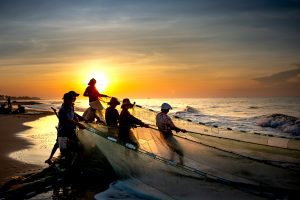
3Andrew was a fisherman.
According to the Bible, Andrew was a fisherman from Galilee and the brother of Simon Peter. He is often called the “first called” because he was the first of Jesus’s disciples.
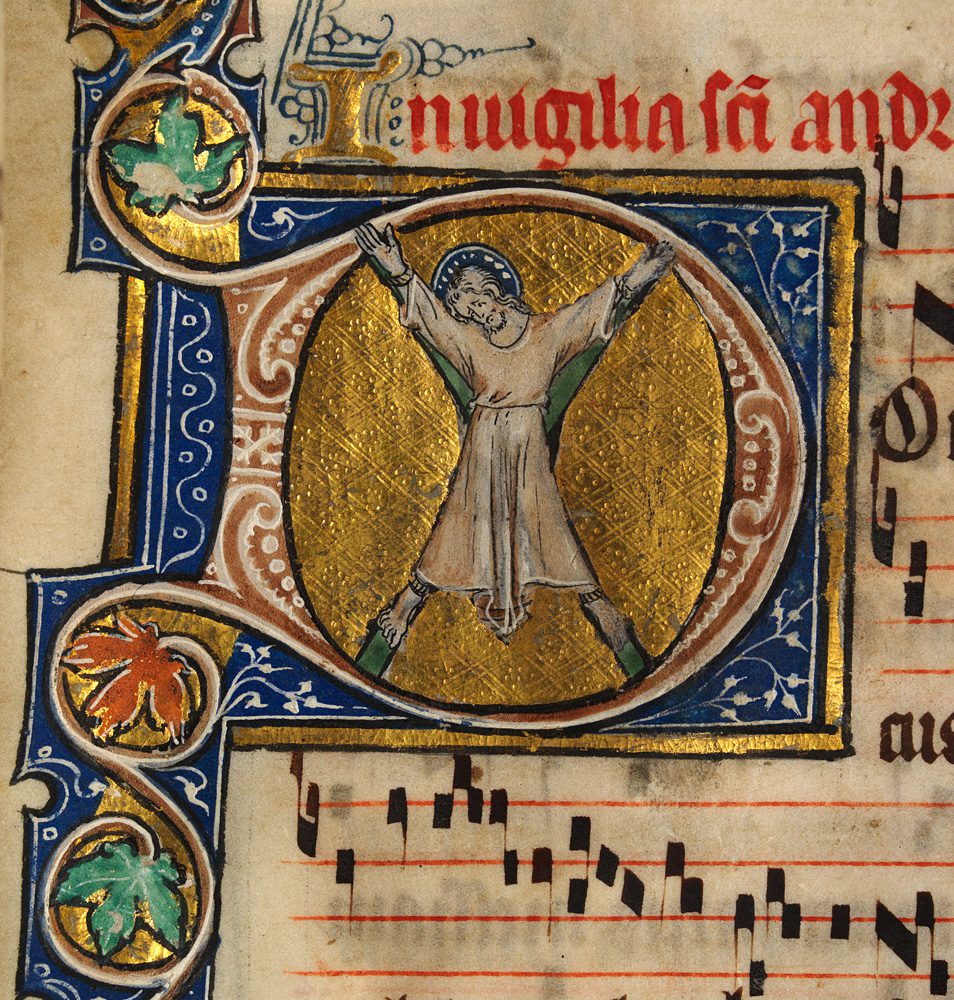
4He was crucified on an X-shaped cross.
Tradition says Andrew was crucified at Patras in Greece on a diagonal cross, because he felt unworthy to die on the same shape of cross as Jesus. This X-shaped cross is called a saltire.
5The saltire is one of the oldest national flags.
Legend says that in the 800s, before a battle near Athelstaneford in East Lothian, a Scottish king saw a white saltire against a blue sky and won the battle. The flag has been used for centuries since.
6He never visited Scotland.
Andrew had no known connection with Scotland during his life. According to legend, some of his relics were carried there by St Rule, and the town of St Andrews grew up around the shrine.
7The Declaration of Arbroath names him.
The Declaration of Arbroath, the famous letter of 1320 asserting Scotland’s independence, describes St Andrew as the nation’s patron and protector.
8His saltire is part of the Union Flag.
The white diagonal cross on a blue background forms part of the Union Flag of the United Kingdom, alongside the crosses of St George and St Patrick.
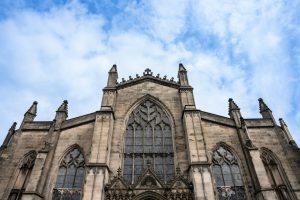
9Relics are kept in Edinburgh.
St Mary’s Catholic Cathedral in Edinburgh holds relics of St Andrew, given to Scotland in 1879 and 1969.
10He is also patron saint of other countries.
Andrew is the patron saint of Greece, Romania, Russia and Ukraine, as well as of fishermen and singers.
11Barbados celebrates its independence on St Andrew’s Day.
Barbados became independent on 30 November 1966, and became a republic on the same date in 2021. St Andrew is the island’s patron saint.
12Scots celebrate with ceilidhs and food.
Many towns hold ceilidhs, concerts and festivals, and traditional dishes such as haggis, neeps and tatties and cullen skink are served. The day also marks the start of Scotland’s winter festival season, which runs through Hogmanay to Burns Night.
FAQs about St Andrew’s Day
When is St Andrew’s Day?
Every year on 30 November.
Is St Andrew’s Day a bank holiday?
It is an official bank holiday in Scotland, but not in the rest of the UK, and not every Scottish employer gives the day off.
Sources and further reading
Explore more: facts about Barbados.
Do you know any facts about St Andrew’s Day? Share them in the comments below!
Spotted something wrong? Suggest a correction
We check every suggestion and update articles when facts change. Thank you for helping keep facts.uk accurate.