
The Cocos (Keeling) Islands are a remote scattering of coral islands in the Indian Ocean, home to fewer than 600 people. For 150 years they were run as a private fiefdom by a Scottish family known as the “Kings of Cocos”, Charles Darwin studied their reefs, and a famous First World War sea battle was fought off their shores. Here are 14 facts about the Cocos (Keeling) Islands.
The Cocos (Keeling) Islands at a glance
Where: the Indian Ocean, about 2,750 km northwest of Perth
Status: an external territory of Australia
Islands: 27, on two coral atolls
Population: about 600 (2021 census)
Land area: about 14 square km (5.4 square miles)
Currency: Australian dollar
1They have two names.
The islands are named after the coconut palms that cover them and after the English sea captain William Keeling, who sighted them in 1609 while working for the East India Company. Locals usually just call them Cocos.
2They belong to Australia.
The islands have been an Australian territory since 1955. Before that they were run from Ceylon (now Sri Lanka) and Singapore as part of the British Empire.

3There are 27 islands, but only two are lived on.
The territory is made up of two atolls: a large horseshoe-shaped ring of 26 islands around a lagoon, called South Keeling, and the single island of North Keeling, 24 km away. People live only on West Island and Home Island.
4The two inhabited islands are very different.
West Island, with the airport and most government offices, is home mainly to Australians from the mainland. Home Island is home to the Cocos Malay community, descendants of workers brought to the islands in the 19th century, who make up most of the population.

5A Scottish family ruled them for 150 years.
In 1827, the Scottish trader John Clunies-Ross settled on the islands and set up coconut plantations. His family ran Cocos almost as a private kingdom, even issuing their own currency, until the Australian government bought the islands from the last “King of Cocos” in 1978.
6The islanders voted to join Australia in 1984.
In a United Nations-supervised vote in 1984, the people of Cocos chose to integrate fully with Australia rather than become independent or loosely linked.
7Charles Darwin studied their reefs.
HMS Beagle visited Cocos in April 1836, and Charles Darwin’s observations of the coral there helped him develop his theory of how atolls form, as coral grows upwards around sinking volcanic islands.
8A famous sea battle was fought there.
On 9 November 1914, the Australian cruiser HMAS Sydney caught the German raider SMS Emden after it landed a party to wreck the cable and radio station on Direction Island. The badly damaged Emden was run aground on North Keeling, Australia’s first naval victory.
9North Keeling is a national park.
The whole of North Keeling island and the sea around it form Pulu Keeling National Park, an important breeding site for seabirds such as red-footed boobies, frigatebirds and the endangered Cocos buff-banded rail.
10Most of the islands are barely above sea level.
The low coral islands rise only a few metres above the sea, which makes them highly vulnerable to storms and rising sea levels.
11You fly there from Perth.
West Island Airport has regular flights from Perth, usually via Christmas Island, taking around five hours in total. The runway was built during the Second World War.

12Their clocks are set half an hour off.
The islands use Cocos Islands Time, six and a half hours ahead of GMT, one of the few time zones in the world offset by half an hour.
13Most people speak Cocos Malay.
English is the official language, but most residents of Home Island speak Cocos Malay, a variety of Malay that has developed its own words and sounds over almost 200 years.
14The lagoon is famous for its marine life.
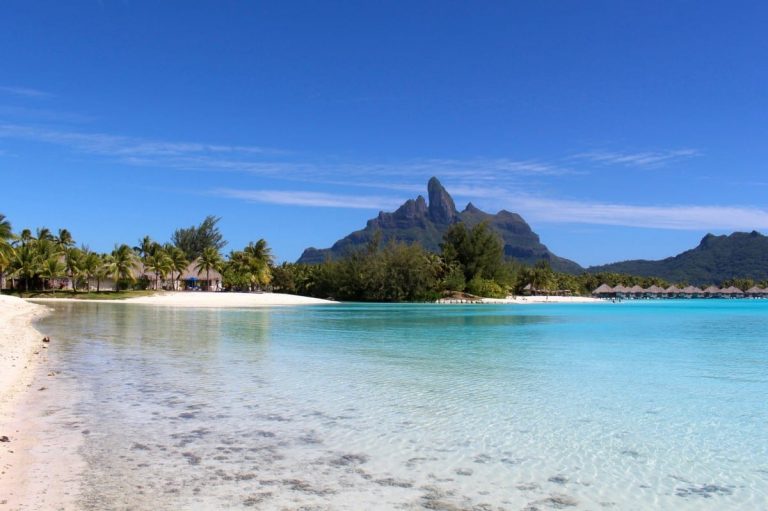
The clear lagoon is home to turtles, reef sharks, manta rays and dugongs, and Direction Island’s Cossies Beach has been named Australia’s best beach.

FAQs about the Cocos (Keeling) Islands
Where are the Cocos (Keeling) Islands?
In the Indian Ocean, about 2,750 km northwest of Perth and roughly halfway between Australia and Sri Lanka.
Who owns the Cocos (Keeling) Islands?
Australia. They are an Australian external territory, and residents are Australian citizens.
How many people live on the Cocos Islands?
About 600, according to the 2021 Australian census, living on West Island and Home Island.
Can you visit the Cocos (Keeling) Islands?
Yes. There are flights from Perth, and visitors stay mainly on West Island. Australians don’t need a passport, but most other visitors need an Australian visa.
Sources and further reading
- Britannica: Cocos (Keeling) Islands
- Parks Australia: Pulu Keeling National Park
- Cocos Keeling Islands tourism
Do you know any fun facts about the Cocos (Keeling) Islands? Share them in the comments below!
Spotted something wrong? Suggest a correction
We check every suggestion and update articles when facts change. Thank you for helping keep facts.uk accurate.
Leave a Reply