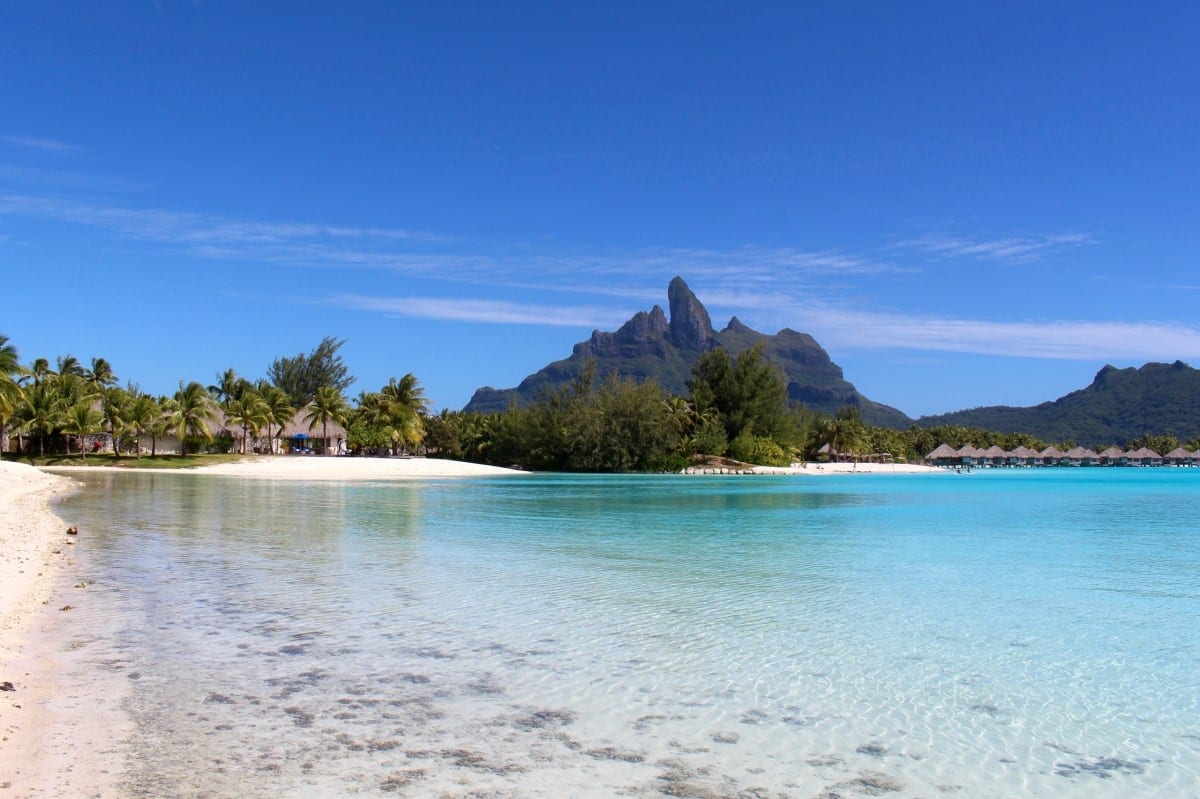
The Cook Islands are 15 tiny islands spread across an area of ocean the size of Mexico, with a population smaller than many English towns, buses that run “clockwise” and “anti-clockwise”, and a triangular $2 coin. Here are 15 facts about the Cook Islands, from their link with New Zealand to the black pearls of Manihiki.
The Cook Islands at a glance
Where: the South Pacific, between American Samoa and French Polynesia
Capital: Avarua, on Rarotonga
Population: about 15,000 (2021 census)
Languages: English and Cook Islands Māori
Currency: New Zealand dollar, alongside local Cook Islands coins and notes
1There are 15 islands in two groups.
The Northern Group is made up of low coral atolls such as Pukapuka, Manihiki and Penrhyn. The Southern Group includes the volcanic, mountainous islands of Rarotonga and Mangaia, as well as Aitutaki, which is famous for its lagoon.

2The land is tiny but the ocean is huge.
All 15 islands together have a land area of only about 236 square km (91 square miles), less than the Isle of Wight. But the ocean the Cook Islands control covers nearly 2 million square km, an area about the size of Mexico.
3They are self-governing, but linked to New Zealand.
Since 1965, the Cook Islands have governed themselves “in free association” with New Zealand. They run their own affairs and make many of their own international agreements, while New Zealand helps with defence and some foreign policy.
4Cook Islanders are New Zealand citizens.
Because of that link, Cook Islanders hold New Zealand citizenship and can live and work there freely. Around 90,000 people of Cook Islands Māori descent live in New Zealand, several times more than live in the Cook Islands themselves.
5About 15,000 people live there.
The 2021 census counted about 15,000 people, around three-quarters of them on Rarotonga. Some of the outer islands have only a few dozen residents.
6They are named after Captain Cook, who never saw the main island.
James Cook visited parts of the group in 1773 and 1777, but never landed on Rarotonga. He called some of them the Hervey Islands. The name Cook Islands was given in the 1820s by the Russian admiral Adam Johann von Krusenstern.
7They were settled by Polynesian voyagers.
Polynesians reached the islands by canoe around 1,000 years ago. According to Māori tradition, some of the canoes that later settled New Zealand set out from Rarotonga, and Cook Islands Māori is closely related to New Zealand Māori.
8The buses go “clockwise” and “anti-clockwise”.
A single main road runs around the edge of Rarotonga, about 32 km long, so the island’s bus service simply goes round in two directions. The timetable lists them as the clockwise and anti-clockwise buses.
9Buildings shouldn’t be taller than a coconut tree.
A well-known local custom on Rarotonga says no building should be higher than a coconut palm. There are no high-rise hotels, which is part of the islands’ appeal.
10The capital is a small harbour town.
Avarua, on the north coast of Rarotonga, is the capital and the only town of any size, with the parliament, the main harbour and the Punanga Nui market.

11They have a triangular $2 coin.
The New Zealand dollar is the main currency, but the Cook Islands also issue their own coins and notes, which are only accepted locally. They include an unusual triangular $2 coin, a popular souvenir.

12They are famous for black pearls.
The lagoons of Manihiki and Penrhyn produce black pearls, grown inside black-lipped oysters. Pearls are one of the country’s most valuable exports after tourism.
13Aitutaki has one of the most beautiful lagoons on Earth.
Aitutaki’s turquoise lagoon is ringed by small islets called motu. Visitors to One Foot Island, or Tapuaeta’i, can get a novelty footprint stamp in their passport from a tiny post office on the beach.
14The whole ocean is a marine park.
In 2017, the Cook Islands created Marae Moana, a marine park covering its entire ocean territory, one of the largest of its kind in the world. Large-scale commercial fishing is banned within 50 nautical miles of every island.
15Drum dancing is a national passion.
Cook Islands drum dancing, with fast hip movements and pounding wooden drums, is famous across the Pacific. The biggest celebration is Te Maeva Nui, held every year around 4 August to mark the anniversary of self-government.
FAQs about the Cook Islands
Are the Cook Islands part of New Zealand?
Not exactly. They are a self-governing country in free association with New Zealand. Cook Islanders are New Zealand citizens, but the islands have their own government and parliament.
Do you need a passport to visit the Cook Islands?
Yes. Most visitors, including from the UK, can stay for up to 31 days without a visa, but need a valid passport and a return ticket.
What currency is used in the Cook Islands?
The New Zealand dollar. Cook Islands coins and notes are also used, but they can’t be spent or exchanged outside the islands.
What are the Cook Islands known for?
Their lagoons, especially Aitutaki, black pearls, drum dancing, and a slow, uncrowded pace of life on islands with no high-rise buildings.
Sources and further reading
Explore more: more facts about Avarua.
Do you know any fun facts about the Cook Islands? Share them in the comments below!
Spotted something wrong? Suggest a correction
We check every suggestion and update articles when facts change. Thank you for helping keep facts.uk accurate.
Leave a Reply