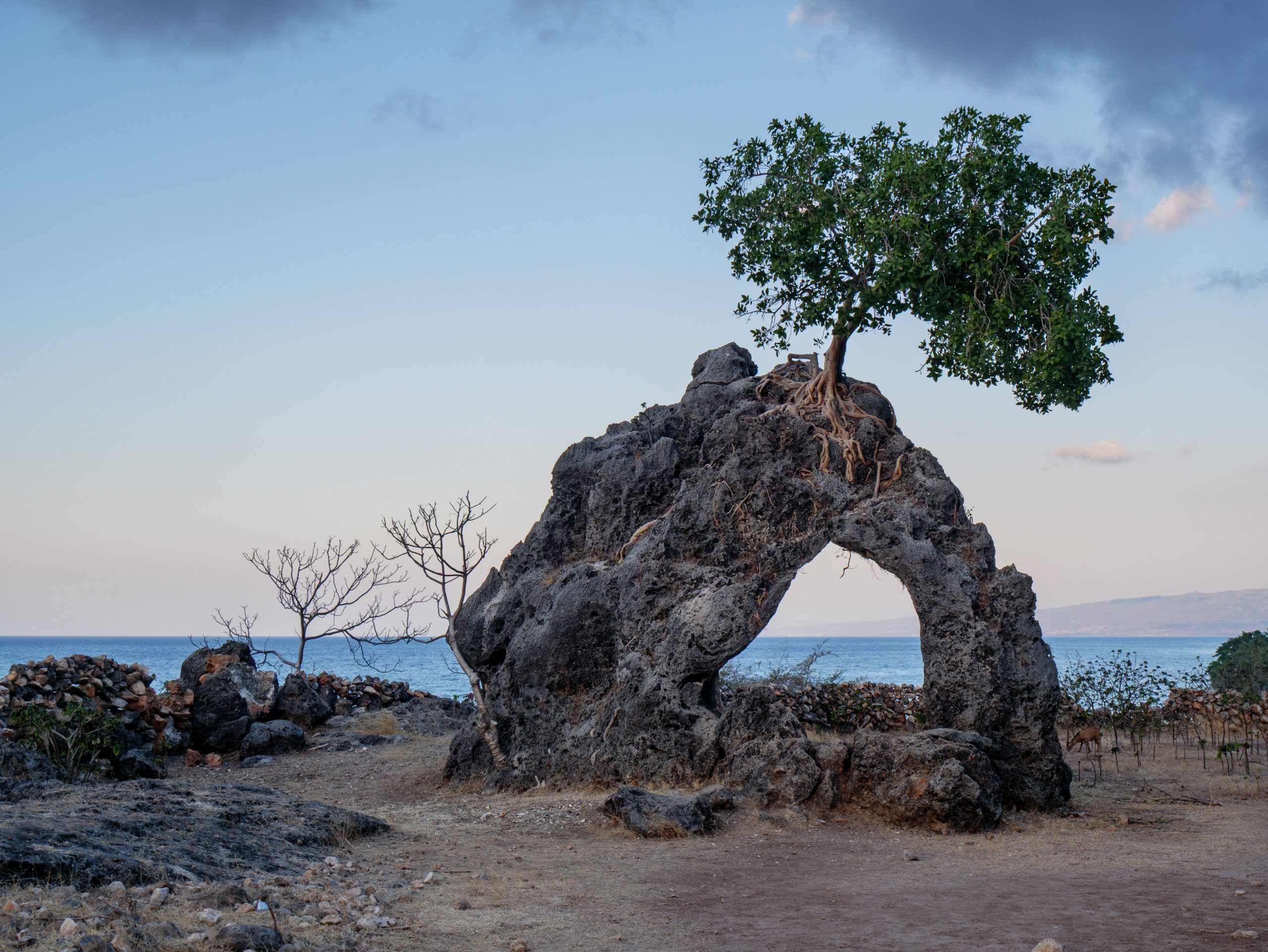
Timor-Leste, also known as East Timor, is one of the world’s youngest countries. It fought for decades to win its independence, restored it in 2002 and became the newest member of ASEAN in 2025. Here are 16 fascinating facts about Timor-Leste.
Timor-Leste at a glance
Official name: Democratic Republic of Timor-Leste
Capital: Dili
Population: about 1.34 million (2022 census)
Area: about 15,000 km² (5,800 square miles)
Official languages: Tetum and Portuguese
Currency: US dollar
Independence restored: 20 May 2002
1It shares an island with Indonesia.
Timor-Leste covers the eastern half of the island of Timor, plus the small enclave of Oecusse on the island’s north coast and the islands of Atauro and Jaco. The western half of Timor belongs to Indonesia, and Australia lies about 700 kilometres to the south-east.
2Its name means “East East”.
“Timor” comes from timur, the Malay word for east, and “Leste” is the Portuguese word for east. So the country’s official name, Timor-Leste, roughly translates as “East East”.

3It was a Portuguese colony for more than 400 years.
Portuguese traders arrived in the early 1500s, drawn by the island’s sandalwood. The Dutch later took the western half, and the border between the Portuguese and Dutch parts of Timor was finally settled in the early 20th century.
4Its first independence lasted nine days.
As Portugal withdrew, Timor-Leste declared independence on 28 November 1975. Nine days later, on 7 December 1975, Indonesia invaded, and it occupied the country for the next 24 years. More than 100,000 people are estimated to have died as a result of the conflict.
5It voted for freedom in 1999.
In a United Nations-organised vote on 30 August 1999, 78.5% of voters chose independence. Pro-Indonesian militias responded with widespread violence, and an international peacekeeping force led by Australia arrived to restore order.
6It was the first new country of the 21st century.
After two and a half years under UN administration, Timor-Leste became fully independent on 20 May 2002, making it the first new sovereign state of the 21st century.

7It became ASEAN’s 11th member in 2025.
After applying in 2011, Timor-Leste was formally admitted to the Association of Southeast Asian Nations at its summit in Kuala Lumpur in October 2025, the first new member since Cambodia joined in 1999.
8It uses the US dollar.
The US dollar has been the official currency since 2000. Timor-Leste mints its own coins, called centavos, which are used alongside American notes.
9Most people speak Tetum.
Tetum and Portuguese are the official languages, while Indonesian and English are “working languages”. Around 30 local languages are also spoken across the country.
10It is one of the most Catholic countries in the world.
About 97% of people are Roman Catholic. When Pope Francis held a mass in Dili in September 2024, around 600,000 people came, almost half of the country’s population.

11A holy statue stands on its highest peak.
Mount Ramelau, also called Tatamailau, rises to 2,986 metres (9,797 feet). A statue of the Virgin Mary stands on the summit, and many people climb in the dark to watch the sunrise over both coasts of the island.
12Its reefs are among the richest on Earth.
Timor-Leste lies in the Coral Triangle, the world’s richest area for marine life. Surveys around Atauro Island have recorded some of the highest numbers of reef fish species ever found at a single site.
13Its first national park protects land and sea.
Nino Konis Santana National Park, created in 2007 at the eastern tip of the country, covers about 1,236 square kilometres, including more than 550 square kilometres of sea and coral reef.

14Legend says the island is a sleeping crocodile.
According to a much-loved legend, a young crocodile was helped by a boy, and when it grew old it turned into the island of Timor so that the boy and his descendants could live on its back. Many Timorese still call the crocodile avó, or grandfather.
15Some of the world’s oldest fish hooks were found here.
Archaeologists digging at the Jerimalai rock shelter at the eastern end of the island found fish hooks made from shell that are up to 23,000 years old, among the oldest ever discovered, along with evidence of people catching deep-sea fish such as tuna.
16Coffee is its biggest non-oil export.
Most of the government’s income comes from oil and gas in the Timor Sea, but coffee is the country’s main farm export. High-grown Arabica from the mountains around Ermera is prized by speciality roasters.

FAQs about Timor-Leste
Is Timor-Leste the same as East Timor?
Yes. Timor-Leste is the country’s official name in English as well as Portuguese, but it is still often called East Timor.
What is the capital of Timor-Leste?
Dili, on the north coast, home to around 300,000 people.
When did Timor-Leste become independent?
It first declared independence on 28 November 1975, but was invaded by Indonesia nine days later. Its independence was restored on 20 May 2002.
Is Timor-Leste in ASEAN?
Yes. It became the 11th member of ASEAN in October 2025.
Sources and further reading
Explore more: facts about Indonesia.
Do you know any fun facts about Timor-Leste? Share them in the comments below!
Spotted something wrong? Suggest a correction
We check every suggestion and update articles when facts change. Thank you for helping keep facts.uk accurate.
Leave a Reply