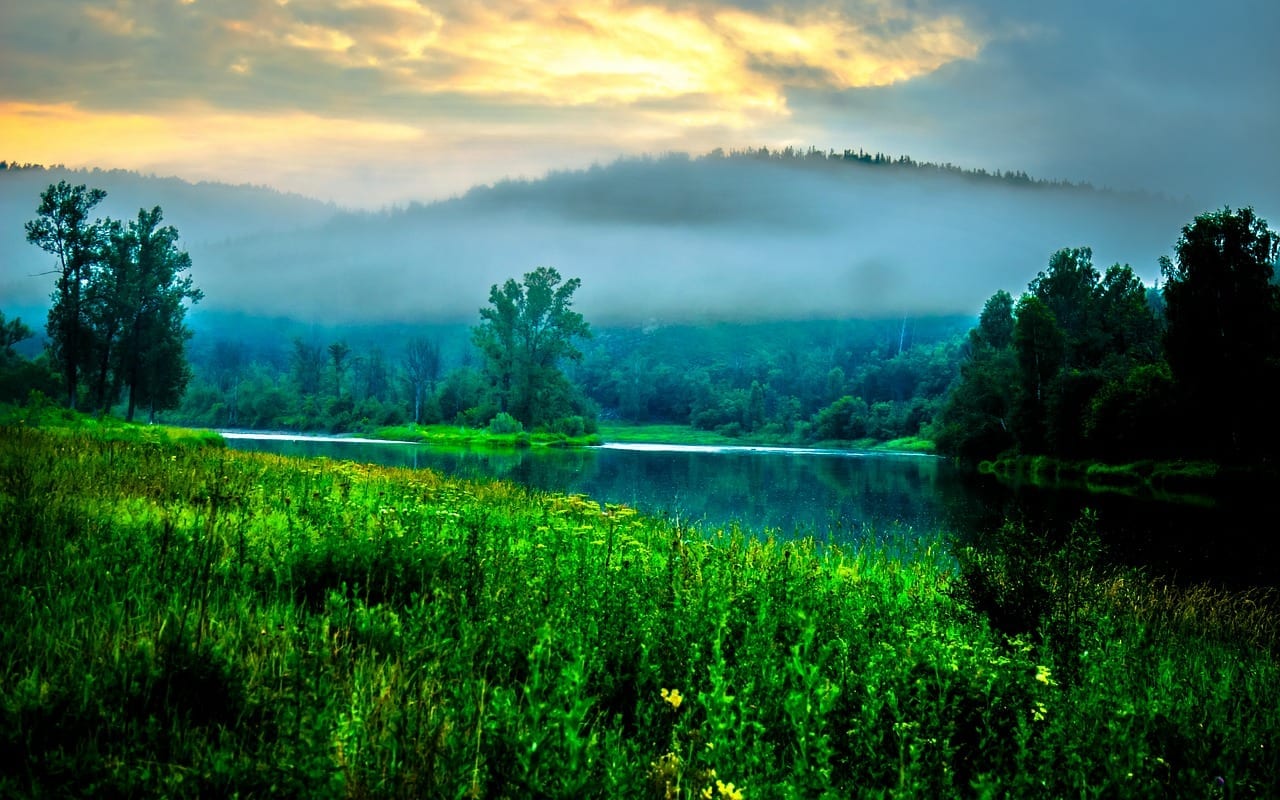
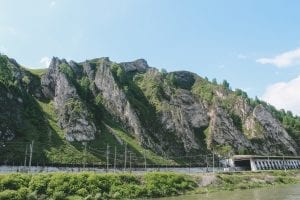
The Ural Mountains run for about 2,500 km through western Russia and mark the traditional border between Europe and Asia. They are among the oldest mountains on Earth, they gave their name to a family of languages that includes Finnish and Hungarian, and they hold one of the world’s great stores of minerals and gems. Here are 15 facts about the Ural Mountains, starting with the questions people ask most.
The Ural Mountains at a glance
Where: western Russia, from the Arctic coast south to the steppes of north-west Kazakhstan
Length: about 2,500 km (1,550 miles)
Width: about 40 to 150 km
Highest peak: Mount Narodnaya, 1,895 m (6,217 ft)
Age: formed roughly 250 to 300 million years ago
Biggest city nearby: Yekaterinburg
1They divide Europe from Asia.
Geographers have used the Urals as the boundary between Europe and Asia since the 18th century. Near Yekaterinburg you can stand with one foot in each continent at a marker on the watershed, one of several Europe-Asia obelisks along the range.
2They stretch from the Arctic almost to the Caspian.
The range runs about 2,500 km from the Kara Sea in the north, and carries on as the island of Novaya Zemlya beyond it. In the south it fades into the low Mugodzhar Hills of Kazakhstan, with the Ural River continuing on to the Caspian Sea.
3They aren’t very tall.
The highest point, Mount Narodnaya in the Subpolar Urals, is 1,895 m (6,217 ft), lower than many Alpine ski resorts. Most of the range is rounded ridges and plateaus between 300 and 1,200 m.
4That’s because they are so old.
The Urals were pushed up roughly 250 to 300 million years ago, when the landmass that is now Europe collided with ancient Siberia and Kazakhstan as the supercontinent Pangaea came together. Hundreds of millions of years of erosion have worn them down from what were once far higher peaks.
5They’re split into five regions.
From north to south, geographers divide the range into the Polar, Subpolar, Northern, Middle and Southern Urals. The north is Arctic tundra; the south ends in dry steppe close to semi-desert.
6They hold an extraordinary amount of treasure.
The Urals have been mined for iron, copper, gold, platinum and gems for centuries, and they powered Russia’s industry from the time of Peter the Great. The region is especially famous for emeralds, alexandrite and malachite, the green stone used to decorate rooms in the Winter Palace in St Petersburg and the columns of St Isaac’s Cathedral.
7Alexandrite was named after a Tsar.
This rare gem, discovered in the Ural emerald mines in the 1830s, looks green in daylight and red under candlelight. It was named after the future Tsar Alexander II, and its red and green matched the colours of imperial Russia’s military.
8Europe’s largest virgin forest is here.
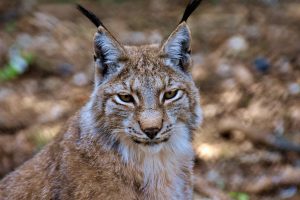
The Virgin Komi Forests on the western slopes of the northern Urals cover about 32,800 km² and became Russia’s first natural UNESCO World Heritage Site in 1995. They are home to brown bears, wolves, lynx, elk, wolverines and sables.
9They gave their name to a language family.
The Uralic languages are named after the mountains, because scholars once thought the original speakers came from the area. The family includes Finnish, Estonian and Hungarian, as well as smaller languages spoken in Russia such as Komi, Mari and Udmurt.
10The Dyatlov Pass mystery happened here.
In February 1959, nine experienced hikers died on a mountain slope in the northern Urals after cutting their way out of their tent and fleeing into the snow in freezing temperatures. The case inspired decades of theories. Russian investigators concluded in 2020 that an avalanche was to blame, and a study published in 2021 backed the idea of a small slab avalanche.
11Stalin moved whole factories here.
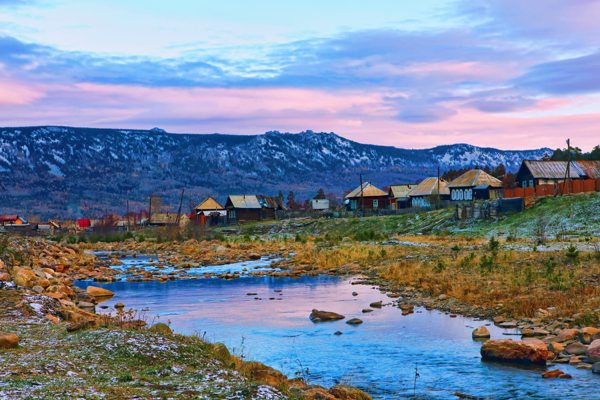
When Germany invaded the Soviet Union in 1941, hundreds of factories in the west were taken apart and rebuilt in and beyond the Urals, out of reach of German bombers. The tank factory at Chelyabinsk produced so many tanks that the city was nicknamed “Tankograd”.
12Yekaterinburg is the region’s capital in all but name.
Founded in 1723 and named after Catherine I, Yekaterinburg is now Russia’s fourth-largest city, with around 1.5 million people. It is where the last Tsar, Nicholas II, and his family were executed in 1918. In Soviet times it was called Sverdlovsk.
13The Ural River is one of Europe’s longest.
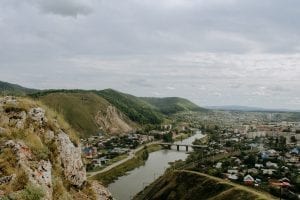
Rising in the southern Urals, the Ural River flows about 2,428 km (1,509 miles) through Russia and Kazakhstan into the Caspian Sea. For part of its length it is also counted as a Europe-Asia boundary.
14It has thousands of lakes.
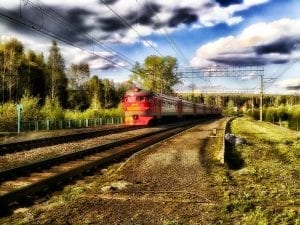
The eastern foothills are dotted with lakes, many of them left by glaciers. Lake Turgoyak near Miass is known for water so clear you can see about 18 m down, and it is sometimes called the “little sister of Lake Baikal”.
15Siberia starts on the other side.
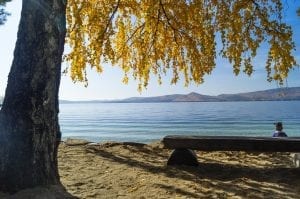
Everything east of the Urals in Russia is traditionally counted as Siberia. The Trans-Siberian Railway crosses the range between Perm and Yekaterinburg, and passengers pass a Europe-Asia marker beside the line.
FAQs about the Ural Mountains
Where are the Ural Mountains?
In western Russia, running north to south from the Arctic Ocean to north-west Kazakhstan. They separate the European part of Russia from Siberia.
How tall are the Ural Mountains?
The highest peak is Mount Narodnaya, at 1,895 m (6,217 ft). Most of the range is much lower, around 300 to 1,200 m.
How old are the Ural Mountains?
They formed roughly 250 to 300 million years ago, which makes them one of the oldest mountain ranges still standing.
Are the Ural Mountains in Siberia?
No. They mark Siberia’s western edge. Siberia begins on their eastern side.
Are the Urals the oldest mountains in the world?
No, though they are among the oldest. The Barberton Greenstone Belt in South Africa contains rocks around 3.5 billion years old, and the Appalachians are older than the Urals too.
Sources and further reading
Explore more: facts about the Russian Revolution.
Do you know any fun facts about the Ural Mountains? Share them in the comments below!
Spotted something wrong? Suggest a correction
We check every suggestion and update articles when facts change. Thank you for helping keep facts.uk accurate.
One response to “15 Facts About the Ural Mountains: Height, Age and Location”
-
Thank you for the information.
I’m reading a book re Romanov family and know very little Russian geography.
Leave a Reply