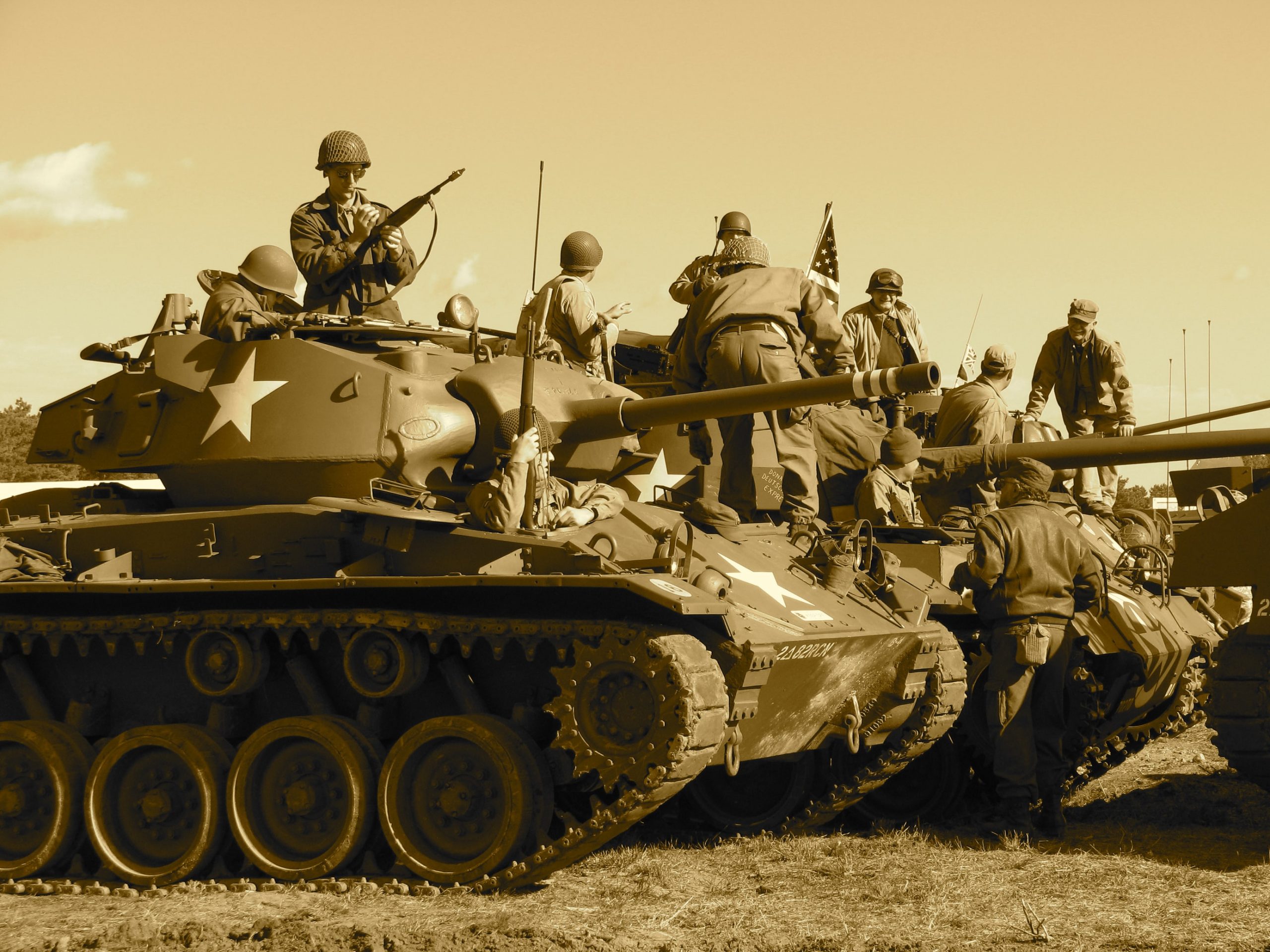
Tanks first rolled into battle in 1916, crawling across the mud of the Somme at walking pace. They were called “tanks” to fool enemy spies, came in “male” and “female” versions, and modern British tanks still have a built-in kettle. Here are 15 facts about tanks, from the First World War to today.
Tanks at a glance
First used in battle: 15 September 1916, at Flers-Courcelette on the Somme
First tank: the British Mark I
Top speed of the Mark I: about 6 km/h (3.7 mph)
Most-produced tank: the Soviet T-54/55
Biggest collection: The Tank Museum, Bovington, Dorset
1Leonardo da Vinci sketched one in the 1480s.
Leonardo da Vinci drew a design for an armoured fighting vehicle shaped like a flying saucer, with guns all round and wheels turned by men inside. It was never built, and as drawn its gears would have made the wheels turn in opposite directions.
2They were called tanks to keep them secret.
While they were being developed in 1915, the British needed a cover story for the strange machines. Workers were told they were building mobile water carriers for the desert, which were shortened to “water tanks” and then simply “tanks”. The name stuck.
3The first prototype was called Little Willie.
Built in 1915 by William Foster and Co. of Lincoln, Little Willie was the world’s first working tank prototype. It survives at The Tank Museum in Bovington.
4They were first used in battle in 1916.
On 15 September 1916, during the Battle of the Somme, 32 British Mark I tanks went into action at Flers-Courcelette. Many broke down or got stuck, but they terrified German soldiers who had never seen anything like them.
5They were painfully slow.
The Mark I could manage only about 6 km/h (3.7 mph) on a road and much less across mud and shell holes, which is about walking pace.
6Tanks came in male and female versions.
“Male” tanks carried small cannons, called 6-pounders, for attacking strongpoints, while “female” tanks carried only machine guns for fighting infantry. Some later tanks had one of each, and were called hermaphrodites.
7Being inside one was horrible.
The crew of eight shared a cramped steel box with an unshielded engine. Temperatures could top 50°C, the air filled with fumes, and bullets hitting the outside sent hot flakes of metal flying around inside. Crews wore leather and chainmail masks to protect their faces.
8The first mass tank attack came at Cambrai.
On 20 November 1917, the British attacked with more than 400 tanks at the Battle of Cambrai, breaking through German lines several kilometres in a single day, a huge distance for the Western Front.
9Germany built only 20 tanks in the First World War.
Germany was slow to adopt tanks and built just 20 of its huge A7V model, often relying on captured British tanks instead.
10The first tank against tank battle was in 1918.
On 24 April 1918, at Villers-Bretonneux in France, three British Mark IV tanks met three German A7Vs in the first ever battle between tanks.
11The biggest tank battle was at Kursk.
In July 1943, Germany and the Soviet Union fought the Battle of Kursk, involving around 6,000 tanks in total. It included the clash at Prokhorovka, often described as one of the largest tank battles in history.
12The Soviet T-34 was the war’s great workhorse.
The Soviet Union built more than 80,000 T-34 tanks, which were simple, tough and easy to repair. After the war, its successor the T-54/55 became the most-produced tank in history, with around 100,000 made.
13British tanks come with a kettle.
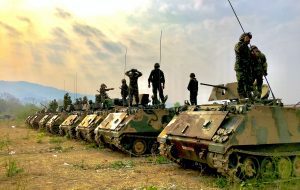
Since the late 1940s, British tanks have been fitted with a boiling vessel, or BV, so crews can heat water, cook rations and, of course, make tea without leaving the safety of the tank. The idea came from the Second World War, when crews were attacked while brewing up outside.
14The American Abrams runs on a jet engine.
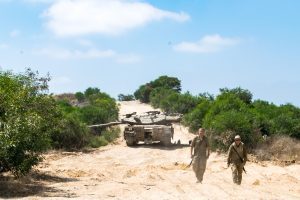
The US M1 Abrams is powered by a gas turbine, similar to a jet engine, which can run on almost any fuel, including diesel and jet fuel. It is fast for its size but uses a lot of fuel.
15You can see hundreds in Dorset.
The Tank Museum at Bovington in Dorset has around 300 armoured vehicles, one of the largest collections in the world, including Little Willie and the only working German Tiger I tank.
FAQs about tanks
When were tanks first used?
On 15 September 1916, by the British Army at the Battle of Flers-Courcelette, part of the Battle of the Somme.
Why are tanks called tanks?
It was a code name. To keep them secret, the British pretended they were water carriers, or water tanks, being built for the desert.
How fast were First World War tanks?
The British Mark I could reach about 6 km/h (3.7 mph) on flat ground, roughly walking pace, and was much slower across a battlefield.
What is the most famous tank?
Contenders include the British Mark I, the German Tiger, the Soviet T-34 and the American Sherman of the Second World War.
Sources and further reading
Explore more: facts about the First World War.
Do you know any fun facts about tanks? Share them in the comments below!
Spotted something wrong? Suggest a correction
We check every suggestion and update articles when facts change. Thank you for helping keep facts.uk accurate.



Leave a Reply