The Northern Mariana Islands are a chain of tropical Pacific islands that belong to the United States, yet their people can’t vote for the US president. They were the scene of one of the bloodiest battles of the Second World War, and the planes that dropped the atomic bombs on Japan took off from one of them. Here are 12 facts about the Northern Mariana Islands.
The Northern Mariana Islands at a glance
Official name: Commonwealth of the Northern Mariana Islands (CNMI)
Status: a self-governing territory of the United States
Capital: Saipan
Population: about 47,000 (2020 census)
Languages: English, Chamorro and Carolinian
Currency: US dollar
1There are 14 islands.
The chain stretches about 750 km north to south in the western Pacific. Almost everyone lives on the three biggest southern islands, Saipan, Tinian and Rota; the volcanic islands further north are mostly uninhabited.

2They are part of the United States, but not a state.
The islands became a commonwealth in political union with the United States under an agreement signed in 1975, and the people became US citizens in 1986. They run their own local government, but they can’t vote in US presidential elections and send only a non-voting delegate to Congress.
3Guam is next door, but separate.
Guam is the southernmost of the Mariana Islands, but it is a separate US territory with its own government. Saipan is only about 200 km north of Guam.
4They were named after a Spanish queen.
Spanish missionaries named the islands in 1668 after Queen Mariana of Austria, who was ruling Spain at the time. The islands were later ruled by Germany and then Japan before coming under US control after the Second World War.
5The first islanders arrived about 3,500 years ago.
The Chamorro people, who settled the Marianas by canoe, are thought to have made one of the longest ocean crossings of the ancient world. Their giant stone pillars, called latte stones, can still be seen, the largest at the House of Taga on Tinian.
6Saipan saw one of the fiercest battles of the war.
In June and July 1944, American forces captured Saipan from Japan in a battle that killed around 30,000 Japanese soldiers and thousands of civilians. Many civilians jumped to their deaths from the cliffs at the north of the island, now known as Suicide Cliff and Banzai Cliff.
7The atomic bomb planes took off from Tinian.
After its capture, Tinian became one of the busiest airfields in the world. In August 1945, the B-29 bombers Enola Gay and Bockscar took off from North Field on Tinian to drop the atomic bombs on Hiroshima and Nagasaki. The loading pits for the bombs are still there.

8They sit beside the deepest place on Earth.
The Mariana Trench, the deepest part of any ocean, curves along the east of the islands. Part of it is protected in the Marianas Trench Marine National Monument, created in 2009.
9Some of the islands are active volcanoes.
The northern islands are the tops of volcanoes, and some are still active. Anatahan erupted in 2003, its first recorded eruption, and Pagan erupted in 1981, forcing its residents to leave.
10They were hit by one of the strongest typhoons on US soil.
In October 2018, Super Typhoon Yutu struck Tinian and Saipan with winds of around 285 km/h (180 mph), making it one of the strongest storms ever to hit US territory.
11It is warm all year.
The islands have a tropical climate, with temperatures around 24 to 30°C (75 to 86°F) for most of the year, and they are a popular holiday destination for visitors from South Korea and Japan.
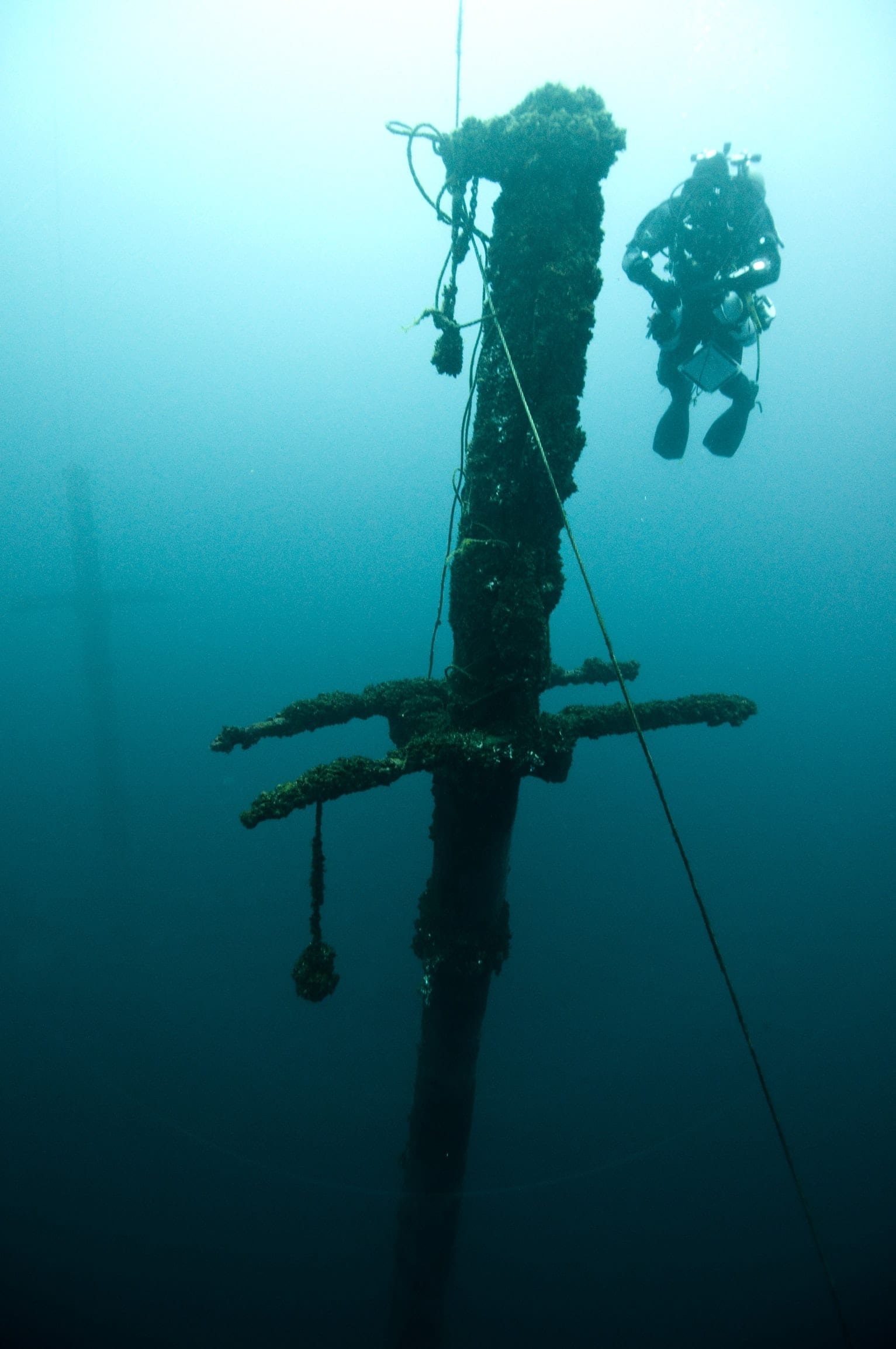
12They are famous for diving.
Clear water, coral reefs and wartime wrecks make the islands a favourite with scuba divers. The Grotto on Saipan, a flooded limestone cave linked to the open sea, is one of the best-known dive sites in the Pacific.
FAQs about the Northern Mariana Islands
Are the Northern Mariana Islands part of the US?
Yes. They are a self-governing commonwealth of the United States. People born there are US citizens, but the islands are not a state.
What is the capital of the Northern Mariana Islands?
Saipan, the largest island, where the government is based.
Do you need a passport to visit the Northern Mariana Islands?
US citizens travelling from the US mainland don’t need one, but most other visitors, including from the UK, need a passport and must meet US entry rules.
Is Guam part of the Northern Mariana Islands?
No. Guam is a separate US territory, although it is geographically part of the same Mariana Islands chain.
Sources and further reading
Explore more: facts about the Mariana Trench.
Do you know any fun facts about the Northern Mariana Islands? Share them in the comments below!
Spotted something wrong? Suggest a correction
We check every suggestion and update articles when facts change. Thank you for helping keep facts.uk accurate.
Leave a Reply