


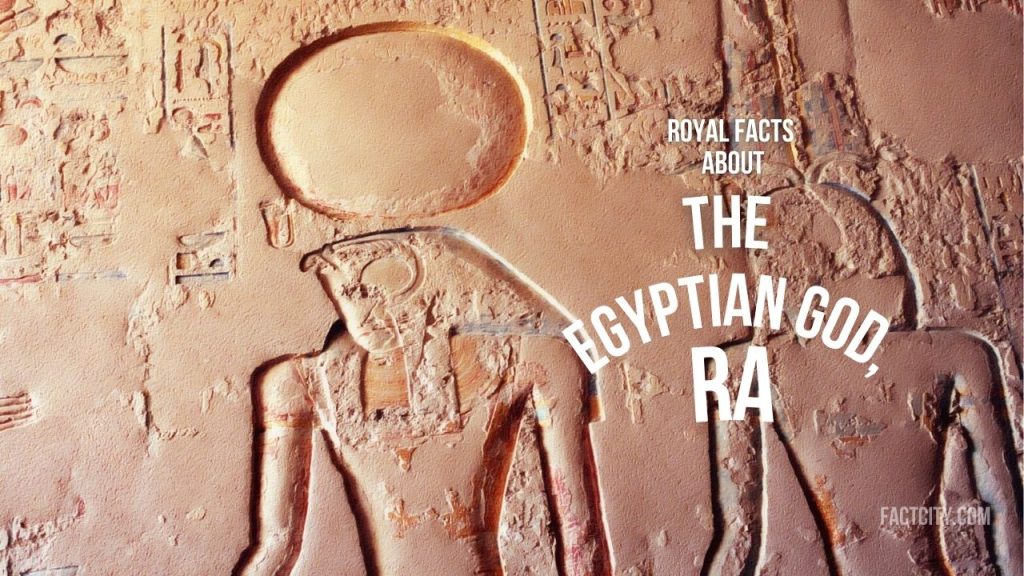
Ra was the ancient Egyptian sun god – and one of the most powerful and important deities in the whole of Egyptian mythology. The Egyptians believed he created the world, ruled the sky, and sailed across the heavens each day before travelling through the underworld at night to be reborn at dawn. Usually shown as a falcon-headed man crowned with a glowing sun disc, Ra was so central to Egyptian life that pharaohs called themselves the “Son of Ra” – and in time he merged with the god Amun to become Amun-Ra, “King of the Gods.”
But there’s far more to Ra than the title “sun god” suggests. He fought a giant serpent every single night, wept the human race into existence, guarded a secret name that gave him power over all creation, and once nearly wiped out humanity in a fit of rage. Here are 22 fascinating facts about Ra, the Egyptian sun god.
1. Ra sat at the very top of the Egyptian pantheon.
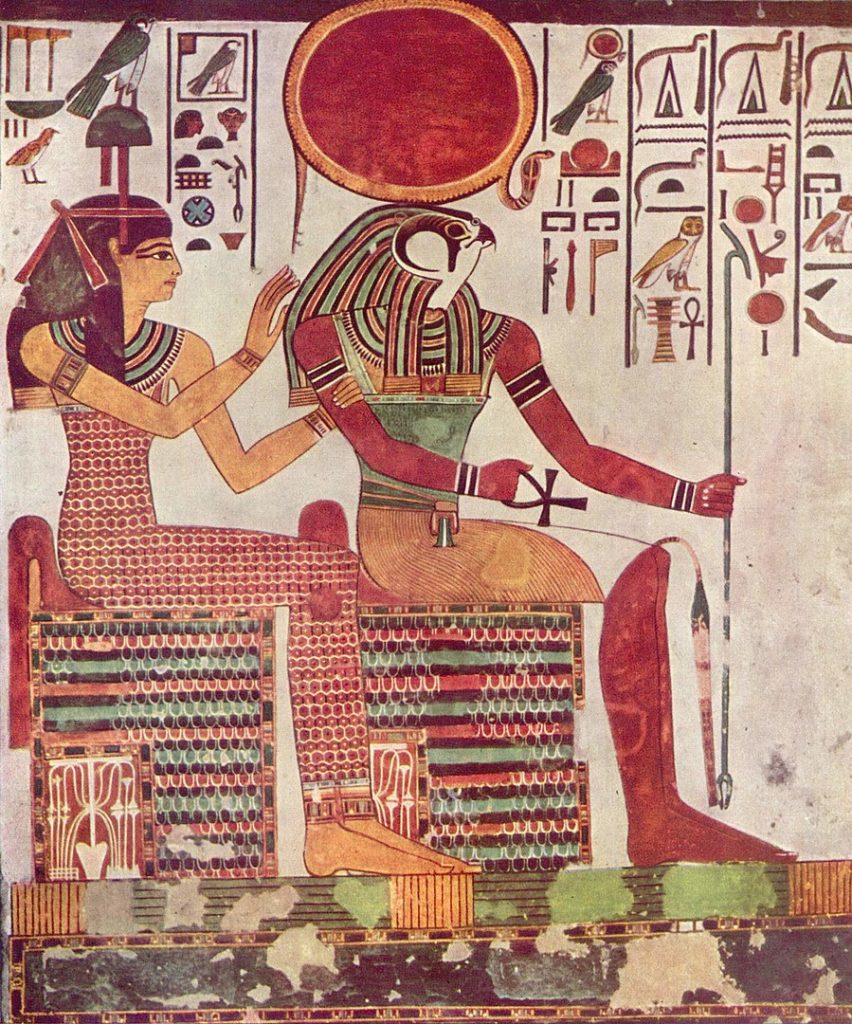
Ra – sometimes written Re – was among the most powerful and revered gods in all of ancient Egyptian religion. He was usually shown as a man with the head of a falcon, crowned by a sun disc, tying him to both the sky and the sun itself.
2. He was the sun god – and much more.
In the West, Ra is best known as the Sun God, but his role ran deeper than that. He was a creator god, believed to have brought the world and everything in it into being. To the Egyptians he embodied light, warmth, kingship and order itself.
3. He wasn’t just linked to the sun – he WAS the sun’s journey.
Ra didn’t merely rule the sun; he travelled with it. Each day he crossed the sky, and each night he sailed through the underworld, facing danger before rising again at dawn. Sunrise was quite literally Ra’s rebirth. A busy schedule, by anyone’s standards.

4. Ra changed form throughout the day.
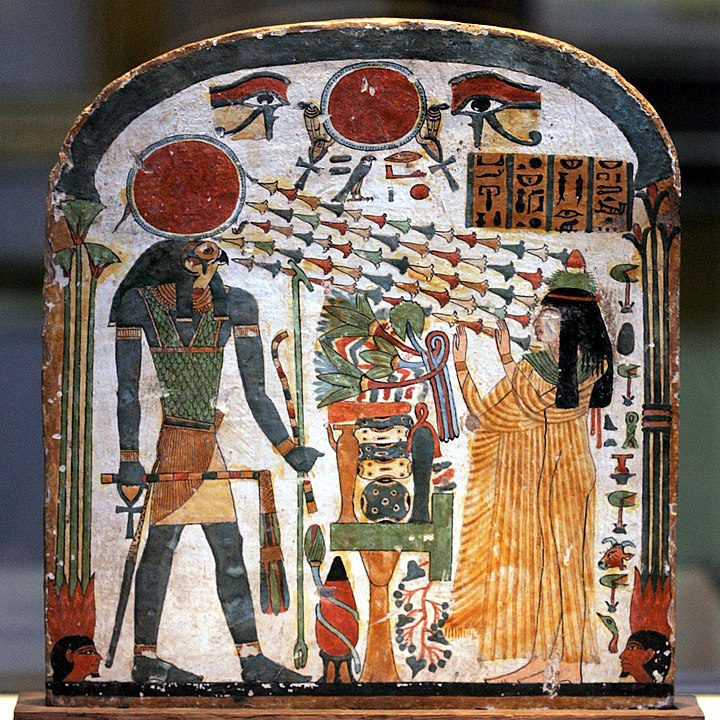
The Egyptians pictured the sun’s daily journey as three forms of the same god. At dawn he was Khepri, the scarab beetle, rolling the sun up over the horizon. At midday he was Ra in his full glory. And at dusk he became Atum (or the ram-headed Khnum), the ageing sun sinking into the west.
5. You can spot Ra by his sun disc – encircled by a cobra.
Ra’s classic symbol is the solar disc resting above his head, often wrapped by a rearing cobra (the uraeus), representing protection and royal power.
A quick myth-buster: that famous image of a sun disc with rays ending in little human hands is NOT Ra. That’s the Aten, a distinct sun deity elevated by the pharaoh Akhenaten during his short-lived experiment with worshipping a single god. The two are related, but they’re not the same – so don’t mix them up.
6. He sailed the skies in a boat.
Ra crossed the heavens each day aboard a solar barque called the Mandjet – the “Boat of Millions of Years.” At sunset he switched to a second vessel, the Mesektet, to make the perilous night voyage through the underworld.
7. Every night, Ra fought a giant serpent.
The night journey wasn’t a quiet cruise. Each night the chaos serpent Apophis (also called Apep) tried to swallow the sun and plunge the world into darkness. Ra and his defenders had to fight him off before dawn. When the sun rose, it meant order had beaten chaos once again – a battle the Egyptians believed replayed every single night.
8. Ra supposedly aged as the day wore on.
Because Ra embodied the sun, he was thought to grow older and weaker as the day went on – strong at noon, frail by dusk. His nightly trip through the underworld renewed him, so he could be reborn young at sunrise.
9. Humans were said to be born from Ra’s tears.
In one creation story, humankind sprang from Ra’s own tears. It’s thought to stem from a piece of ancient Egyptian wordplay: the words for “tears” and “people” sounded alike. Egyptians sometimes called themselves the “Cattle of Ra” – the god’s own herd.
10. The Eye of Ra was a goddess in her own right.
Ra’s power was often personified as the “Eye of Ra” – a fierce, protective female force sent out to do his bidding. The Eye was linked to several goddesses, including Hathor, Sekhmet and Bastet, who acted as his daughters and defenders.
11. He once tried to wipe out humanity.
When Ra decided that people had grown disloyal, he sent his Eye – in the form of the lioness goddess Sekhmet – to punish them. She grew so bloodthirsty she threatened to destroy everyone. To stop her, Ra had thousands of jugs of beer dyed red and poured across the land. Sekhmet drank the “blood,” fell into a drunken sleep, and awoke calmed as the gentle Hathor. Humanity survived – just.
12. Ra kept a secret name that gave him ultimate power.
Ra was said to have many names, but one true, secret name held the source of his power – and he told it to no one. In a famous myth, the goddess Isis tricked him: she created a serpent that poisoned him, then withheld the cure until he whispered his hidden name to her. She used that knowledge to strengthen her son, Horus.
13. His different names marked different times of day.
According to legend, Ra revealed some of his names to Isis: he was Khepri in the morning, Ra at midday, and Atum (sometimes given as Temu) in the evening. But the ultimate secret name always stayed hidden – even from the scholars who study the myths today.
14. Ra-Horakhty combined two great gods.
Ra held many titles, including “Ra-Horakhty” – “Ra, who is Horus of the Two Horizons.” This merged Ra with the sky god Horus, doubling down on his identity as the supreme solar deity spanning sunrise to sunset.
15. Over time, Ra merged with other gods.
Egyptian religion was flexible, and powerful gods often blended together. The most famous example is Amun-Ra, which fused Ra with Amun, the great god of Thebes. The combined deity became “King of the Gods” and dominated worship during Egypt’s New Kingdom.
16. Egypt’s pharaohs called themselves the “Son of Ra.”
Ra was bound tightly to kingship. From the Old Kingdom onward, pharaohs took the title “Son of Ra,” claiming divine descent from the sun god himself. To rule Egypt was, in effect, to rule on Ra’s behalf – a powerful bit of political theology.
17. Legend said Ra was Egypt’s first king.
Some myths go further still, casting Ra as the very first ruler of Egypt, reigning on earth in a golden age before gods and kings withdrew to the heavens. Every earthly pharaoh who followed was seen as continuing his line.
18. Heliopolis was the beating heart of his worship.
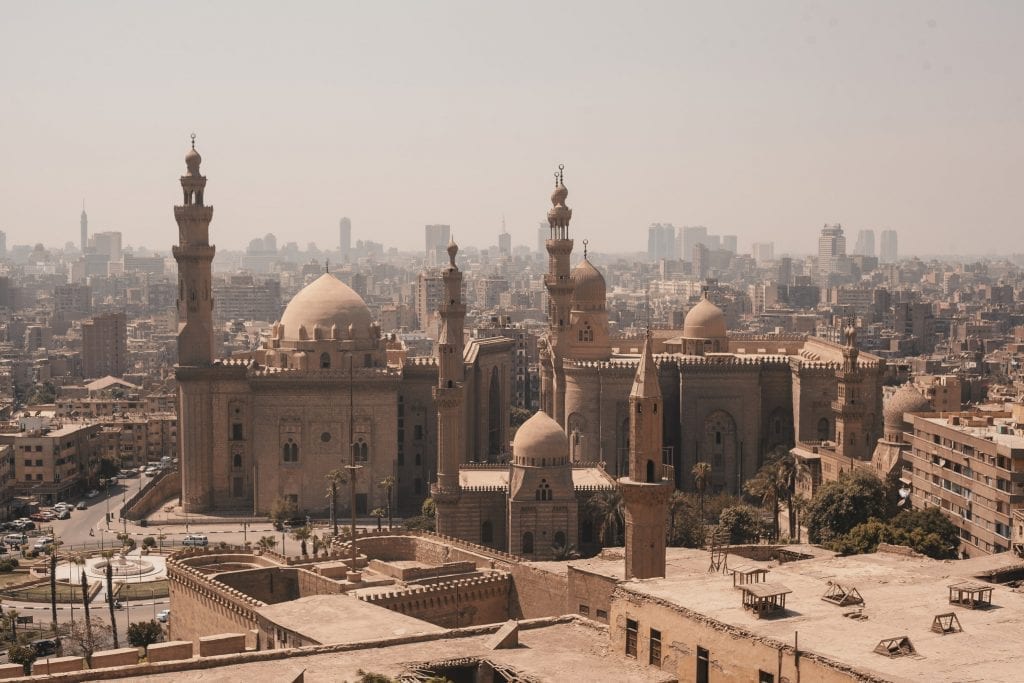
The city the Greeks called Heliopolis – “Sun City,” known to the Egyptians as Iunu – was Ra’s great cult centre. It sat where north-eastern Cairo stands today, and its priests were among the most influential in the land.

19. Obelisks were monuments to the sun.
Those towering, needle-like obelisks Egypt is famous for were closely tied to sun worship. Their shape is often linked to the sun’s rays, and to the sacred “Benben” stone at Heliopolis – said to be the mound on which the creator sun god first appeared.
20. A sacred bull was treated as Ra on earth.
At Heliopolis, a living bull known as the Mnevis was honoured as an embodiment of Ra. These sacred bulls were cared for in life and ceremonially buried in death – a reminder of how physically present the Egyptians believed their gods to be.
21. Ra’s reach stretched far beyond Egypt.
As the sun that shines on everyone, Ra’s symbolism travelled well. His association with kingship, divine right and cosmic order influenced how power was imagined across the ancient world – and his imagery still turns up everywhere, from museum galleries to blockbuster films and video games.

22. His worship faded with the rise of Christianity.
For thousands of years Ra was central to Egyptian life. But as the Roman Empire adopted Christianity, the old gods gradually fell out of worship. Ra’s temples emptied – yet his story, symbols and sun disc endure to this day.
FAQs About The Egyptian God Ra
Who was the Egyptian god Ra?
Ra was the ancient Egyptian sun god and a creator deity – one of the most important gods in all of Egyptian mythology. He was believed to have created the world and to sail across the sky each day as the sun, journeying through the underworld at night before being reborn at dawn. He is usually shown as a falcon-headed man wearing a sun disc, and later merged with Amun to become Amun-Ra, 'King of the Gods'.
Who were Ra's daughters?
Ra was associated with several goddesses said to act as his daughters and as the 'Eye of Ra' – his fierce protective force. The most commonly named are Hathor, Sekhmet and Bastet, though other goddesses such as Wadjet and Tefnut are also linked to him depending on the myth.
What was Ra's true name?
Ra was known by many names – Khepri in the morning, Ra at midday and Atum in the evening – but he guarded one secret true name that was the source of his power. In the famous myth of Isis and Ra, the goddess tricked him into revealing it, but the myths never disclose it to us, and it remains unknown.
Was Ra the first or oldest Egyptian god?
In the Heliopolitan creation myth, the self-created sun god (Atum-Ra) was among the first gods, emerging from the primordial waters of Nun to begin creation. So Ra is often described as a 'first' god and creator – though Egyptian mythology had several different creation stories, and the primordial chaos of Nun was thought to exist before him.
What is the difference between Ra and the Aten?
Ra is the traditional falcon-headed sun god, usually shown with a sun disc and cobra. The Aten is the sun disc itself, worshipped as a distinct god under the pharaoh Akhenaten, and shown as a disc with rays ending in human hands. The Aten grew out of an aspect of Ra but became its own deity during Akhenaten's brief religious revolution.
Further reading
Ra – World History Encyclopedia
Ra: Sun God, Symbol & Story – Study.com
Do you know any fun facts about the Egyptian god Ra? Share them in the comments below!